-
by sayum
28 August 2026 10:07 AM







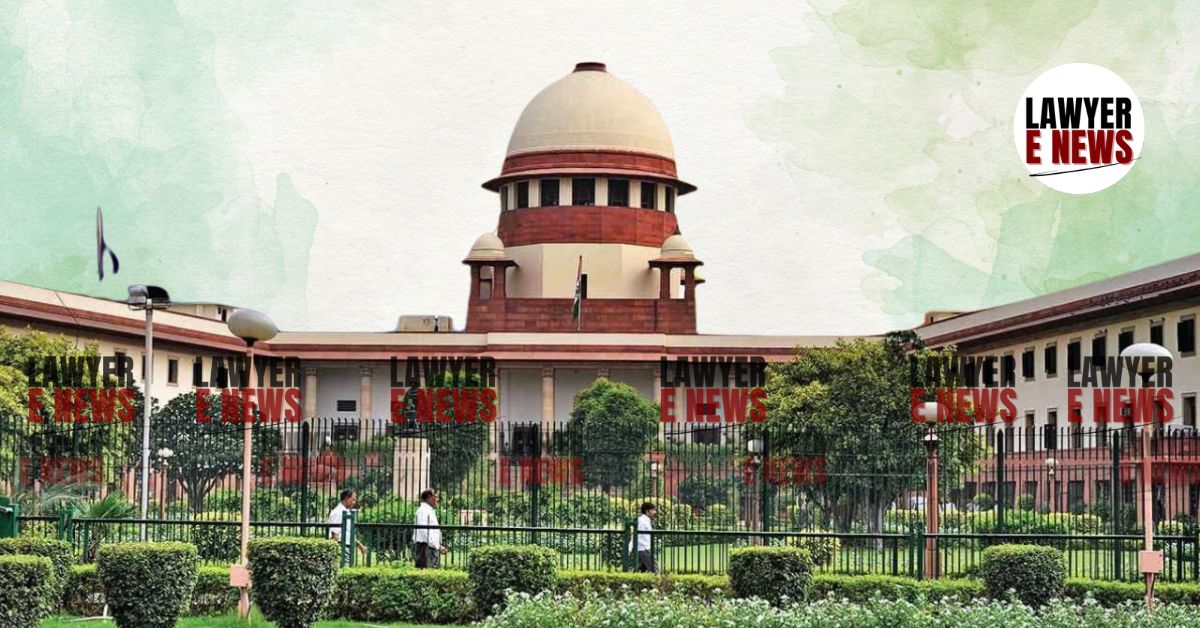
“Summoning A Person on the Basis of a Frivolous Complaint Is a Serious Matter—It Tarnishes Reputation Irreversibly” - Supreme Court of India set aside the summoning order issued by the Magistrate and quashed all criminal proceedings arising out of a 2014 complaint that alleged rape and caste-based atrocities by the appellant. The bench comprising Justice J.B. Pardiwala and Justice Sandeep Mehta found the allegations to be manifestly doubtful, vague, and bereft of material particulars, ruling that the complaint was a "gross abuse of the process of law."
“Delay, Vagueness, and Contradiction Cannot Be Glossed Over When Liberty Is at Stake”
The complainant had lodged a private complaint in 2014, alleging that the appellant had raped her in 2010, recorded a video to blackmail her, and continued to engage in a sexual relationship under false promises of marriage. The complaint further stated that when the appellant secured employment and moved to Faridabad, she was allegedly abused with casteist slurs by the appellant and his associates when she insisted on marriage.
The Supreme Court noted the four-year delay in filing the complaint and the absence of specific dates or locations, which raised serious credibility issues:
“It is very apparent on a plain reading of the complaint, more particularly, considering the nature of the allegations that the same doesn’t inspire any confidence. There is no good explanation offered, why it took four years for the respondent no.2 to file a complaint.”
“No Accused Should Be Dragged Through Trial Based on Allegations That Do Not Disclose Even the Basic Facts of the Offence”
The trial court had issued summons to the accused based on a Section 202 CrPC inquiry. This was upheld by the Allahabad High Court in 2019, which rejected the accused’s plea under Section 482 CrPC. The appellant then approached the Supreme Court, contending that the complaint was fabricated and stemmed from a failed consensual relationship.
Accepting this argument, the Court observed: “None of the allegations levelled in the complaint are substantiated by any other independent evidence on record.”
“The complaint fails to disclose the date of the incident including the place of the incident, etc.”
The Court stressed that summoning orders must not be passed mechanically, especially when a person’s liberty and reputation are at stake. Citing its previous ruling in Mohammad Wajid v. State of U.P. (2023 SCC OnLine SC 951), the Court reiterated: “In frivolous or vexatious proceedings, the Court owes a duty to look into many other attending circumstances emerging from the record... and if need be, with due care and circumspection try to read in between the lines.”
“There Is a Clear Distinction Between Rape and Consensual Sex Under a Failed Promise of Marriage”
The Court also revisited the settled jurisprudence on distinguishing between false promises of marriage and genuine consensual relationships that did not culminate in marriage. Referring to Deepak Gulati v. State of Haryana, (2013) Cri LJ 2990, the Court held:
“An accused can be convicted for rape only if the court reaches a conclusion that the intention of the accused was mala fide, and that he had clandestine motives.”
“The failure to keep a promise made with respect to a future uncertain date, due to reasons that are not very clear from the evidence available, does not always amount to misconception of fact.”
This nuanced approach was used by the Court to highlight that every breakdown of a relationship does not ipso facto constitute rape, especially when the allegations are vague and unsupported.
“Prosecution of Parents and Addition of Caste Atrocity Charges Without Evidence Make the Case Doubtful”
The complaint had not only arrayed the appellant but also dragged in his parents and added charges under Section 3(1)(10) of the SC/ST Act, along with IPC Sections 376 (rape), 377 (unnatural offences), 452 (house-trespass), 323 (voluntarily causing hurt), 504 (intentional insult), and 120B (criminal conspiracy).
The Court found these additions to be overzealous and unsubstantiated: “Not only the appellant was dragged into the criminal proceedings but even the parents of the appellant were arrayed as accused... This itself makes the entire case doubtful.”
Further, the complainant declined to even accept notice from the Supreme Court, which was noted by the Court as indicative of her lack of seriousness: “The fact that the complainant thought fit not to even accept the notice issued by this Court is one additional ground that she was not at all serious right from day one.”
“The High Court Failed to Exercise Its Inherent Powers to Prevent Abuse of Process”
The Supreme Court came down heavily on the High Court’s refusal to interfere: “The High Court too overlooked the relevant aspects of the matter while rejecting the Section 482 application... The continuation of the criminal proceedings against the appellant would be nothing but gross abuse of the process of law.”
The Court emphasized that the High Court’s power under Section 482 CrPC is not ornamental, and must be exercised to prevent miscarriage of justice.
Quoting Rajiv Thapar v. Madan Lal Kapoor, the Court reiterated the four-step test to determine whether a criminal proceeding deserves to be quashed. In this case, all four criteria were satisfied.
“Reputation Is Not a Casualty Zone—Frivolous Complaints Destroy Lives Without Trial”
In a deeply reflective moment, the Court warned against the damage caused by frivolous allegations:
“Summoning any person on the basis of a frivolous or vexatious complaint is something very serious. This would tarnish the image of the person against whom false, frivolous and vexatious allegations are levelled.”
The judgment serves as a powerful reminder that allegations of serious crimes must pass the threshold of credibility, failing which they amount to harassment through legal process.
Holding that the entire case was born out of vengeance, emotional breakdown, and speculative intent, the Supreme Court exercised its powers to quash all proceedings in Criminal Case No. 655/2014 pending before the Additional Chief Judicial Magistrate, Allahabad. The impugned summoning order and the High Court’s refusal to interfere were both set aside.
“We are of the view that continuation of the criminal proceedings against the appellant would be nothing but gross abuse of the process of law.”
Date of Decision: 02.09.2025