-
by sayum
26 August 2026 6:42 AM







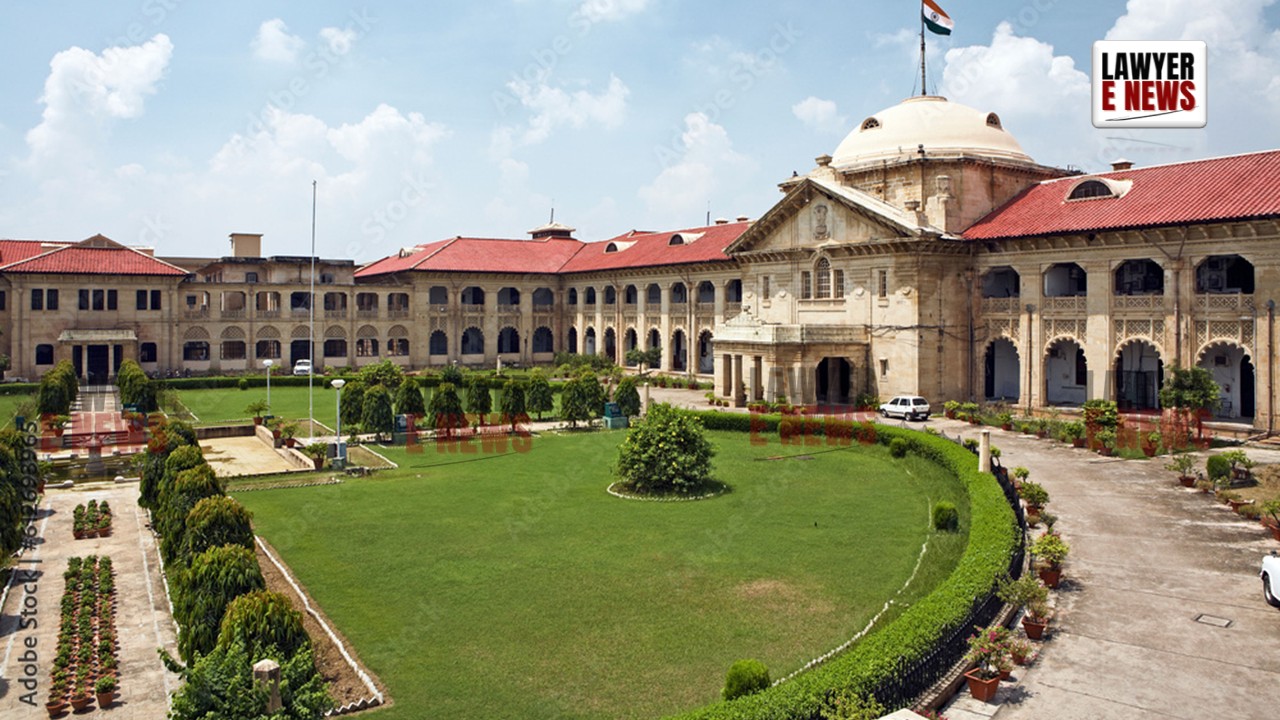
“Suspension Without Hearing Is Unconstitutional”, In a powerful judgment Allahabad High Court (Lucknow Bench) struck down an ex parte suspension order issued by the Bar Council of Uttar Pradesh, calling it a blatant violation of natural justice. The Court ruled that the 10-year ban on advocate Sushil Kumar Rawat for an alleged act of bigamy was not only procedurally flawed but also lacked substantive legal backing.
“You cannot punish a man without proving guilt – mere allegations do not justify professional execution,” the Court observed.
“Justice Delayed Is Injustice, But Justice Denied Is Tyranny”
The petitioner, Sushil Kumar Rawat, approached the High Court under Article 226 of the Constitution, challenging an order dated 23.02.2025, by which he was debarred from practicing law across India for a decade. The action was taken on the basis of a complaint alleging bigamy, without any criminal conviction or a proper disciplinary hearing.
The order was passed before the date scheduled for his appearance, which was 10.03.2025 — a fact the Court found shocking.
“How could the Bar Council pass an order on February 23 when it had summoned the advocate for March 10? This is not only irregular, it is unconstitutional,” said the Bench comprising Justice Shekhar B. Saraf and Justice Manjive Shukla.
“Bigamy Allegation Does Not Equal Moral Turpitude Without Conviction”
The High Court emphasized that moral turpitude must be adjudicated, not assumed. Relying on the Supreme Court’s authoritative rulings, the Court reaffirmed that:
“Moral turpitude means conduct so base, vile, or depraved that it shocks the moral conscience of society. It cannot be inferred from allegations alone.”
The Bench distinguished the Madras High Court’s ruling in P. Mohanasudaram v. ICAI, noting that in that case, the person was convicted of bigamy, while in the present case, no such conviction existed.
“Allegations of bigamy, without proof or conviction, cannot be the basis for a professional death sentence,” the Court held.
“Even Disciplinary Actions Must Follow Due Process”
The Court held that the Bar Council’s failure to serve notice properly, coupled with the premature decision, constituted a clear breach of natural justice. The Bench rejected the argument that the petitioner had an alternative remedy through an appeal.
“A writ petition is maintainable where fundamental procedural violations occur. Denial of natural justice is not a mere technicality – it goes to the heart of fair adjudication.”
The Court also cited SBI v. P. Soupramaniane, and Pawan Kumar v. State of Haryana, noting that moral turpitude is not a rubber stamp term but must be examined in context and with legal standards of proof.
“Suspension Set Aside, Due Process Restored”
In its final direction, the High Court quashed the Bar Council’s order and issued a clear mandate:
“Issue a fresh notice to the petitioner, grant him an opportunity to be heard, and then pass a reasoned order in accordance with law — within 12 weeks.”
The ruling offers relief to Sushil Kumar Rawat and sends a strong message to professional bodies: disciplinary authority must be exercised with fairness, not arbitrariness.
“This Judgment Is Not Just About One Advocate – It’s About Upholding Constitutional Fairness in Professional Governance”
The Allahabad High Court has reaffirmed that no one is above the Constitution — not even statutory bodies. A professional's reputation, livelihood, and dignity cannot be stripped without due process, evidence, and hearing.
“In a democracy governed by rule of law, justice must not only be done, it must be seen to be done — especially when liberty and livelihood are at stake.”
Date of decision: 27/11/2025





