-
by sayum
28 August 2026 8:44 AM







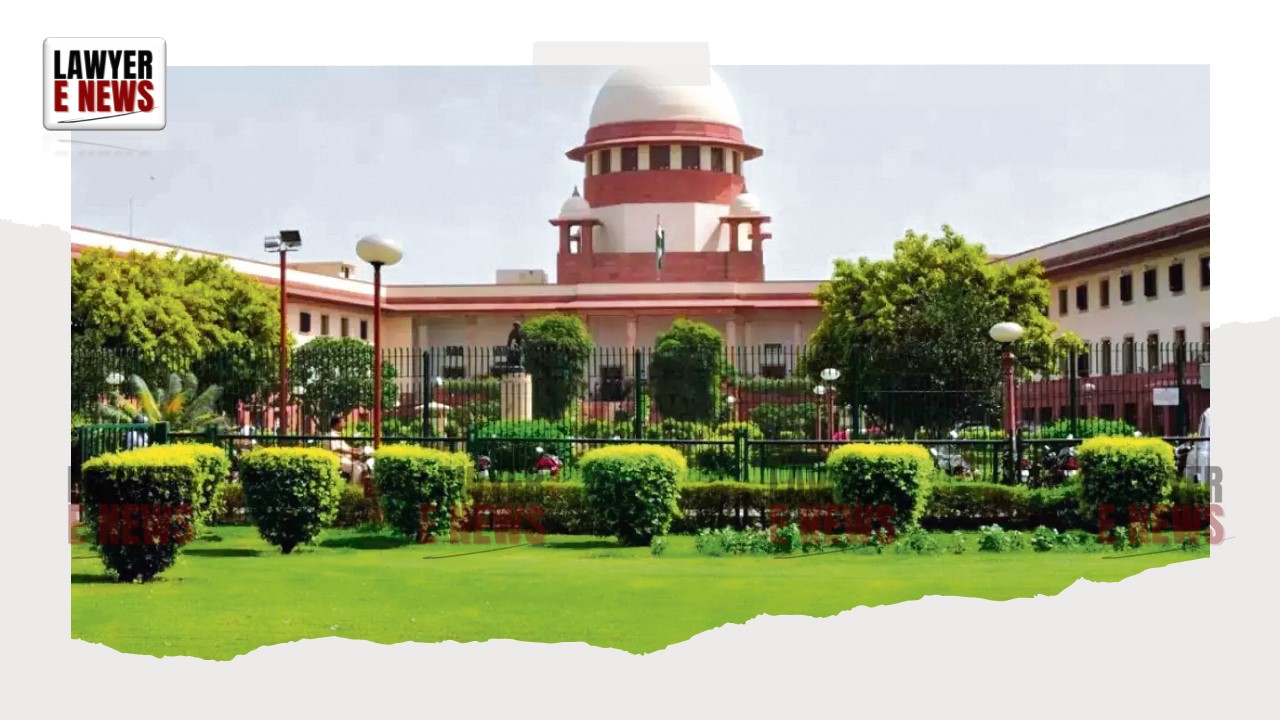
"A Will must be proved in accordance with law; mere registration does not cure suspicious circumstances," On September 1, 2025, the Supreme Court of India that reaffirms settled principles of property law concerning the nature of ownership transfer through documents like Agreement to Sell, General Power of Attorney (GPA), Affidavit, and Will. The Court allowed the appeal by setting aside the decree in favour of the plaintiff-brother and dismissed the original suit for possession and declaration, holding that the documents relied upon did not confer any valid title.
Family Dispute Over Property Gifted by Father
The case revolves around a property at Ambedkar Basti, Delhi, originally owned by Shri Kundan Lal, father of both the appellant (Ramesh Chand – Defendant No. 1) and respondent (Suresh Chand – Plaintiff). The plaintiff claimed that the father transferred the suit property to him on 16.05.1996 through a GPA, Agreement to Sell, Affidavit, and a Registered Will.
He alleged that the defendant was merely a licensee who became a trespasser, and further wrongfully sold half of the property to a third party (Defendant No. 2). The defendant, on the other hand, claimed oral transfer in 1973, continuous possession since then, and invalidity of all documents allegedly executed by the father.
The trial court decreed in favour of the plaintiff, and the Delhi High Court upheld the decision. However, in 2011, the Supreme Court remanded the case back to the High Court after noting that it had relied on the now-overruled Asha M. Jain v. Canara Bank judgment. Post-remand, the High Court reaffirmed the same decision, which led to the current appeal.
"Agreement to Sell Is Not a Conveyance; No Title Passes Without a Registered Sale Deed": SC
"Section 54 of the Transfer of Property Act is unequivocal—sale of immovable property of value exceeding ₹100 requires a registered deed," observed Justice Aravind Kumar, speaking for the Bench.
The Court emphasized that an Agreement to Sell does not create ownership rights or interest in property. Referring to Suraj Lamp & Industries (2012) 1 SCC 656, it reiterated that:
"An agreement of sale, whether with or without possession, is not a conveyance... and will not confer any title nor transfer any interest in an immovable property."
Power of Attorney Cannot Transfer Ownership
Rejecting the GPA as a basis for title, the Court clarified: "A power of attorney is an agency instrument; even if irrevocable, it does not transfer ownership rights."
It noted that the GPA in this case merely authorized management of the property, without any clause permitting transfer or sale. The GPA, therefore, did not support the claim of ownership.
Will Not Proved in Accordance with Law — "Suspicious Circumstances Not Cleared"
Perhaps the most pivotal part of the judgment was the Court's analysis of the registered Will dated 16.05.1996, allegedly executed by Shri Kundan Lal in favour of the plaintiff.
The Court was categorical: "Section 68 of the Indian Evidence Act mandates that at least one attesting witness must be examined to prove a Will. This has not been done."
Moreover, the Will was surrounded by suspicious circumstances. The Court noted:
"The testator had four children, yet the Will favoured only one, with no explanation for disinheriting the others. No evidence was adduced to dispel these doubts."
Rejecting the High Court's erroneous observation that attesting witnesses are required only in disputes between legal heirs, the Court ruled:
"Such an observation is contrary to law. Registration of a Will does not prove its validity in the absence of attesting witness testimony."
Claim Under Section 53A of TP Act Rejected – Plaintiff Was Not in Possession
The plaintiff had also invoked Section 53A of the Transfer of Property Act (doctrine of part performance), arguing that possession was handed over based on the agreement.
The Court firmly dismissed this, holding:
"The fact that the plaintiff filed a suit for possession itself proves he was not in possession of the property on the relevant date. Hence, no protection under Section 53A can be granted."
Legal Heirs of Kundan Lal Entitled to Property — "Succession Opened Up on Death"
Holding that the title did not pass to the plaintiff through any of the documents relied upon, the Court concluded:
"The will not having been proved and sale not having been validly executed, succession opened upon the death of Kundan Lal, and all Class I heirs are entitled to their respective shares."
Bona Fide Purchaser Defendant No. 2's Rights Protected — Only to the Extent of Defendant No. 1's Share
Defendant No. 2, who purchased 50% of the property from Defendant No. 1, had claimed protection as a bona fide purchaser. The Supreme Court reiterated its earlier interim order from 26.08.2013:
"The rights of Defendant No. 2 shall not be prejudicially affected. However, such protection shall extend only to the share of the appellant (Defendant No. 1)."
All remaining rights are open to be worked out as per law.
Supreme Court Allows Appeal — Plaintiff’s Suit Dismissed
In conclusion, the Supreme Court allowed the appeal, set aside the judgments of both the High Court and Trial Court, and dismissed the plaintiff’s suit for possession, mesne profits, declaration and mandatory injunction. The Court made no order as to costs.
Date of Decision: 01 September 2025