-
by sayum
11 August 2026 2:00 PM







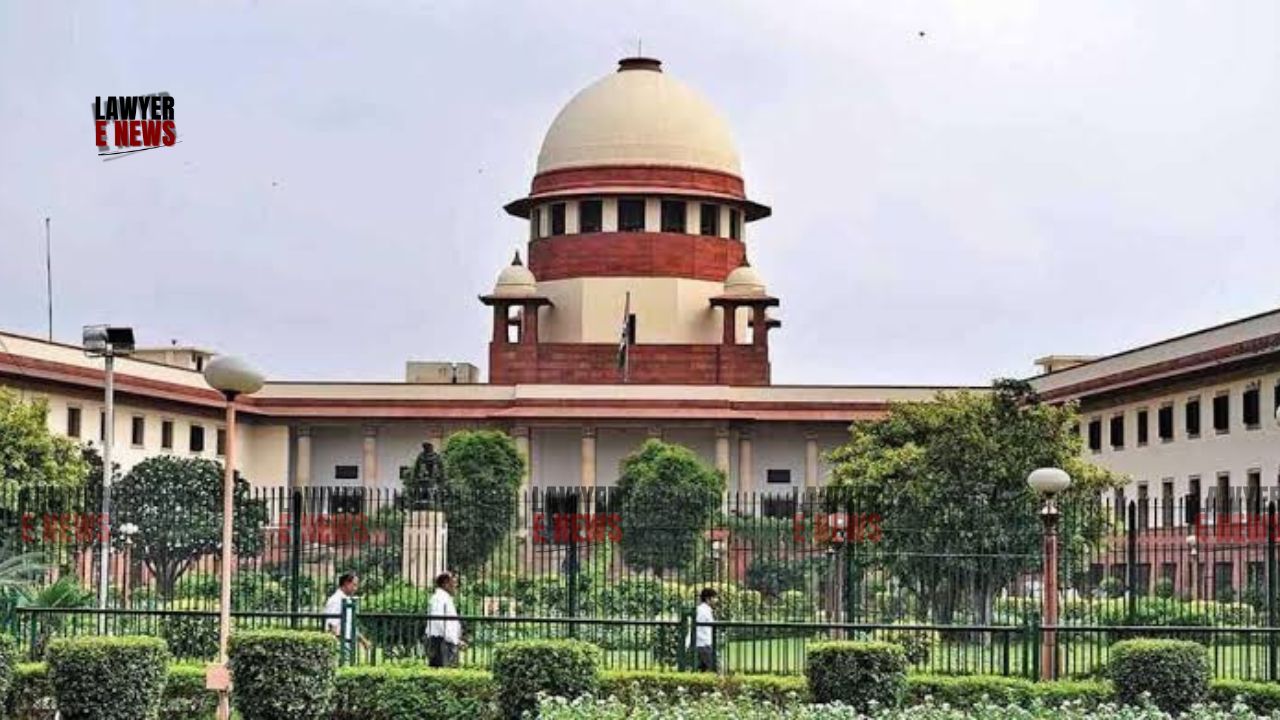
Courts Must Reject Fictitious and Champertous Claims at the Threshold — Judicial Process Cannot Be Misused Through Clever Drafting”: In a landmark decision Supreme Court struck down a civil suit based on a mere agreement to sell, holding that such agreements do not confer any enforceable legal right to sue against third parties, particularly when title is disputed and possession lies with a third party. The Court emphasized that Order VII Rule 11 of the Civil Procedure Code must be used to reject suits at the threshold where there is no cause of action or the claim is barred by law, especially in cases involving clever pleadings or speculative litigation.
“An agreement to sell creates no interest in property and does not confer a right to sue a third party. Litigation founded solely on such agreements, without title or possession, must be nipped in the bud.”
The appellant, RBANMS Educational Institution, a 148-year-old charitable trust, has been in continuous possession of a property since 1905, used for running educational and sports institutions in Bangalore. The respondents filed a civil suit in 2018 seeking a permanent injunction to restrain the appellant from alienating the property, based on an agreement to sell dated 10.04.2018, allegedly executed between private individuals (not the appellant) and the respondents.
The suit was filed even though the respondents were not in possession, and the vendors under the agreement were not made parties. The trial court and High Court had both refused to reject the plaint, prompting the present appeal.
“Agreement to Sell Confers No Legal Title, No Right to Sue Third Parties”
The Supreme Court held unequivocally that: “The agreement to sell does not confer any right on the proposed purchaser under the agreement… Until the sale deed is executed, the purchaser is not vested with any right, title or interest in the property.”
Referring to Section 54 of the Transfer of Property Act, the Court stated: “A contract for sale does not, of itself, create any interest in or charge on such property.”
The Court cited precedent including Rambhau Namdeo Gajre v. Narayan Bapuji Dhotra, Suraj Lamp & Industries v. State of Haryana, and Cosmos Co-operative Bank v. Central Bank of India, all of which affirmed that mere agreements to sell are not enforceable against non-parties and do not convey any ownership.
“When Title Is in Dispute, Injunction Without Declaration Is Not Maintainable”
The Court found the respondents’ suit defective in form and substance: “When title is under a cloud, it is necessary that a declaration be sought. A suit merely for injunction without declaration, especially by one without title or possession, is not maintainable.”
It referred to Jharkhand State Housing Board v. Didar Singh and Anathula Sudhakar v. P. Buchi Reddy, holding that: “The plaintiffs claim to have paid ₹75,00,000/- in cash, yet they have no title, no possession, and have not even impleaded the vendors — the suit is legally untenable.”
“Filing Multiple Suits Based on Dubious Agreements Is Abuse of Process”
The Court condemned the respondent's repeated pattern of filing suits based on various “agreements to sell” across Bangalore as indicative of: “Champertous litigation — speculative, inequitable and extortionate in character.”
It cautioned that courts must not be blind to patterns of misuse: “Speculative suits drain the resources of genuine public institutions… The judiciary must not be a platform for such legal blackmail.”
“Cash Transactions of ₹2 Lakh and Above Must Be Reported to Income Tax Authorities”
In an important direction with ramifications beyond the case at hand, the Supreme Court invoked Section 269ST of the Income Tax Act, which prohibits cash transactions above ₹2 lakh.
“When a suit is filed claiming ₹75 lakh paid by cash, not only does it raise serious suspicion but it also reflects blatant violation of statutory provisions intended to curb black money.”
The Court issued binding directions:
Courts must inform Income Tax authorities of such claims.
Sub-registrars and tax officials must take action when such cash payments surface.
Disciplinary action should be initiated against public officials who fail to report such transactions.
Allowing the appeal, the Court categorically held that: “This is a classic case where the plaintiffs have no legal right to sue. Their claim is barred by law, devoid of cause of action, and based on a mere agreement with third parties.”
The Supreme Court set aside the orders of the trial and High Courts and rejected the plaint under Order VII Rule 11(a) and (d) CPC, declaring: “Litigation of this nature must be nipped in the bud. Judicial time must not be wasted on fictitious suits.”
The Court refrained from imposing costs but warned the respondents: “Any future misuse of the judicial process may invite exemplary costs.”
Date of Decision: April 16, 2025