-
by sayum
29 August 2026 3:15 PM







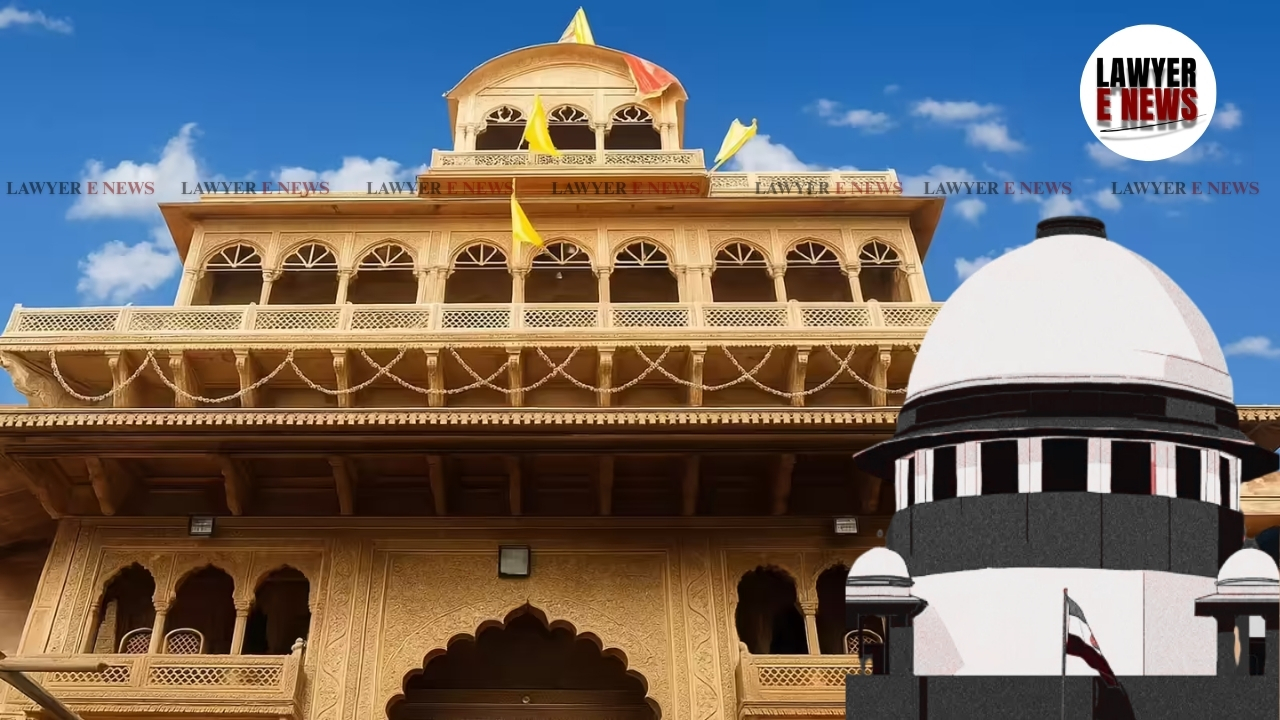
“Temple Funds Can’t Be Touched Without Stakeholder Consent”, Supreme Court of India, in a significant judgment, modified prior directions permitting the use of Thakur Shree Bankey Bihari Ji Maharaj Temple funds for land acquisition and stayed the operation of the Uttar Pradesh Shri Bankey Bihari Ji Temple Trust Ordinance, 2025, which proposed a state-controlled trust to manage the historic temple at Vrindavan, Mathura.
A bench comprising Justice Surya Kant and Justice Joymalya Bagchi found that earlier directions allowing usage of temple funds were passed “in collateral proceedings” without hearing the Shebait Goswamis, the traditional managers of the Temple. The Court held:
“To allow substantive directions on a matter of such significance to be issued in collateral proceedings, especially in absentia of the necessary stakeholders, may not be in conformity with procedural fairness and judicial best-practices.” [Para 17]
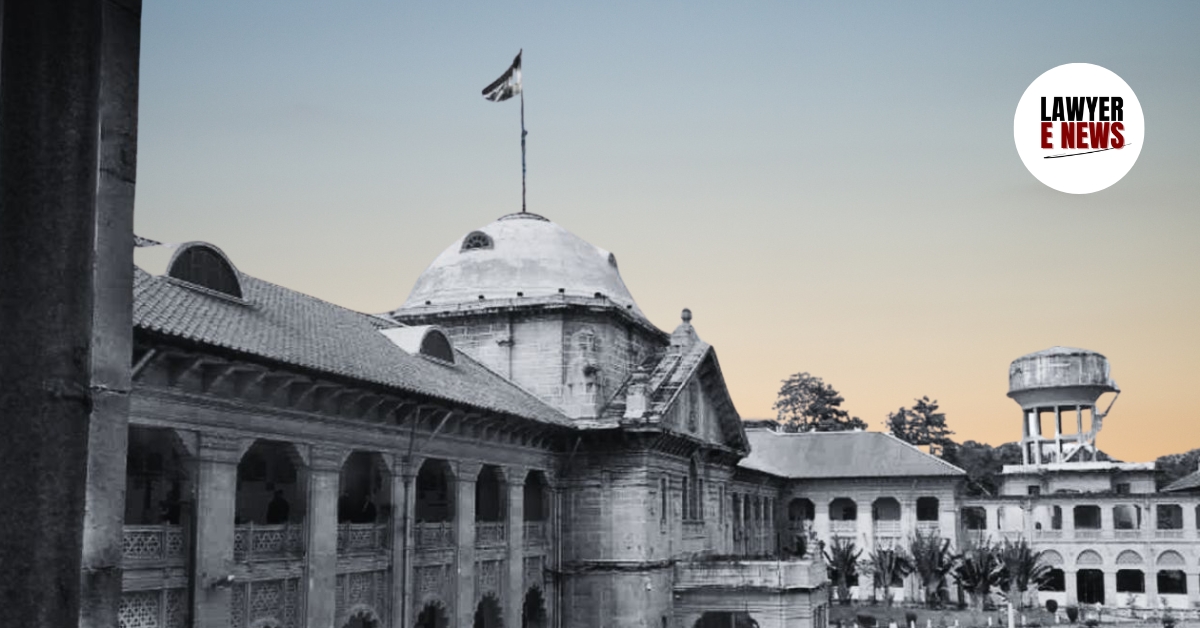
The Court restored the High Court’s earlier order of 08.11.2023, barred the use of temple funds for land acquisition, and constituted a High-Powered Committee to ensure uninterrupted temple functioning, public amenities, and redevelopment — all while leaving the constitutional challenge to the Ordinance open for adjudication before the Allahabad High Court.
The Thakur Shree Bankey Bihari Ji Maharaj Temple, built in 1864, holds immense religious, cultural, and historical significance. It has long been managed under a 1939 Scheme framed by a Munsif Court judgment, wherein Shebait Goswamis (from the Raj Bhog and Shayan Bhog branches) collectively oversaw temple administration.
Over the decades, internal disputes between Goswami factions led to prolonged litigation. To maintain functionality, the High Court in 2016 directed that all critical administrative decisions would be overseen by the Munsif/Civil Judge, Mathura, with day-to-day rituals handled by the Goswamis.
In 2022, a tragic stampede at the Temple claimed two lives, prompting a PIL (No. 1509/2022) before the High Court, seeking better crowd management and infrastructure development. The High Court allowed the State’s proposal to develop a temple corridor on five acres of land, but explicitly barred use of temple funds, directing that costs must be borne by the State. This order, dated 08.11.2023, was never appealed and thus attained finality.
Despite this, in May 2025, a Co-ordinate Bench of the Supreme Court, while hearing an unrelated matter (Ishwar Chanda Sharma v. Devendra Kumar Sharma) concerning Giriraj Temple at Govardhan, permitted the use of Bankey Bihari Temple funds for land acquisition — without impleading the Shebait Goswamis.
Simultaneously, the Uttar Pradesh Government promulgated the Shri Bankey Bihari Ji Temple Trust Ordinance, 2025, which authorized formation of a state-managed trust, effectively replacing the 1939 Scheme. These actions led to the present batch of writ petitions and modification applications before the Supreme Court.
Whether the Supreme Court Could Modify High Court’s Final Order Without Appeal
“This Court could not have, in exercise of its civil appellate jurisdiction, effectively set aside the High Court’s judgment without any formal appeal or challenge being placed before it.” [Para 18]
The Apex Court restored the High Court's judgment dated 08.11.2023, which had directed that temple redevelopment expenses be borne by the State, not the temple. It found that the order passed in Ishwar Chanda Sharma suffered from procedural infirmity:
“The Shebait Goswamis… were not heard prior to the passing of said order.” [Para 16]
On Use of Temple Funds for Land Acquisition
“We find that such directions suffer from a foundational procedural infirmity… and are not sustainable in law.” [Para 16–17]
The Court noted that directions allowing temple fund usage were passed without proper pleadings, in a case unrelated to the Bankey Bihari Temple, thus violating principles of natural justice.
On the Constitutional Validity of the 2025 Ordinance
The Court declined to entertain the challenge under Article 32, observing:
“We see no valid ground to entertain the challenge directly before us… the affected persons have an equally efficacious remedy under Article 226.” [Para 22]
Petitioners were relegated to the Allahabad High Court to challenge the Ordinance. The Court requested the Chief Justice of the High Court to list such petitions before a Division Bench and decide them expeditiously within one year.
Interim Stay on Trust Formation Under the Ordinance
To preserve the status quo, the Court stayed Sections 3 and 5 of the Ordinance, which deal with Trust creation and composition:
“The constitution of the Shree Bankey Bihari Ji Temple Trust… shall be kept in abeyance till the question of validity is finally resolved by the High Court.” [Para 29]
Formation of High-Powered Temple Management Committee
Given the ineffectiveness of existing ad-hoc arrangements and ongoing factional disputes among the Goswamis, the Court directed:
“A High-Powered Managing Committee headed by an impartial person… is required to be constituted to run the day-to-day affairs of the Temple.” [Para 33]
Key Directions and Committee Composition
The High-Powered Temple Management Committee shall supervise all daily functions, including infrastructure, crowd management, public amenities, and redevelopment:
Committee Members Include:
Justice (Retd.) Ashok Kumar – Chairperson
Retd. Judge Mukesh Mishra – Member
District & Sessions Judge, Mathura
Munsif/Civil Judge, Mathura
District Magistrate, Mathura – Member Secretary
SSP, Mathura
Municipal Commissioner, Mathura
Vice Chairman, Mathura Vrindavan Development Authority
A renowned Architect (to be appointed)
ASI Representative
2 Members each from both Goswami groups
Honorarium and Operational Details:
“Chairperson to be paid ₹2 lakhs/month; Member ₹1 lakh/month — from Temple funds. Office space to be provided by District Administration free of charge.” [Para 36]
Goswamis restricted to religious rituals — “no other sevayat shall interfere in management.”
Chairperson will have final authority on procedural and administrative matters.
Petitioners/intervenors may submit suggestions to the Committee.
This judgment reaffirms critical constitutional values: procedural fairness, religious autonomy, and judicial restraint. The Supreme Court, in a sensitive yet firm ruling, ensured that devotees’ interests and public safety are balanced with due respect to traditional religious management.
“The sanctity of safe religious pilgrimage shall never be unjustly denied to all the citizens of this country.” [Para 33]
By staying the Ordinance, invalidating directions passed without hearing, and instituting an accountable and secular interim authority, the Court has created a legally robust and ethically grounded interim arrangement, pending constitutional scrutiny by the High Court.
Date of Decision: 08 August 2025