-
by sayum
26 August 2026 10:38 AM







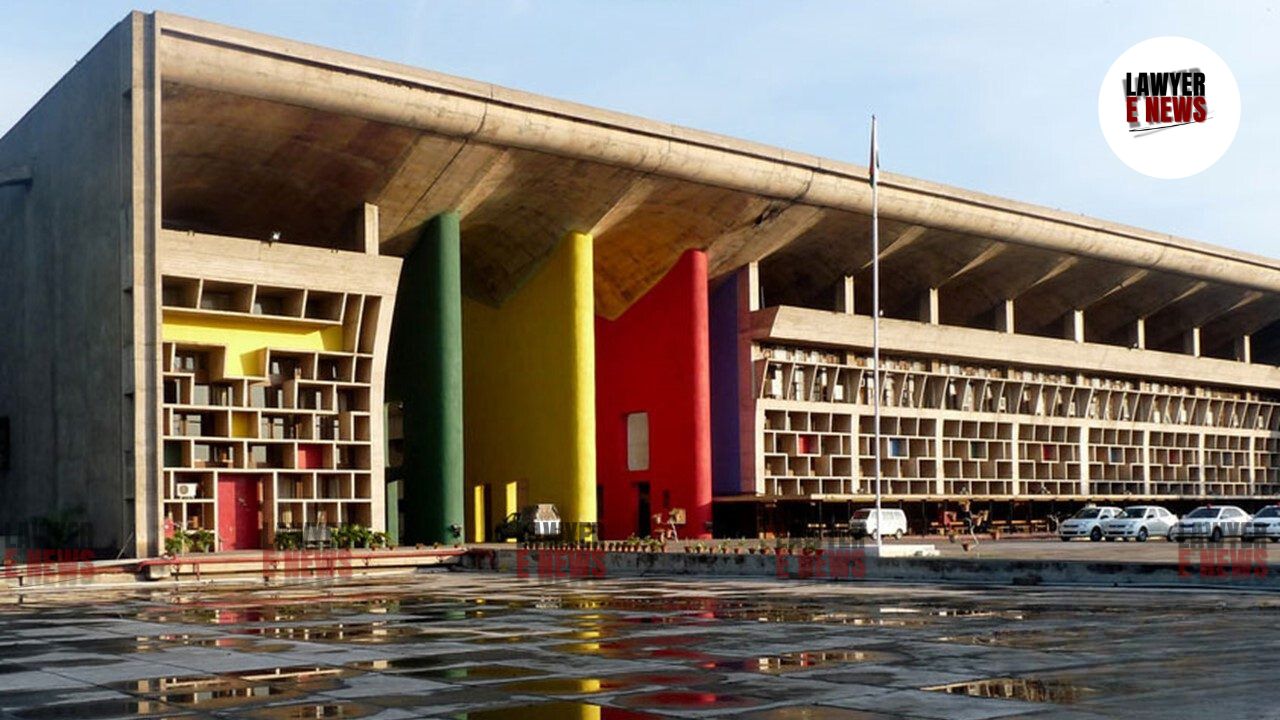
“Once the defendant himself admits that the gate of the plaintiff’s house opens onto the suit land, and fails to produce title documents — how can he claim exclusive ownership?” In a latest judgement , Punjab and Haryana High Court dismissed a second appeal filed under Section 100 of the Civil Procedure Code, reaffirming that no substantial question of law arose from the concurrent findings of the Trial and First Appellate Courts, both of which had granted a permanent injunction restraining the defendants from interfering with a common passage.
Justice Deepak Gupta, sitting in Civil Appellate Jurisdiction, underlined a critical fact that proved fatal to the defendants’ case: “From the admission of defendant No.2 during cross-examination, it is proved that the gate of the plaintiff’s house opens towards the suit property.”
This clear admission, along with the absence of any ownership documents on part of the defendants, proved decisive. The High Court emphasized that the lower courts’ conclusions were rooted in unimpeachable documentary and oral evidence and found no grounds for interference.
“No Substantial Question of Law Where Concurrent Findings Are Reasoned and Supported by Record” – High Court Reiterates Limits of Second Appeal
Opening the judgment with clarity, Justice Deepak Gupta noted:
“This Regular Second Appeal has been filed by the defendants against the concurrent findings of the Courts below, whereby the suit for permanent injunction filed by the plaintiff – Mohar Khan was decreed... and the appeal preferred by the defendant was dismissed.”
At the heart of the dispute was a narrow street abutting the plaintiff’s house in Village Khedla, District Nuh. The plaintiff claimed that the street had always been a common passage used by both parties for access, as well as for draining wastewater and maintaining pipelines. Alleging that the defendants had begun placing building materials and had constructed a water tank on the passage, the plaintiff sought an injunction.
The defendants denied the claim, arguing that the land in question was personal property of defendant No.1, Habib Khan, who had allegedly sold it to the wife of the appellant, Yunush. They further contended that the house of the plaintiff did not even face the disputed land.
However, both the Trial Court (by judgment dated 10.01.2020) and the First Appellate Court (by judgment dated 03.07.2024) rejected this version, holding that the disputed land had long functioned as a shared access path, with consistent usage, absence of ownership evidence from the defendants, and clear indications from site plans and witness testimony.
“Site plans and defendant’s own words establish that land was never private in character”
The High Court gave substantial weight to a series of findings from the First Appellate Court, particularly its reliance on earlier litigation and verified site plans.
Justice Deepak Gupta highlighted the First Appellate Court’s reasoning:
“The plaintiff relied upon site plans Ex.P1, Ex.P9 and Ex.P10—all depicting a common passage between the houses of Hazi Atru and Habib Khan. PW-4 Hasim Ali deposed that he had seen the disputed passage being used since childhood. Conversely, the defendants produced no document showing ownership of the passage.”
The Court underscored the unreliability of the defendant’s site plan (Ex.D1), stating that it was marred by selective omissions. The draftsman, DW-1 Hasin Ahmad, admitted in cross-examination that he had not called the plaintiff for inspection, nor shown the iron gate on the plaintiff’s side that directly faced the passage. This omission rendered the plan suspect.
The Court reiterated:
“Accordingly, it was held that the land in dispute is not the personal property of the defendants and must be presumed to be a common passage, over which the defendants have no right to encroach.”
“No Perversity, No Misreading — Only Well-Reasoned Findings”
In its final analysis, the High Court found the findings of both lower courts to be well-reasoned, consistent with evidence, and devoid of any legal error.
Justice Deepak Gupta observed:
“The findings recorded by both the Courts below are based upon proper appreciation of oral and documentary evidence. The concurrent conclusion that the disputed land constitutes a common passage is supported by consistent documentary proof, admissions of the defendants, and credible witness testimony.”
Dismissing the second appeal, the Court added:
“Learned counsel for the appellant has failed to point out any illegality, perversity, or misreading of evidence in the concurrent findings. No question of law, much less a substantial one, arises for consideration.”
The judgment reaffirms a settled legal principle under Section 100 CPC — that second appeals do not lie against well-reasoned concurrent findings of fact unless a substantial question of law can be established.
In this case, where the admissions by the defendant, the consistent site plans, and the absence of ownership evidence clearly established the land’s status as a common passage, the High Court declined to reopen settled factual conclusions.
Justice Deepak Gupta’s ruling is a reminder that civil litigation must rest on evidence, not assertions, and that common pathways serving communities cannot be unilaterally appropriated under the cloak of vague title claims.
Date of Decision: 29 October 2025