-
by sayum
28 August 2026 12:24 PM







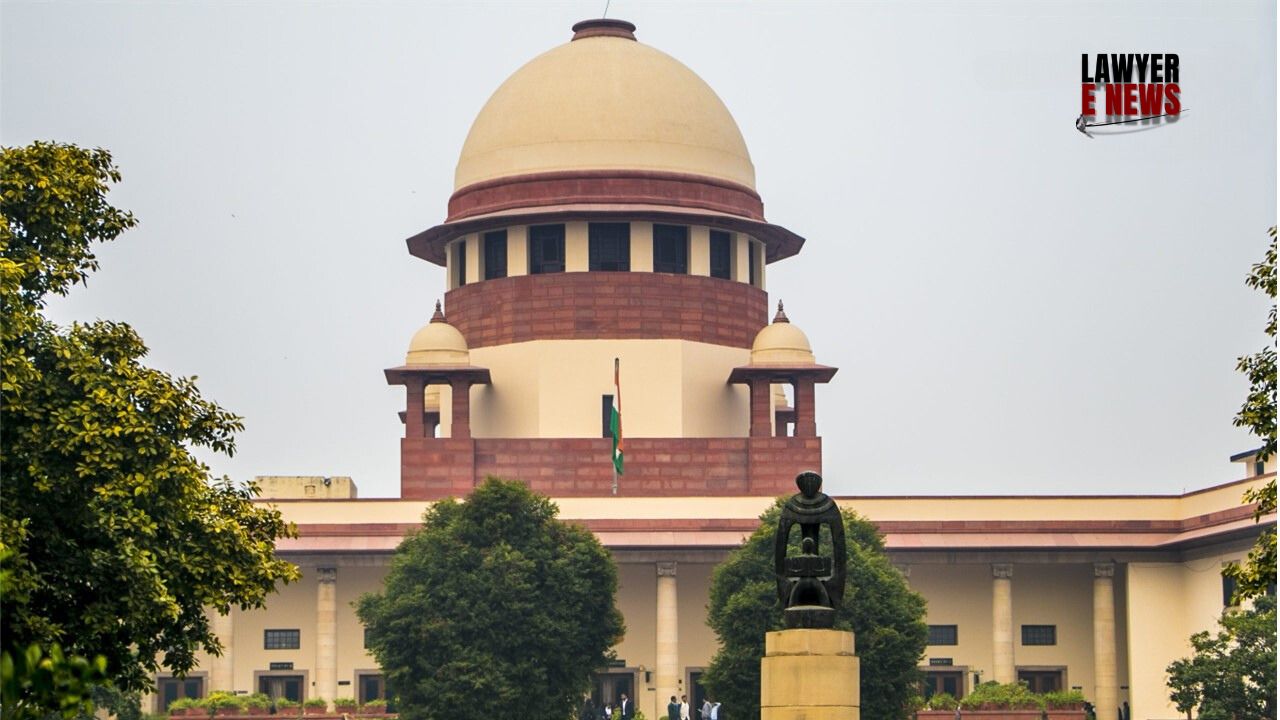
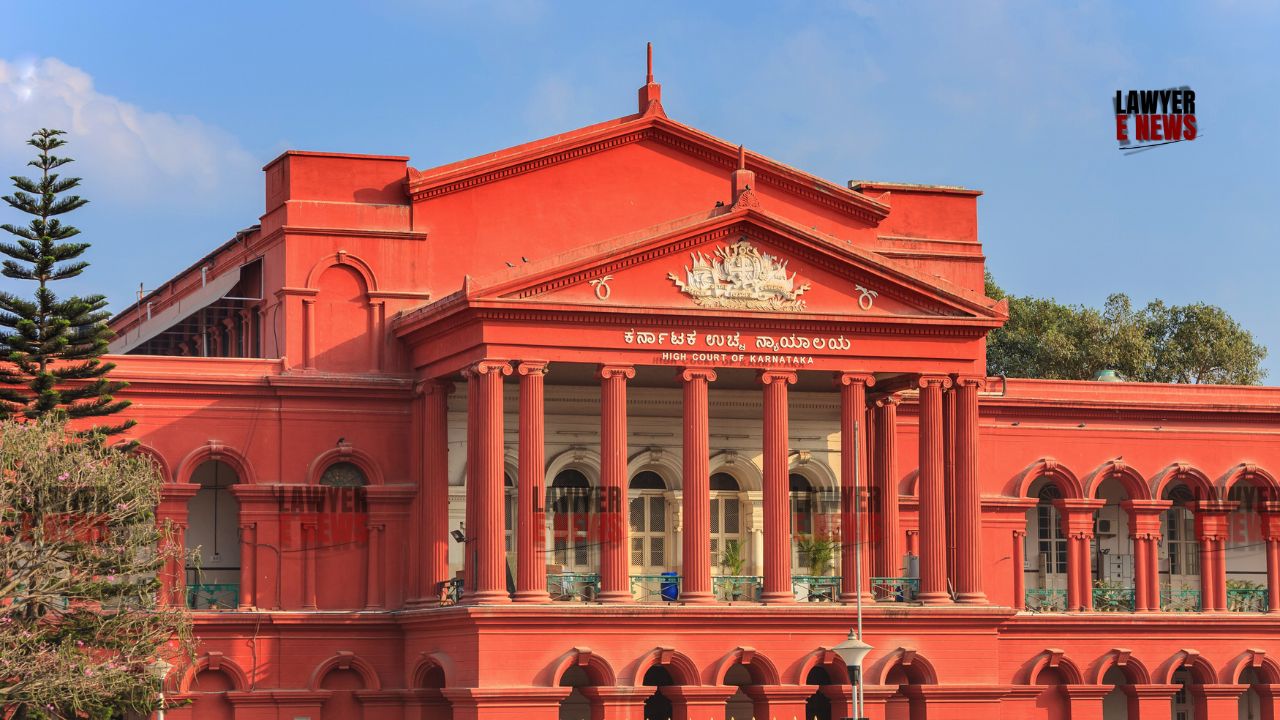
“Government Is No Different From A Private Litigant When It Comes To Limitation” - On 12th September 2025, the Supreme Court of India, where it categorically struck down the Karnataka High Court’s order that had condoned an extraordinary delay of 3966 days—almost 11 years—in filing a second appeal. A Bench of Justice J.B. Pardiwala and Justice R. Mahadevan held that “administrative lethargy and laxity can never stand as a sufficient ground for condonation of delay” and made it clear that the State or its instrumentalities cannot expect preferential indulgence merely because of their bureaucratic structure.
The Court delivered a strong message to all High Courts, warning that they must not become “surrogates for State laxity and lethargy” and must remain alive to the plight of private litigants who cannot be left perpetually entangled in litigation due to governmental indifference.
From Sympathy To Strictness: The Journey Of Section 5
The Court opened its analysis by revisiting the landscape of Section 5 of the Limitation Act. For decades, rulings like Chandra Mani v. Union of India and Lipok Ao v. State of Nagaland extended a certain leniency to government litigants on the reasoning that the State, being an impersonal machinery bound by bureaucratic procedure, could not be equated with private parties. It was then urged that public interest might suffer if State appeals were thrown out for delay.
However, the Bench reminded that even in those earlier judgments, a caution was sounded that such sympathy “cannot continue for all times to come.” The exhortations to create legal cells and hold officers personally responsible for delay were largely ignored by the State.
This consistent neglect gave rise to a new judicial stance in Postmaster General v. Living Media India Ltd. (2012), which became the watershed moment. In words that were recalled with approval in the present case, the Court had held: “The law of limitation undoubtedly binds everybody, including the Government. The usual explanation of bureaucratic inefficiency can no longer be accepted.”
“Condonation Is The Exception, Not The Rule”
The Supreme Court painstakingly traced the jurisprudence after Postmaster General. In Amalendu Kumar Bera v. State of West Bengal, it was made clear that while a liberal approach may be warranted in some cases, negligence and laches on the part of the State could not be excused. Similarly, in State of M.P. v. Bherulal, the Court expressed anguish at the “routine manner” in which government authorities seek condonation by pleading inefficiency. The Bench had then warned that the Court will not become a certificate-issuing body for dismissals.
In University of Delhi v. Union of India and Borse Brothers Engineers v. State of Maharashtra, the Court held unequivocally that “consideration for condonation of delay does not and cannot vary depending on whether the party is the Government, a public body, or a private litigant.”
The present judgment synthesised all these rulings into a clear principle: “Condonation of delay is to remain an exception, not the rule. Governmental litigants, no less than private parties, must demonstrate bona fide, sufficient, and cogent cause for delay.”
Explanation v. Excuse: The Court Draws A Fine Line
One of the most striking aspects of this judgment is its distinction between an “explanation” and an “excuse.” The Court observed that an explanation shows diligence and absence of mala fides, while an excuse is merely a defensive denial of responsibility. It warned that courts must be circumspect in accepting explanations rooted in bureaucratic processes.
“Wherever delay is sought to be condoned on the ground of bureaucratic lethargy, courts ought to loathe in accepting such explanations as sufficient cause. Only in exceptional circumstances, where the explanation reflects genuine effort and reasonable diligence, can delay be condoned.”
The Present Case: “A Mockery Of Justice”
Applying these principles, the Supreme Court came down heavily on the Karnataka High Court. The housing corporation, though advised in May 2006 to file an appeal, remained inactive for years, blaming its Executive Engineer for negligence. Even disciplinary action against the errant officer was initiated only in March 2017—conveniently after filing the condonation application.
The High Court had accepted this narrative and condoned the delay, going further to examine the merits of the case. The Supreme Court denounced this approach as “merit-hunting,” holding that merits are irrelevant at the stage of condonation.
“It hardly matters whether a litigant is a private party or a State when it comes to condoning the gross delay of more than 11 years. To condone such a delay is to make a mockery of justice and to once again ask the appellant to undergo the rigmarole of legal proceedings, despite holding a decree since 1989.”
The Court further declared that allowing such condonation would amount to institutionalising inefficiency, betraying public interest, and denying finality to litigation.
“Public Interest Lies In Efficiency, Not Indulgence”
The Bench firmly rejected the notion that condoning delays by the State always serves public interest. Instead, it held that “public interest lies not in condoning governmental indifference, but in compelling efficiency, responsibility, and timely decision-making.”
The Court reiterated that limitation laws are grounded in public policy and the maxim interest reipublicae ut sit finis litium—it is for the general welfare that there be an end to litigation. Quoting Basawaraj v. Special Land Acquisition Officer, the Bench reminded: “The law is hard, but it is the law—dura lex sed lex.”
A Warning To High Courts
Setting aside the High Court’s order, the Supreme Court directed immediate execution of the decree within two months. It imposed additional costs of ₹25,000 on the respondent housing corporation, payable to the Karnataka State Legal Services Authority, apart from costs earlier imposed.
In a concluding admonition, the Bench declared: “High Courts ought not give a legitimising effect to the callous attitude of State authorities. They should remain extra cautious if the party seeking condonation is a State authority. Litigants cannot be left in perpetual litigation wherein the fruits of their decrees are frustrated at later stages.”
Date of Decision: 12 September 2025