-
by sayum
23 August 2026 2:56 PM







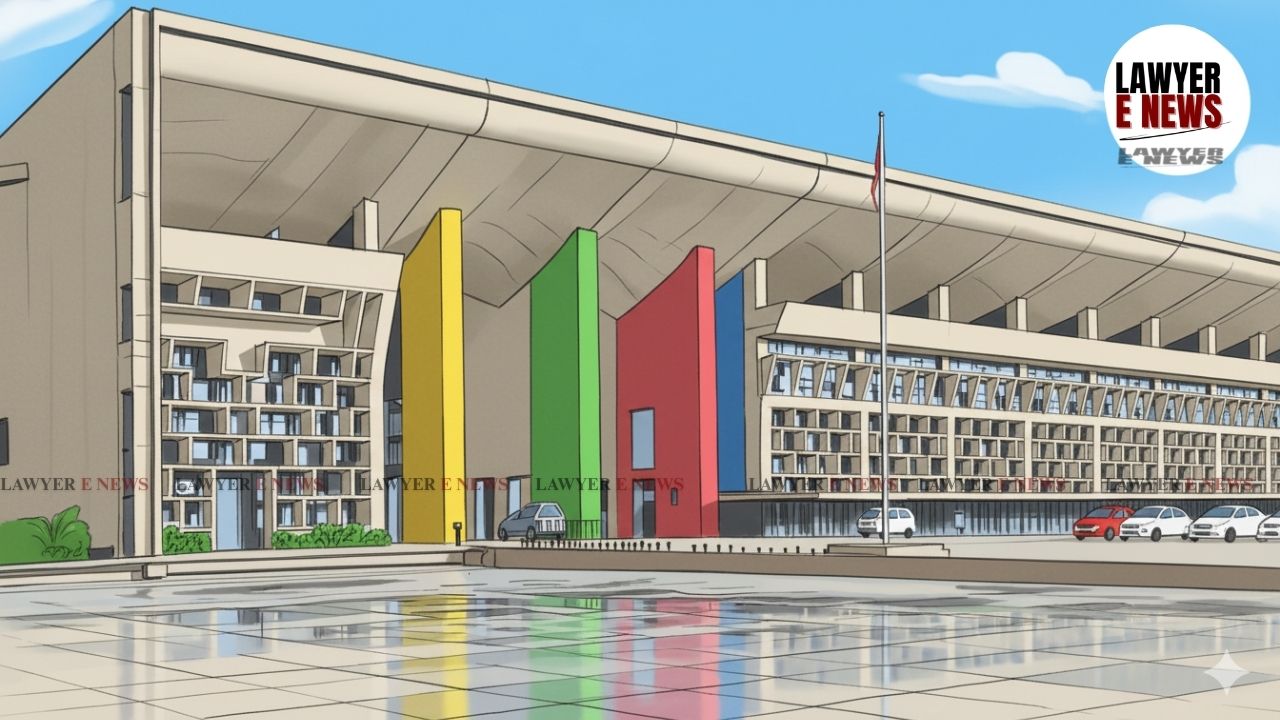
"Standard of Proof in Motor Accident Claims Is Preponderance of Probabilities, Not Beyond Reasonable Doubt" – In a crucial pronouncement reinforcing core principles of accident jurisprudence, the Punjab and Haryana High Court overturned a Motor Accident Claims Tribunal’s refusal to award compensation to bereaved parents who had lost their 11-year-old son in a tragic road accident. In the matter titled Yog Raj and Another v. Chuhar Singh @ Makhan and Others, the High Court held that the Tribunal had grossly misappreciated evidence, applied incorrect legal standards, and wrongly relied upon the driver’s criminal acquittal to infer absence of negligence.
The Court allowed the first appeal against order filed under Section 166 of the Motor Vehicles Act, setting aside the Tribunal’s 2008 award and directing respondent no. 4 – the insurer – to pay compensation amounting to ₹7,94,492 along with 9% interest per annum from the date of the claim petition until realization.
The Court declared, “The findings recorded by the learned Tribunal are contrary to the evidence on record, based on misappreciation of material testimony, and are unsustainable in the eyes of law.”
The matter arose from an accident that occurred on 22nd October 2004 at around 7 PM, when minor Balwinder Kumar, aged 11, was run over by a Mahindra Jeep bearing registration PB-32-D-3805. He died on the spot. His mother, Saroj Rani, who was accompanying him, deposed that the vehicle was being driven in a rash and negligent manner by respondent no.1 Chuhar Singh. The Tribunal, however, disbelieved the account of the claimants on the ground that the FIR was delayed and that the driver had been acquitted in the connected criminal case under Section 304-A of the Indian Penal Code.
However, the High Court found that the Tribunal had proceeded on wholly flawed reasoning and overlooked the fact that the FIR was registered only after the intervention of the Punjab State Human Rights Commission. The Court observed that the delay in lodging the FIR was satisfactorily explained and could not have been treated as fatal, especially considering the socio-economic status of the claimants and the initial refusal of police authorities to register the case.
The Court categorically noted that “PW-2 Saroj Rani, mother of the deceased and an eye-witness to the occurrence, gave a cogent and consistent account of the accident… her testimony remained unimpeached in cross-examination… There is nothing on record to discredit her testimony or to suggest that her presence at the spot was doubtful.”
It further emphasized that the supporting testimony of PW-3 Varinder Kumar, another eye-witness, corroborated all material aspects regarding the manner in which the accident took place. The Tribunal’s rejection of these testimonies on vague and speculative grounds was held to be wholly unjustified.
Rejecting the Tribunal’s heavy reliance on the criminal acquittal of the driver, the High Court reaffirmed that proceedings under the Motor Vehicles Act are of a civil nature and the standard of proof is based on preponderance of probabilities and not proof beyond reasonable doubt. The Court held that “It is a settled proposition of law that the judgment of a criminal court is not binding on proceedings before the Motor Accident Claims Tribunal, particularly on the issue of negligence, which is to be determined independently.”
The Court came down heavily on the Tribunal’s speculative finding that the claimants and the driver were in collusion, stating that such an inference could not have been drawn in the absence of any pleadings or proof by the insurer. Referring to the recent Supreme Court decision in Geeta Dubey v. United India Insurance Co. Ltd., 2024 INSC 998, the High Court reiterated that “collusion between the claimants and the owner/driver must be specifically pleaded and proved by the insurance company. Mere suspicion cannot be elevated to a finding of fact.”
Further, the High Court pointed out that the driver Chuhar Singh had taken contradictory stands in his written statement and in his deposition. While denying the accident in his pleadings, he later admitted during testimony that the accident did take place and that he was present at the spot. The Court observed that such inconsistent and unreliable testimony could not form the basis for denying a just claim by the parents of a deceased minor.
The Court underscored the established position that technicalities should not be allowed to defeat substantive justice in motor accident matters. Citing the decision in Anita Sharma v. New India Assurance Co. Ltd., AIR 2021 SC 302, the Court reiterated that “minor contradictions or delay in lodging FIR cannot defeat a just claim.” The Court added that proceedings before the MACT are summary in nature and governed by principles of equity and substantial justice.
On the aspect of computation of compensation, the High Court emphasized that the deceased child could not be treated as a non-earner. It relied on authoritative precedents including Kajal v. Jagdish Chand (2020) 4 SCC 413 and Baby Sakshi Greola v. Manzoor Ahmad Simon, 2024 SCC OnLine SC 3692, to hold that minimum wages applicable to a skilled worker should form the basis for computing the minor’s notional income.
Applying this benchmark, the Court assessed the monthly income of the deceased at ₹4,375, added future prospects at the rate of 40%, deducted 50% towards personal expenses, and applied a multiplier of 18 in terms of Sarla Verma v. DTC (2009) 6 SCC 121. The Court further awarded filial consortium to both parents at ₹48,400 each, along with ₹18,150 each under the heads of loss of estate and funeral expenses, factoring in the 10% escalation laid down in Pranay Sethi (2017) 16 SCC 680.
The total compensation awarded was ₹7,94,492, with interest at the rate of 9% per annum from the date of filing of the claim petition till realization. The Court directed the Insurance Company to deposit the amount within two months, with instructions to the Tribunal for expeditious disbursal to the parents.
In conclusion, the High Court restored justice for the grieving family by correcting the serious legal and factual errors committed by the Tribunal, reaffirming that procedural delays, especially those caused by institutional failures, cannot deprive victims or their families of rightful compensation. The decision marks a strong statement on the legal duty of courts to ensure that the Motor Vehicles Act is interpreted and applied as a piece of beneficial legislation, with sensitivity and realism rather than technical rigidity.
Date of Decision: 23 December 2025