-
by sayum
23 August 2026 2:56 PM







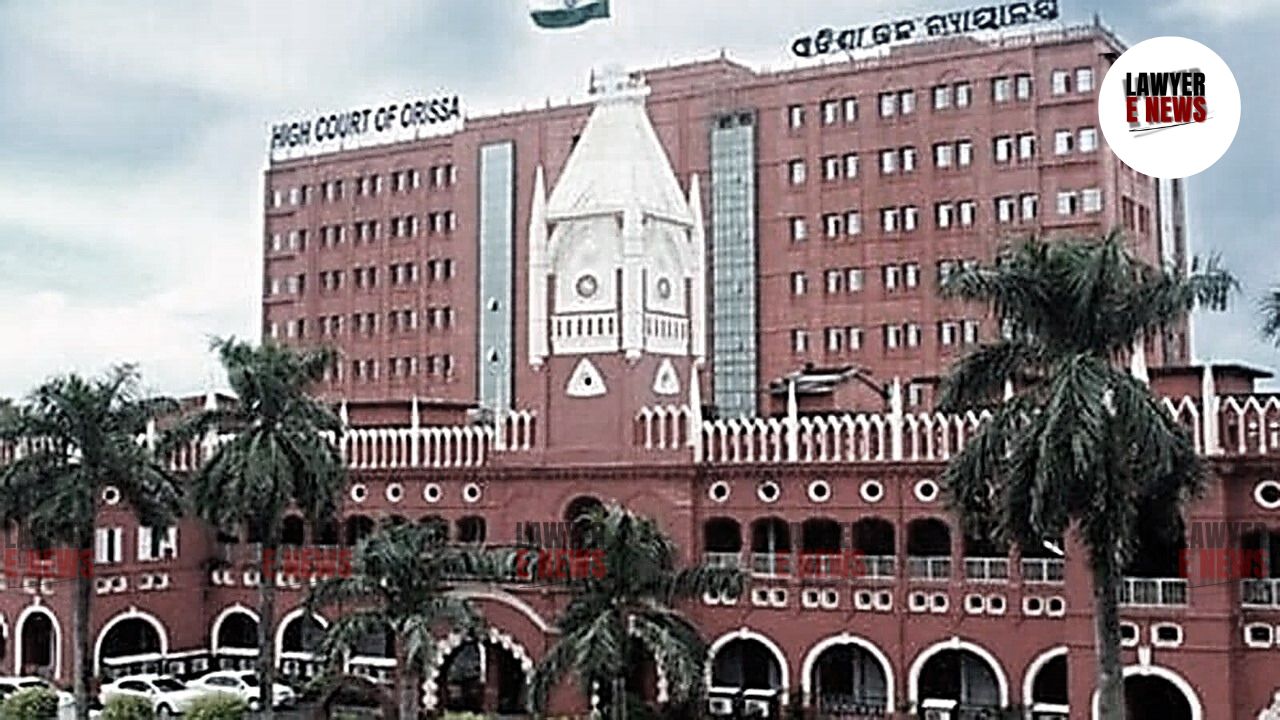
“Mere Registration is Not a Badge of Validity – Suspicious Circumstances Can Drown Even the Most Formal Will”, In a decision carrying significant ramifications for succession jurisprudence, the Orissa High Court in Gokulananda Joshi (since deceased) & Others v. Prakash Chandra Joshi & Others (R.S.A. No. 286 of 2003) held that a Will which disinherits natural heirs without offering any explanation, and whose execution is surrounded by doubts, cannot be sustained in law. The second appeal filed by the legatees under the disputed Will was dismissed, with the Court upholding the concurrent findings of both the Trial and Appellate Courts that the Will dated 28.01.1993 was not validly proved and was tainted with suspicious circumstances.
“This Court finds no legal error in the conclusion that the Will, though registered, is neither free from doubt nor executed in a manner that inspires confidence in its genuineness,” remarked Justice Ananda Chandra Behera, affirming the decree granting partition rights to the disinherited heirs.
“Disinheritance Without Reason Weakens the Testament – Silence of the Testator During His Lifetime Speaks Louder Than a Registered Document”: Court Strikes Down Bequest
The case emerged from a long-standing family partition suit involving the estate of Satya Narayan Joshi, who died leaving behind two sons and two daughters. During the pendency of the partition suit filed by the children of his predeceased son Girija Shankar Joshi, Satya Narayan allegedly executed a Will, bequeathing all his properties solely to his second son Gokulananda Joshi and his immediate family, entirely excluding his daughters and grandchildren from Girija’s lineage.
Though the appellants—beneficiaries under the Will—argued that the properties were the self-acquired assets of Satya Narayan and had been validly bequeathed, the Court was unconvinced by the manner in which the Will was presented and attempted to be proved.
“The testator was 89 years of age, had full opportunity to disclose the existence of this Will while alive, and yet remained silent before the court,” noted Justice Behera. “The absence of any pleading or assertion by him during his lifetime lends serious doubt to the authenticity of the Will.”
The plaintiffs—heirs of the predeceased son—argued that the Will was a fabrication, executed during litigation to defeat their legitimate rights. They highlighted that no justification for disinheriting the daughters and their branch was ever offered, and the attesting witnesses failed to inspire judicial confidence.
“Attestation is Not a Ritual – It Is the Cornerstone of Credibility in a Will”: High Court Applies Strict Evidentiary Test
The Court scrutinised the compliance with Section 63 of the Indian Succession Act and Sections 68 and 69 of the Indian Evidence Act, observing that the appellants’ evidence was not just insufficient but contradictory.
The scribe of the Will (DW-1) testified that the document was prepared at the instruction of Satya Narayan Joshi, but failed to identify the attesting witnesses or confirm the formalities of attestation. The attesting witness (DW-2) deposed vaguely and contradicted the scribe’s version, stating that only he and the testator were present during registration, and curiously claimed the Will was in favour of a single individual—Gokulananda Joshi—when in fact it had four beneficiaries.
“The depositions of DW-1 and DW-2 are riddled with contradictions,” observed the Court. “When the testator himself was an experienced deed writer, his refusal or inability to write the Will himself, without explanation, is inexplicable and adds to the suspicion.”
Further, the Court held that “registration of the Will is not a cure for evidentiary infirmity,” citing Ramesh Chand v. Suresh Chand, 2025 (3) SCC 219, and Moturu Nailini Kanth v. Gainedi Kaliprasad, 2024 (1) Civil Court Cases 714 (SC), both of which reiterated that a Will must be proved not only formally but also by removing every legitimate suspicion.
“Judicial Conscience Must Be Satisfied That the Will Is Genuine – Not Just That It Exists”
The High Court strongly affirmed that the concurrent findings of the lower courts were based on well-established legal standards. Both the Trial Court and the First Appellate Court had concluded that the Will was shrouded in suspicion, not least because it had been executed during litigation, excluded close heirs without cause, and was supported by witnesses whose testimony lacked harmony.
“It is well-settled that a Will which disinherits close family members must explain why,” the Court observed, citing Lalitaben Jayanti Popat v. Pragnaben Jamnadas Katoria, 2009 (1) OLR 170 (SC), and Janaki Narayan Bhoir v. Narayan Nam Deo Kadam, AIR 2003 SC 761.
Justice Behera observed, “The execution of the Will is not beyond suspicion. It was executed mid-litigation, never defended by the testator himself, and the evidence of attestation is incomplete and unconvincing.”
The Court ultimately found no merit in any of the four substantial questions of law formulated at admission. Whether a testator was pleased with the care of one child, whether the exclusion of others was explained, or whether one witness sufficed to prove attestation—all were rendered moot by the factual finding that the Will itself had not been proved to be genuine.
“A Testament Written Amidst Silence and Secrecy Cannot Trump the Inheritance Rights of Natural Heirs”
Concluding the judgment, the Court dismissed the appeal with these words: “There is no merit in this 2nd Appeal filed by the appellants (defendant Nos.2 to 4 and 7). The same must fail.”
As a result, the First Appellate Court’s modified decree stood confirmed, granting the plaintiffs a ¼th share in the suit properties and rejecting the exclusive claim of the appellants under the alleged Will.
This judgment reinforces a fundamental tenet of Indian succession law—that testamentary freedom does not operate in a vacuum. The more a Will departs from natural succession, the greater the burden on the propounder to prove its legitimacy.
Date of Decision: 23rd December 2025