-
by sayum
05 August 2026 9:31 AM







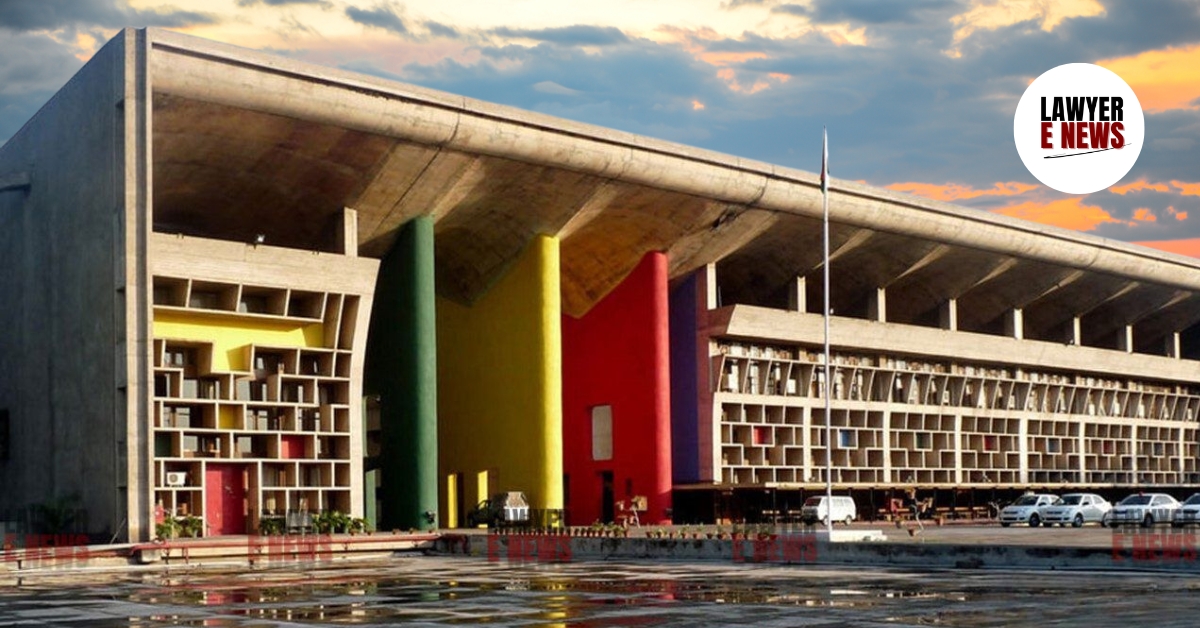
“The Duty of the Court Is to Do Substantial Justice—Not to Allow Parties to Take Undue Advantage of Technical Mistakes”, Punjab and Haryana High Court delivered a significant ruling in which uphold that the trial court’s decision to correct a clerical error in the property schedule of a preliminary partition decree passed in 1985.
Justice Vikram Aggarwal held that correcting “Plot No. 51” to “Plot No. 57” in Schedule A of the preliminary decree under Sections 152 and 153 CPC was not only legally sound but also necessary to reflect the true intent of the parties and the subject matter.
“The Court has a duty to do substantial justice and cannot permit parties to take undue advantage or benefit of a typographical or technical error in the proceedings,” the Court observed.
The judgment sets a notable precedent in procedural jurisprudence, emphasizing that clerical errors must not be weaponized to derail longstanding, finalized litigation.
The dispute arises from a partition suit filed in 1982 by Vidya Parkash Jain seeking division of Joint Hindu Family properties, including those listed in Schedule A (immovable). Among them, Serial No. 16 mistakenly referred to the property as “Plot No. 51, Veer Colony, Delhi” instead of the correct address, “Plot No. 57, Veer Nagar, Jain Colony, Delhi.”
The preliminary decree was passed on 29.03.1985, upheld on appeal in RSA No. 786 of 2010, and later affirmed by the Supreme Court in 2016, thus attaining finality.
When the application for a final decree was filed and a Local Commissioner was appointed in 2024 to inspect Plot No. 57, the petitioners—current occupants and owners of various floors in Plot No. 57—claimed that they had no knowledge of the litigation. They contested the correction of the decree, asserting that their property had never formed part of the original partition suit.
Their primary objection: the decree mentioned Plot No. 51, not Plot No. 57, and the correction would affect their vested rights as bona fide purchasers.
Clerical or Substantive? Correction Allowed under Sections 152/153 CPC
The petitioners argued that correcting the property number required an amendment to the plaint, not merely a clerical correction under Section 152 CPC.
The Court emphatically disagreed: “From a perusal of the plaint, written statements, and judgments... it emerges that a typographical error crept in while drafting Schedule A. Instead of Plot No. 57, it was incorrectly mentioned as Plot No. 51.”
It observed that Defendant No. 10, Surender Kumar, the predecessor of the petitioners, had clearly identified the correct property (Plot No. 57) in his written statement at the time of the original trial, thus confirming the parties' mutual understanding.
Quoting settled precedent, the Court held: “If the mistake is so palpable that nobody can possibly have any doubt as to what the parties meant or what the Court meant when it passed its judgment, the Court has power to correct it under Section 152 CPC.”
Relying on Pratibha Singh v. Shanti Devi Prasad [(2003) 2 SCC 330], the Court reiterated that errors in identification of property which do not change the nature or subject matter of the decree can be corrected even after many years.
Title of Bona Fide Purchasers Not Decided – Issue Left Open
The petitioners—owners of different floors of Plot No. 57—argued that they were bona fide purchasers without notice of the partition suit and thus protected from its consequences.
The Court refused to adjudicate on their title at this stage: “This Court is not commenting upon the issue of lis pendens or the validity of the claim of the petitioners. That issue is left open to be agitated before the appropriate forum under Order 22 Rule 10 CPC.”
The Court made it clear that the scope of the present revision was confined solely to whether the correction of the decree was legal, and not about determining ownership or invalidating any conveyance.
Justice Over Technicalities – Courts Must Not Reward Delay
The petitioners had only raised objections in 2024, nearly 40 years after the suit, and 8 years after the Supreme Court had affirmed the decree. The Court noted:
“Partition proceedings commenced in 1982 and became final in 2016. They cannot be allowed to run into rough weather again on technical issues raised at this stage.”
The petitioners’ argument that “they discovered the inclusion only during the Local Commissioner’s visit” was rejected as implausible, given the longstanding and public nature of the proceedings.
Justice Vikram Aggarwal delivered a reasoned verdict based on a thorough evaluation of precedent and procedural fairness:
The error in describing the property number was clerical and not substantive.
The identity of the property had never been in doubt during the original suit, and even the party now contesting it (through legal successors) had acknowledged it as Plot No. 57.
Technical objections, such as challenging multiple orders in one petition or seeking procedural safeguards at this stage, were brushed aside in the interest of justice.
The Court underscored that clerical corrections can be made even if the error originated in pleadings, provided there is clarity of intention and no prejudice to parties’ substantive rights.
Quoting from Mohinder Singh v. Teja Singh, AIR 1979 P&H 47, the Court reminded: “A decree of a competent court should not, as far as practicable, be allowed to be defeated on account of an accidental slip or omission.”
The High Court dismissed both revision petitions, affirming the trial court’s authority to correct clerical errors in a decades-old decree. The petitioners’ concerns about title, lis pendens, and procedural fairness were held to be premature and misplaced, with a clear remedy available under Order 22 Rule 10 CPC.
This judgment reiterates that courts are guardians of substantive justice, not technical traps. As long as the intent of a decree is clear, no error in digits or addresses should obstruct its execution.
“The power under Sections 152 and 153 CPC exists to ensure that justice is not lost in the noise of typographical mistakes. To hold otherwise would be to sacrifice the substance of justice on the altar of form.”
Date of Decision: 4 July 2025