-
by sayum
29 August 2026 3:15 PM







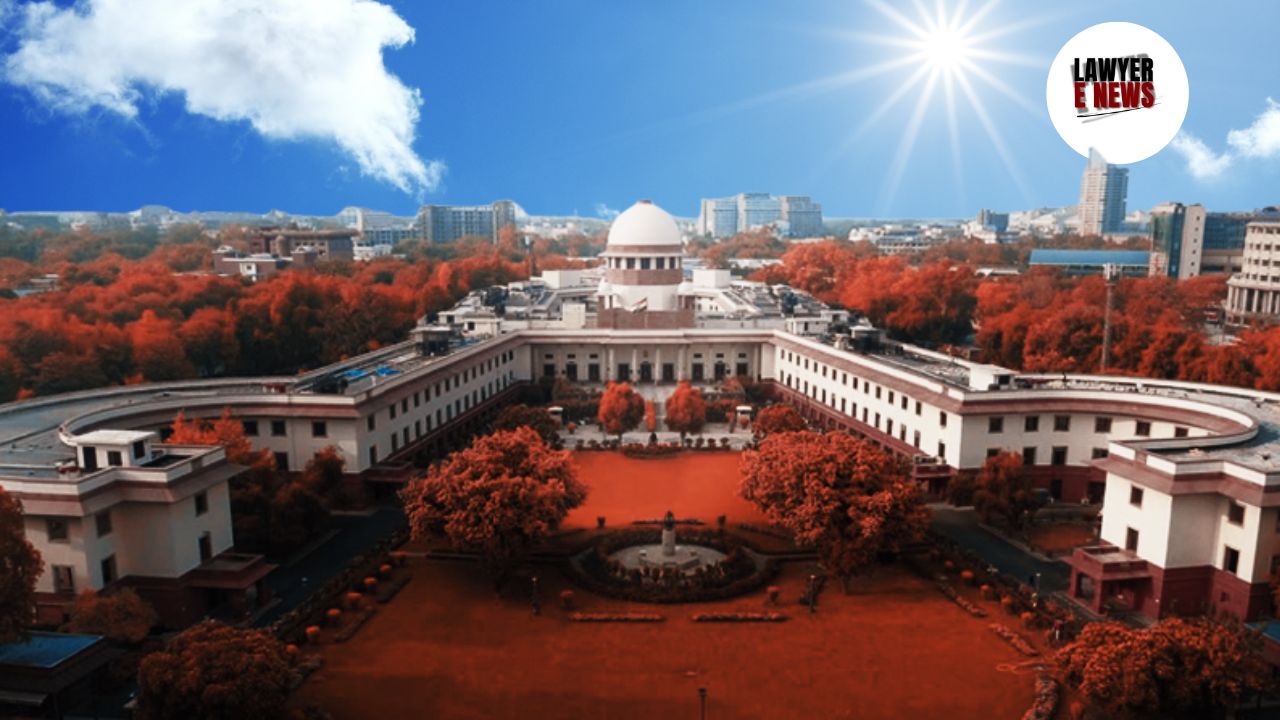
In a landmark ruling that reinforces judicial oversight over charitable institutions, the Supreme Court of India has held that registered societies holding property for public benefit may be brought within the ambit of Section 92 of the Code of Civil Procedure, even if they are not technically express trusts.
Dismissing an appeal filed by the International Goodwill Society of India, the apex court affirmed the Delhi High Court’s decision to grant leave to file a representative suit under Section 92 CPC, holding that the dominant purpose of the suit—protection of public interest—was sufficient to override the presence of some personal grievances.
“Section 92 is a Shield for the Public, Not a Weapon for the Personal”
The judgment arose from a dispute involving allegations of financial impropriety, breach of fiduciary duty, and mismanagement by board members of the appellant society. The respondents, led by Asha Singh, sought relief under Section 92 CPC, including removal of trustees, an account of funds, and settling of a new administrative scheme.
However, the plaint also contained claims regarding the wrongful removal of respondent no. 1 from the post of President—a personal grievance that, according to the appellant, rendered the suit non-maintainable under Section 92.
Rejecting this argument, the Court observed:
“The fact that certain private rights are being agitated must not be reason enough to ignore the other allegations made in the suit... provided the suit is instituted in a representative capacity.”
“Registered Societies May Still Be Bound by Constructive Trusts”
The Court provided an extensive legal analysis of whether a registered society under the Societies Registration Act, 1860, could be subjected to Section 92 CPC, given it is not a trust in the conventional sense.
Drawing from Section 5 of the Act, the Bench observed:
“The property of a society, if not vested in trustees, shall be deemed to be vested in the governing body. That governing body holds such property in a fiduciary capacity.”
Justice J.B. Pardiwala, writing for the Bench, held that when funds or property are misapplied by fiduciaries, courts may impose a constructive trust. The suit, therefore, was maintainable to the extent it sought to hold governing members accountable for public trust violations.
“The respondent nos. 1 and 2, having made allegations of siphoning of funds... could be said to have prima facie satisfied the condition required to apply the doctrine of constructive trust.”
“Look at the Purpose, Not Just the Reliefs”
The Court reiterated that the test for maintainability under Section 92 is not merely the reliefs claimed, but the purpose for which the suit is brought.
“In deciding whether a suit falls within Section 92, the court must go beyond the reliefs and have regard to the capacity in which the plaintiffs are suing and the purpose for which the suit was brought.”
The Bench further noted that reliefs concerning personal grievances—such as reinstatement of respondent no. 1 or invalidation of board decisions—were beyond the scope of Section 92, and could be agitated in separate proceedings. However, their presence did not taint the maintainability of the entire suit.
“Fiduciary Duties Are Real—Even for Societies”
The judgment is particularly significant for its in-depth treatment of fiduciary obligations of society office-bearers. Noting the non-juristic character of societies, the Court emphasized that their assets must nonetheless be protected against misuse.
“Both during the subsistence and dissolution of the society, the members or the governing body cannot be said to possess any beneficial or individual interest over the property vested in them.”
The Court clarified that such societies, though not express trusts, could be subject to constructive trust obligations, especially when misconduct and self-enrichment by governing members is alleged.
Reliefs Within the Framework of Section 92
The Court noted that reliefs sought in prayers (c), (d), and (e) of the plaint—pertaining to removal of trustees, account-taking, and settling a scheme—fell squarely within clauses (a), (d), and (g) of Section 92(1) CPC. These were held to be in public interest.
“These prayers clearly bring the scope of the suit within that of Section 92... The suit is not rendered non-maintainable merely because some other prayers agitate private rights.”
Dismissing the appeal, the Court directed the Delhi High Court to commence trial of the underlying suit (CS(OS) No. 153 of 2020) and determine:
Whether a constructive trust exists,
Which reliefs may be granted under Section 92, and
Whether any other prayers must be dismissed for falling outside the scope of the provision.
“If the allegations are substantiated, the property diverted for the purpose of obtaining a pecuniary advantage would be subject to a constructive trust... and the respondent nos. 3 and 4 would be considered to be ‘constructive trustees’.”
This ruling is poised to have a far-reaching impact on how societies and non-profit entities are held accountable for misuse of funds or breach of public duties, particularly where express trust instruments are absent.
The judgment was delivered by Justice J.B. Pardiwala and Justice R. Mahadevan.
“A public trust cannot be shielded behind the formal structure of a society if the fiduciaries entrusted with public property are accused of self-enrichment or mismanagement. The law will reach them, not through corporate law alone, but through equity and trust law as well.”
This decision cements the Supreme Court’s commitment to transparency and fiduciary accountability, extending the protective umbrella of Section 92 CPC over charitable institutions in all their modern forms.