-
by sayum
10 August 2026 10:54 AM







“A consensual relationship between adults, even if it turns bitter later, cannot be criminalized as rape under the guise of a false promise of marriage.” – In a powerful judgment protecting individual liberty and curbing misuse of the criminal justice system, the Supreme Court quashed rape proceedings against a 23-year-old youth, holding that the allegations failed to constitute an offence under Section 376 IPC. The Court observed that the prosecutrix, a divorced woman with a child, had engaged in a consensual relationship with the appellant and that her retrospective dissatisfaction with the relationship could not be equated with rape.
The appellant had challenged the rejection of his plea to quash FIR No. 490/2023 registered under Sections 376, 376(2)(n), 377, 504, and 506 of the Indian Penal Code. The Bombay High Court had dismissed his petition under Section 482 CrPC, leading to the present appeal before the Supreme Court.
The complainant had alleged that the appellant had physical relations with her multiple times from June 2022 to July 2023 under the false pretext of marriage. However, the Supreme Court found her allegations hollow and self-contradictory. Justice Sanjay Karol, delivering the judgment for the Bench, categorically observed: “Even if the allegations in the FIR are taken as true, it does not appear from the record that the consent of the Complainant was obtained against her will and merely on an assurance to marry.”
Referring to the factual matrix, the Court highlighted that the complainant was a 33-year-old major and a mother who was well aware of the consequences of her actions. She had been meeting the appellant repeatedly, had visited lodges with him on multiple occasions, and had even told the appellant’s family that she would not marry him due to age and caste differences. Despite this, she continued the relationship. The Court noted: “When two young male and female having attained the age of discretion get attracted to each other and due to emotional and passionate attachment succumb to temptation of sexual relationship, then such mental and voluntary participation does not come in the way of granting bail.”
The Court rejected the complainant’s invocation of the “false promise of marriage” theory, asserting that to constitute rape, such a promise must be false from inception and intended to deceive. There was no such material on record.
On the allegations of criminal intimidation under Section 506 IPC, the Court found no coercive element, stating: “There is no evidence of coercion or threat of injury to the Complainant to attract an offence under section 506 IPC.”
Criticizing the abuse of the legal system, the Bench cautioned against using rape laws as tools of vengeance: “Such conduct not only burdens the Courts, but blots the identity of an individual accused of such a heinous offence.”
Drawing strength from the landmark case State of Haryana v. Bhajan Lal, the Court concluded that the case fell within the classic category of abuse of process warranting quashing of the FIR.
Recognizing the life-long stigma that rape allegations entail and considering the appellant’s young age and academic background—he was pursuing B.Sc. Agriculture—the Court invoked its inherent powers to end the proceedings: “Taking into consideration that the Appellant is just 25 years of age, and has a lifetime ahead of him, it would be in the interest of justice that he does not suffer an impending trial.”
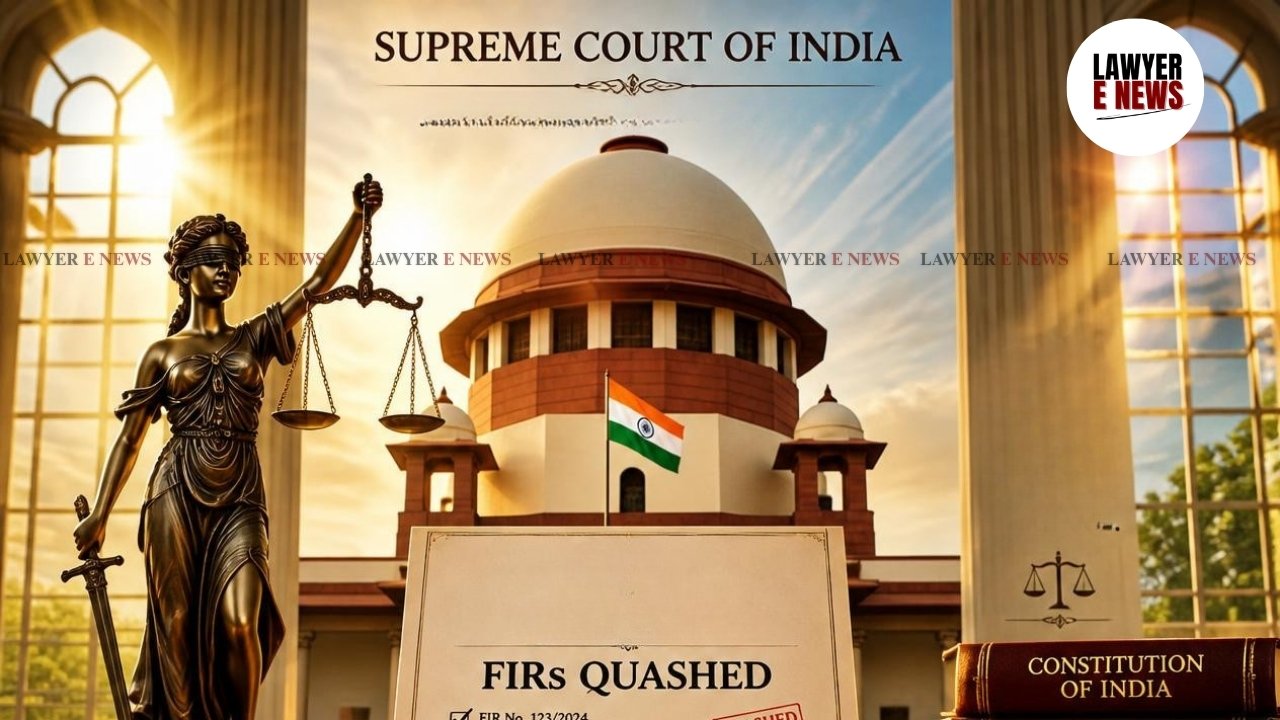
The Supreme Court thus allowed the appeal and quashed the FIR, charge-sheet, and all proceedings before the Magistrate. It further clarified that its ruling would not prejudice any future civil or criminal proceedings between the parties.
This judgment marks a significant precedent in asserting the sanctity of consent, the need for strict adherence to evidentiary thresholds in sexual offence cases, and judicial sensitivity in protecting reputations from irreparable harm.
Date of Decision: 26 May 2025