-
by sayum
28 August 2026 12:24 PM








“When a person enters a political party, it’s not a job; there is no payment” – Today , the Supreme Court of India dismissed a plea challenging the Kerala High Court's judgment that political parties are not legally required to establish Internal Complaints Committees (ICC) under the Sexual Harassment of Women at Workplace (Prevention, Prohibition and Redressal) Act, 2013 (POSH Act). The Bench, comprising Chief Justice D.Y. Chandrachud, Justice K. Vinod Chandran, and Justice A.S. Chandurkar, declined to interfere with the High Court’s decision, citing the absence of an employer-employee relationship within political parties.
“How Do You Put Political Parties in a Workplace Setup?”: Court Questions Applicability of POSH Act to Political Organisations
During the hearing of the Special Leave Petition filed by Advocate Yogamaya, Senior Advocate Shobha Gupta—appearing for the petitioner—argued that the High Court had taken an unduly narrow view of the term "aggrieved woman" under the POSH Act. She emphasized that Section 2(a)(i) of the Act defines an aggrieved woman as "a woman, of any age, whether employed or not, who alleges to have been subjected to any act of sexual harassment by the respondent" in relation to a workplace.
However, the Chief Justice interjected with a critical observation:
"How do you put the political parties in a workplace?", further noting that political parties do not have employees in the traditional legal sense. The Bench pointed out that mere organisational functioning does not transform a political party into a “workplace” within the meaning of the Act.
Despite Gupta's argument that political parties have structured operations and hierarchies—“They have an organisation,” she asserted—the Court remained unconvinced. The Chief Justice emphasized that membership or association with a political party does not create an employment relationship, which is a threshold requirement under the Act for an entity to be mandated to establish an Internal Complaints Committee.
Kerala High Court Had Previously Held POSH Act Inapplicable to Political Parties Due to Lack of Employer-Employee Relationship
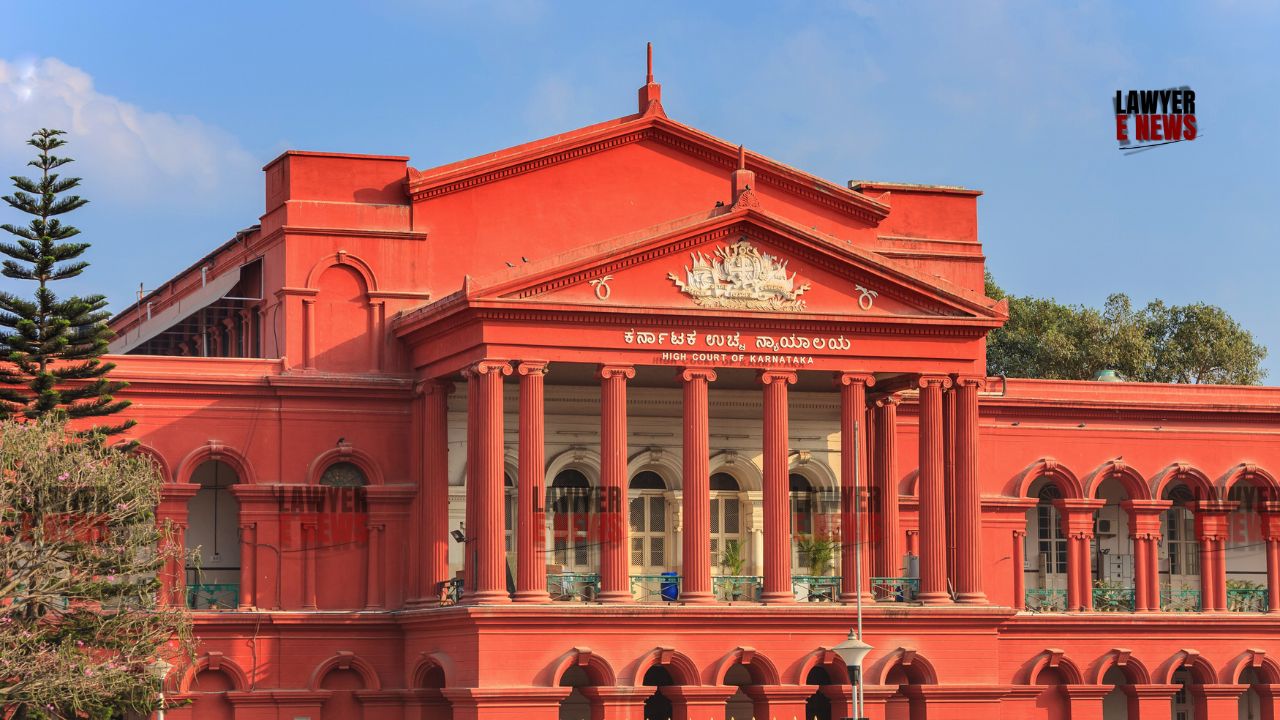
The judgment under challenge had been delivered by a Division Bench of the Kerala High Court comprising Chief Justice S. Manikumar and Justice Shaji P. Chaly in 2022. The petition before the High Court had been filed as a Public Interest Litigation by the Centre for Constitutional Rights Research and Advocacy (CCRRA). The PIL sought to compel political parties such as the Indian National Congress, Bharatiya Janata Party, and Communist Party of India (Marxist) to set up Internal Complaints Committees in accordance with the POSH Act.
After detailed examination, the Kerala High Court held that the POSH framework hinges on the existence of an employer-employee relationship. Citing Section 2(g)(ii) of the Act, which defines “employer” in relation to any workplace other than those covered by the government or local authorities, the Court observed:
“There is no case for the petitioners that any of the organisations and the political parties would come under the term ‘appropriate Government’ or ‘local body’ to persuade such organisations to constitute an Internal Complaints Committee.”
The Court clarified that the applicability of POSH to a body or organisation depends upon it qualifying as a “workplace” and its members having an employment-based relationship. Since political parties do not fulfill either condition, the High Court concluded that they are not required to constitute ICCs under the 2013 law.
Interestingly, in the same judgment, the High Court had held that film production units are bound by POSH Act requirements, as each unit qualifies as a separate “establishment” under the law and thus must have its own ICC.
Petition Dismissed with Observations, No Mandate on Political Parties Under POSH Act
During the Supreme Court proceedings, the Bench made it clear that it found no legal error in the High Court’s reasoning. The CJI observed:
“When a person enters a political party, it’s not a job; there is no payment.”
This oral remark encapsulated the central reasoning of the Court: voluntary political association does not create an employment contract, and therefore the POSH Act cannot be extended to such non-employment relationships.
Having found no constitutional infirmity or legal misapplication in the High Court’s judgment, the Supreme Court dismissed the Special Leave Petition at the admission stage.
It is pertinent to note that the petitioner had earlier filed a PIL seeking a general directive to bring political parties under the ambit of the POSH Act. That plea had been withdrawn, with liberty granted to challenge the Kerala High Court's specific ruling, leading to the present case.
With this decision, the Supreme Court has reaffirmed a strict legal reading of the POSH Act, reiterating that the statute’s protections are tethered to the existence of an employment-based relationship and a recognized workplace. Political parties, being voluntary associations and not employers in the legal sense, are currently beyond the reach of the law’s mandate to form Internal Complaints Committees. While this leaves a legal vacuum for women facing harassment within political spaces, the Court has left it to the legislature to address any such policy lacuna.
Date of Decision: September 15, 2025