-
by sayum
29 August 2026 3:15 PM







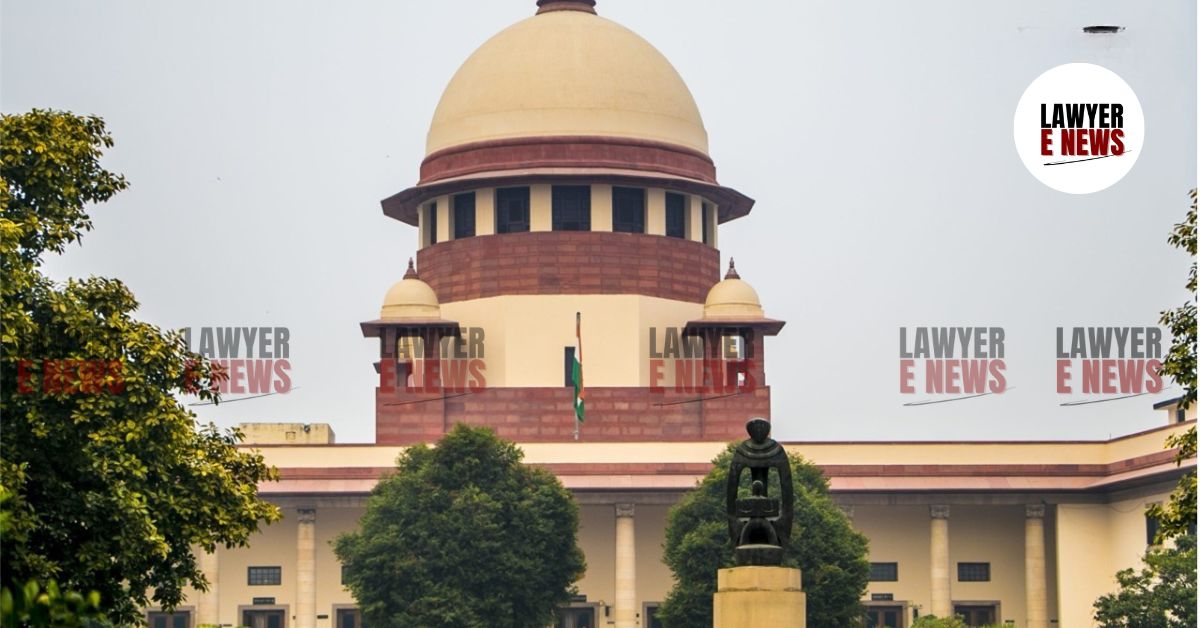
Supreme Court of India delivered a significant judgment setting aside the Delhi High Court’s order granting bail to Olympian wrestler Sushil Kumar, accused in the Chhatrasal Stadium murder case.
A Bench comprising Justice Sanjay Karol and Justice Prashant Kumar Mishra observed that while personal liberty remains a “sacrosanct constitutional guarantee,” the grant of bail in heinous offences cannot be founded on unreasoned or perfunctory orders. The Court held that the High Court had failed to consider the seriousness of the offence, the accused’s abscondence, and the danger of witness intimidation.
The prosecution case revealed a chilling narrative. On the night of 4–5 May 2021, Sushil Kumar and his associates allegedly abducted and assaulted six young men inside Chhatrasal Stadium, Delhi. Among them was Sagar Dhankad, who succumbed to severe head injuries described in the post-mortem as “cerebral damage as a result of blunt force/object impact.”
Investigators recovered blood-stained weapons, firearms, and incriminating material, including a video recording depicting the accused in the assault, later confirmed by forensic analysis to be untampered. Yet, instead of submitting to the investigation, Sushil Kumar absconded, forcing issuance of non-bailable warrants and even a cash reward declaration before his arrest on 23 May 2021.
The trial court framed charges under Sections 302, 307, 364, 365, 452 and other provisions of IPC, along with offences under the Arms Act, 1959. Of the 35 witnesses examined so far, 28 turned hostile, many during periods when the accused was out on temporary bail.
Despite these grave circumstances, the Delhi High Court on 4 March 2025 granted him regular bail under Section 483 of the Bharatiya Nagarik Suraksha Sanhita, 2023.
Justice Karol, writing for the Bench, reminded that the grant of bail is not a mechanical exercise but a careful balancing of liberty and justice:
“The grant of bail constitutes a discretionary judicial remedy… While liberty is sacrosanct in a constitutional democracy, it cannot be construed in a manner that dilutes the seriousness of heinous or grave offences or undermines public confidence in the administration of justice.”
The Court clarified the distinction between an appeal against grant of bail and an application for cancellation of bail. While the latter considers the accused’s conduct post-bail, the former examines whether the original order was “illegal, perverse, unjustified or arbitrary.”
In this case, the High Court’s order was found deficient for ignoring several crucial considerations:
Abscondence of the Accused – The Bench noted:
“After registration of the FIR, the accused remained absconding… non-bailable warrants had to be issued… the Delhi Police declared a cash reward for information. Despite submissions to this effect, these facts did not form part of the High Court’s consideration.”
Seriousness of the Allegations – The Court remarked:
“The national capital was made into a criminal playground to settle scores, with no regard for the law of the land. The injuries were of such nature that they resulted in the unfortunate death of the complainant’s son.”
Strong Prima Facie Material – Recovery of firearms, blood-stained sticks, and the unedited video footage constituted formidable evidence that could not be brushed aside.
Witness Intimidation and Societal Influence – Noting that 28 witnesses had turned hostile during periods of bail, the Court observed:
“Undoubtedly, the accused is a celebrated wrestler and an Olympian… it cannot be doubted that he carries societal impact. In such circumstances, it cannot be said that he would have no domineering influence over witnesses or delay the proceedings of trial.”
The Court held that the Delhi High Court had misapplied judicial discretion and delivered an order “devoid of legal justification.” The judgment concluded:
“The cumulative result of the above discussion is that the impugned order cannot be sustained… The order granting bail to the accused is set aside. Let Respondent No. 2 surrender before the concerned Court within one week. It shall be open to him to apply afresh for bail with a change in circumstances, to be decided on its own merits.”
This ruling reaffirms that while bail remains the rule and jail the exception, courts must ensure that bail orders in heinous crimes like murder and abduction are not passed mechanically. The celebrity status or public stature of an accused cannot overshadow the risk of trial interference or the gravity of the crime.
The Supreme Court has sent a powerful message: perversity in bail orders will not stand scrutiny, and liberty cannot be used as a shield to weaken justice in brutal crimes.
Date of Decision: 13 August 2025