-
by sayum
28 August 2026 10:07 AM







“We Are Constrained to Observe That Appeals to High Court and Supreme Court Were Entirely Avoidable” — Supreme Court of India delivered a forceful and precedent-enforcing judgment, correcting what it termed a gross underestimation of compensation for a minor child who had suffered permanent disability including amputation of a leg and brain hemorrhage in a road accident.
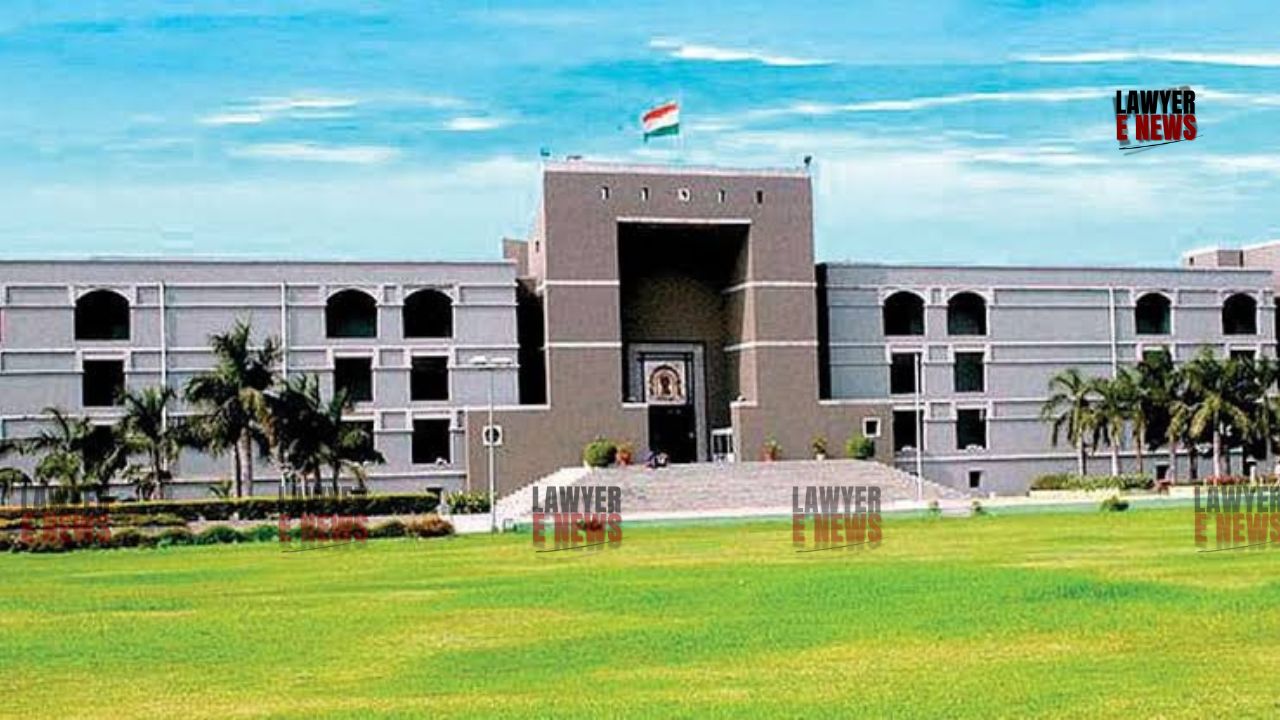
The Court enhanced the compensation from ₹3.90 lakhs awarded by the MACT and ₹8.65 lakhs by the Gujarat High Court, to a total of ₹35.90 lakhs, emphasizing that “a child who suffers a permanent disability cannot be treated like a non-earning individual.”
The minor, Hitesh Nagjibhai Patel, was just 8 years old when on October 14, 2012, he was hit by a rashly driven vehicle while standing by a roadside in Banaskantha, Gujarat. The injuries were life-altering — one of his legs had to be amputated and he suffered severe neurological trauma.
“When a Child Is Disabled for Life, The Law Must Not Fail Twice — Once on the Road and Then in the Courtroom”
The judgment, authored by Justices Sanjay Karol and Prashant Kumar Mishra, opens with a distressing account of delay in justice — 8 years before the MACT, 2.5 years in the High Court, and then 5 months in the Supreme Court — just to arrive at a legally correct compensation amount.
Referring to the failure of the Tribunal and High Court to apply binding precedents, the Supreme Court observed:
“We are constrained to observe that appeals to the High Court as well as to this Court were entirely avoidable, since the law had been amply clarified well before the order of the Tribunal was made on 17.10.2021.”
The Court cited its own earlier landmark decisions, including Kajal v. Jagdish Chand (2020) and Baby Sakshi Greola v. Manzoor Ahmad Simon (2024), to reinforce that minimum wages applicable to skilled workers must be used as the baseline to calculate loss of future earnings for children with permanent disabilities.
“A Child Is Not a Blank Slate — Courts Must Factor Future Potential, Not Present Earning”
In direct contradiction to the MACT’s view that the minor was a non-earning individual, the Supreme Court declared:
“It is now a well-entrenched and consistently reiterated principle of law that a minor child who suffers death or permanent disability in a motor vehicle accident cannot be placed in the same category as a non-earning individual.”
Applying this, the Court determined the child’s notional monthly income to be ₹6,836, based on the prevailing minimum wage for skilled workers in Gujarat in 2012. Future prospects at 40% were added, and the multiplier of 18 was applied to assess future income loss due to 90% permanent functional disability.
This yielded a base compensation of ₹18.60 lakhs for loss of future income alone. The Court then went on to enhance other heads of compensation with careful legal backing.
“Cost of Artificial Limb Must Reflect Life-Long Use — ₹5 Lakh Awarded”
The Court revised the compensation under several heads, using a methodical and precedent-driven approach. Observing that the child had suffered both physical and psychological trauma, it enhanced pain and suffering to ₹5 lakhs, loss of amenities to ₹2 lakhs, and awarded ₹3 lakhs for loss of marriage prospects, recognizing long-term socio-emotional impact.
The Court specifically noted: “Taking into account the direct correlation between the injuries sustained and the consequent loss of permanent functional disability... we are in agreement with the High Court that the disability stands rightly fixed at 90%.”
Further, noting the lifelong reliance on an artificial limb, the Court awarded ₹5 lakhs under that head, relying on its earlier ruling in Ayush v. Reliance General Insurance Co. Ltd.
“Courts Cannot Plead Ignorance of Supreme Court Law — Binding Precedents Must Be Applied”
In a rare rebuke directed at the judiciary itself, the Supreme Court called out the failure of the MACT and High Court to keep abreast with established precedent, stating:
“Both the Courts were duty-bound to keep abreast with the law as clarified by this Court, ensuring that the judgments and orders passed by them are entirely in order therewith.”
This strong language underlines the Court’s growing concern that justice is being denied not due to absence of law but failure to apply it.
“Burden Shifts to Insurer When Claimant Fails to Prove Income” — New Procedural Direction Issued
In a forward-looking directive aimed at streamlining accident compensation cases, the Supreme Court held:
“Where the claimant has failed to furnish appropriate details of income or adequate proof thereof, it shall be the responsibility and obligation of the contesting party, more particularly the insurance company, to furnish before the Tribunal the applicable minimum wage as duly issued by the concerned government.”
This direction, the Court said, is intended to reduce avoidable appeals and ensure consistent and lawful awards at the MACT level itself.
The Registrar Judicial of the Supreme Court was directed to transmit the order to Registrar Generals of all High Courts, who shall ensure it reaches every Motor Accident Claims Tribunal for strict compliance.
Compensation Enhanced to ₹35.90 Lakhs with 9% Interest from Date of Claim
The final compensation is broken down and calculated meticulously, with clear reference to leading cases like Pranay Sethi, Kajal, and Sidram. The Court ordered the insurance company to remit the amount directly into the bank account of the appellant before 30th September 2025.
The case, ultimately, is not only a victory for a victim of tragic injustice but also a stern reminder to lower courts that justice delayed due to disregard of settled law is justice denied.
Date of Decision: 08 August 2025