-
by sayum
29 August 2026 3:15 PM







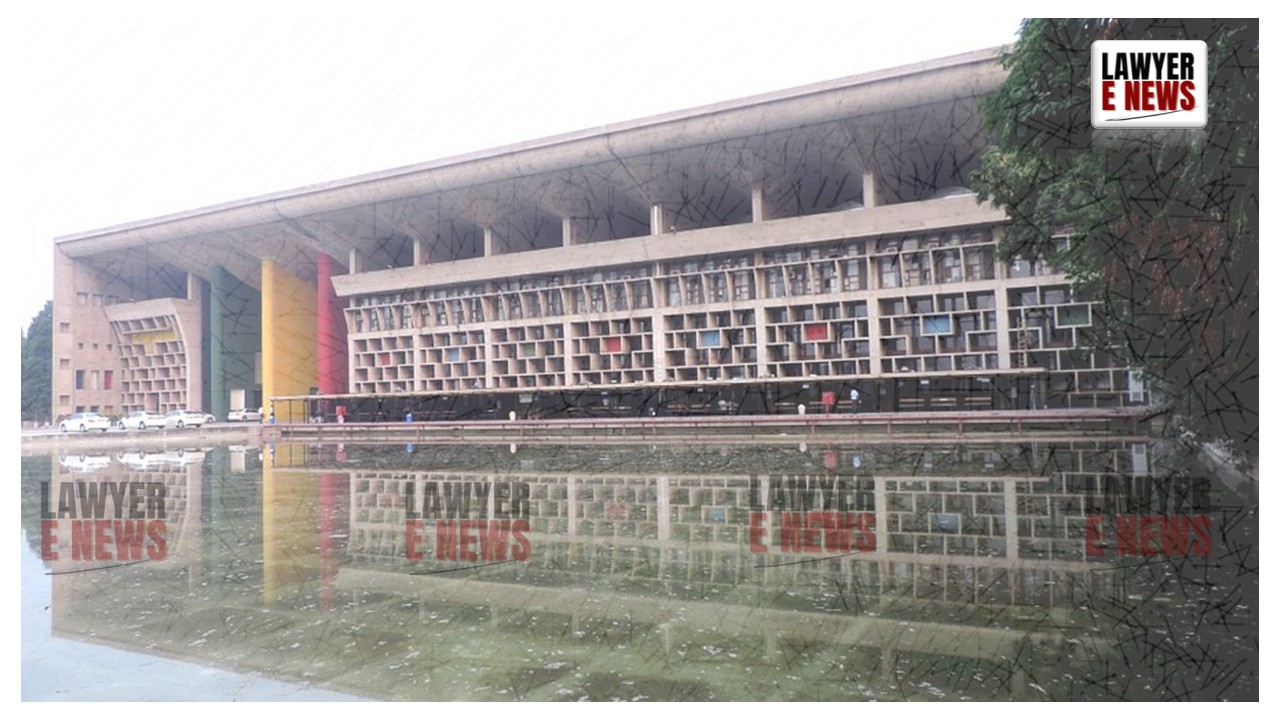
“A Law That Is Black and White Cannot Be Examined in Shades of Grey”— In a decision reinforcing the sanctity of statutory clarity in competitive exams, the Punjab & Haryana High Court partially allowed a petition by candidates who challenged the wrong answer key issued by the Haryana Staff Selection Commission (HSSC) in the constable recruitment examination.
Justice Jagmohan Bansal found the Commission’s official answer to a question on a Magistrate’s power under the Criminal Procedure Code (CrPC) to be legally incorrect, observing that:
“There is no ambiguity in Cr.P.C. with respect to said question i.e. power of Magistrate to direct the Police to conduct investigation.”
“When the Law Speaks Clearly, There Is No Room for Expert Committees to Say Otherwise”
The petitioners had appeared in the written test for the post of Constable conducted on 23 December 2018 and were assigned Question Paper Set ‘K’. Though they successfully cleared the physical tests and document scrutiny, their names were excluded from the final result published on 28 February 2019.
The cause of their exclusion lay in Question No. 28, which read:
“A Magistrate has the power to direct the police to investigate into:”
(A) a non-cognizable offence
(B) a cognizable offence
(C) only a non-cognizable offence as in a cognizable offence the police is under a duty to investigate
(D) both (A) and (B)
The Commission selected Option B as the correct answer. But the High Court rejected this outright. Referring to Section 155(2) of Cr.P.C., the Court emphatically held:
“From the reading of above quoted Section, unescapable conclusion is that Magistrate has power to order the Police to investigate into cognizable as well as non-cognizable offences.”
It further clarified that: “In case of non-cognizable offence, Police rather cannot conduct investigation without order of Magistrate.”
Therefore, the only legally accurate answer was Option D, not B.
“Statutory Law Cannot Be Overruled by an Expert Committee—That Would Make a Mockery of Legality”
While HSSC argued that the answer key had been vetted by an Expert Committee and Chief Examiner, the Court drew a sharp distinction between academic discretion and legal certainty:
“The respondent-Commission is right in its averments with respect to questions relating to Physics, Geography, History and other subjects... however, source of answer to Question No.28 is only one i.e. Criminal Procedure Code.”
The Court stressed that in cases involving pure questions of law, judicial review is not just permissible but necessary, especially when statutory interpretation is straightforward: “There would be casualty if there is compromise between competence/merit and mistake.”
“Judicial Restraint Must Not Become Judicial Abdication Where the Law Speaks for Itself”
The Court anchored its decision in Supreme Court jurisprudence, especially Ran Vijay Singh v. State of Uttar Pradesh (2018) 2 SCC 357, which cautions courts against re-evaluating answer keys except in rare and manifestly clear cases. Justice Bansal found this case to be one such exception:
“In the absence of doubt or ambiguity, the candidates cannot be deprived of marks of correct answer.”
He added: “As per aforecited judgments of Hon’ble Supreme Court, if there is patent or manifest illegality in the answer key, it should be corrected and merit should not be compromised.”
“Different Answers for the Same Question Across Sets Is a Recipe for Heartburn and Litigation”—Court’s Stern Word to HSSC
Although the Court did not grant relief for Question No. 94, where inconsistencies were alleged across different sets, it made a clear caution to HSSC:
“For the same question, different options qua different sets cannot be chosen. The recruitment agency in future must take care of this fact because it creates unwanted litigation and heart burning.”
The Court declined to interfere on Question 94 due to lack of manifest error and the complexity of linguistic interpretation involved, which did not warrant judicial substitution of expert opinion.
“Merit Must Not Be Overlooked Because of a Flawed Key—When the Law Is Clear, Justice Must Prevail”
In conclusion, the Court held that the official answer key was unsustainable in law as far as Question No. 28 was concerned, and ordered the Commission to treat the correct answer as Option D. All other claims by the petitioners were rejected, with the writ petition being partially allowed.
This judgment sends a clear message: competitive exams may rely on expert committees, but not when the answers contradict unambiguous statutory provisions
Date of Decision: 21 August 2025