-
by sayum
23 August 2026 2:56 PM







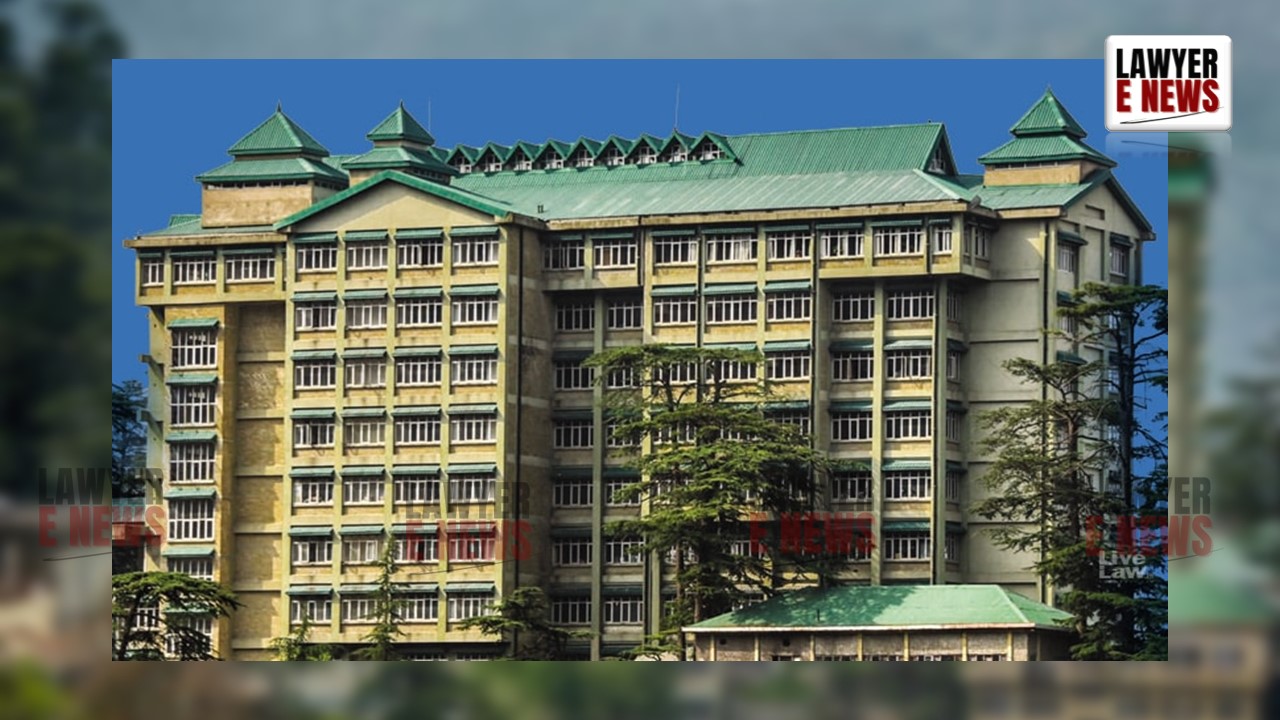
“Delay Defeats Equity”, In a stern reaffirmation of the principle that writ jurisdiction under Article 226 is discretionary and equitable, the Himachal Pradesh High Court on 1st January 2026 dismissed a writ petition seeking parole on the sole ground of unexplained delay and laches. In Sanjay Kumar v. State of Himachal Pradesh & Others (CWP No. 17844 of 2025), a Single Bench of Justice Rakesh Kainthla held that a convict who approached the Court more than a year after the rejection of his parole plea—without furnishing any explanation—was not entitled to any relief.
The Court observed: “Delay or laches is one of the factors that should be borne in mind by the High Court while exercising discretionary powers under Article 226... A person who sleeps over his right for a considerable time cannot be granted extraordinary relief by the writ courts.”
The petitioner, a convict undergoing sentence under the POCSO Act, had approached the Court challenging an order dated 04.09.2024 which rejected his parole application filed under the Himachal Pradesh Good Conduct Prisoners (Temporary Release) Act, 1968. The writ petition, however, was filed on 14.11.2025, after a delay of over 14 months, without any justification or explanation for the delay.
No Statutory Limitation, But Reasonable Timeframe Must Be Observed in Writ Petitions
While acknowledging that there is no fixed period of limitation for filing writ petitions, the Court emphasized that writ jurisdiction is not available as a matter of right, and must be invoked within a reasonable timeframe. It drew heavily from a recent judgment of the Supreme Court in Mrinmoy Maity v. Chhanda Koley, (2024) 15 SCC 215, which cautioned against granting relief to indolent litigants who awaken from “deep slumber” to revive stale causes of action.
Justice Kainthla quoted the Supreme Court extensively: “Even submitting memorials would not revive the dead cause of action or resurrect the cause of action which has had a natural death... Writ Courts are not to indulge in permitting such an indolent litigant to take advantage of his own wrong.”
Citing precedents such as Tridip Kumar Dingal v. State of W.B., (2009) 1 SCC 768, and Chennai Metropolitan Water Supply & Sewerage Board v. T.T. Murali Babu, (2014) 4 SCC 108, the Court underscored that delay and laches, even in cases involving fundamental rights, can defeat relief unless properly explained.
Court Rejects Argument Based on Jail Conduct and Length of Custody
The petitioner had sought parole on the grounds of good conduct in jail and having completed over six years of his sentence. However, the Court was not inclined to entertain the petition solely on such grounds, especially in light of the prolonged and unexplained delay.
“The petitioner is not entitled to any relief from the Writ Court... No explanation has been provided for approaching the Court after a lapse of more than one year from the rejection of the application for parole.”
The Court further clarified that merely having good conduct in jail or serving a significant portion of the sentence does not create an automatic or enforceable right to parole, particularly when the jurisdiction invoked is discretionary and equitable in nature.
Principle of Laches Applies Equally to Parole Matters
Justice Kainthla made it unequivocally clear that the principles governing delay and laches apply equally to parole matters, and the doctrine of equity must prevail: “Delay comes in the way of equity... A writ court is required to weigh the explanation offered and the acceptability of the same. Delay reflects inactivity and inaction on the part of a litigant – a litigant who has forgotten the basic norm that procrastination is the greatest thief of time.”
The Court, therefore, held that the writ petition was liable to be dismissed on the ground of delay alone, without examining the merits of the parole rejection order.
No Relief for Indolent Litigants
The judgment reinforces the well-established jurisprudence that Article 226 relief is not a tool for reviving dead claims. Courts are not compelled to exercise their jurisdiction merely because a right exists in theory—procedural discipline and timely invocation of jurisdiction are equally critical.
Date of Decision: 01 January 2026