-
by sayum
28 August 2026 2:11 PM







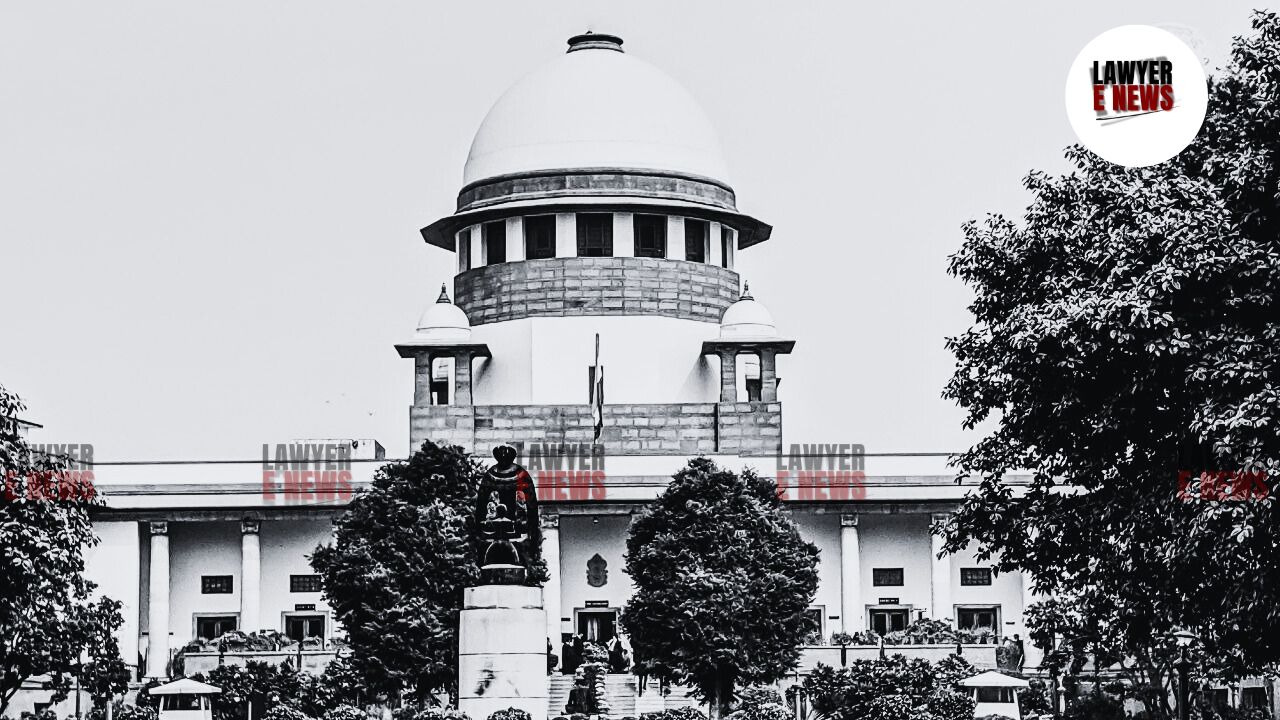
“A Penal Provision Inserted in 2006 Cannot Be the Basis of Conviction for an Offence Committed in 1999”— The Supreme Court of India emphatically held that conviction under a penal statute cannot be sustained if the provision was not in force at the time of commission of the alleged offence. The Court set aside the conviction of a deceased public servant, Akhtar, under Section 195-A of the Indian Penal Code, citing its introduction in 2006, seven years after the incident, and declared that such retrospective application violated Article 20(1) of the Constitution. However, the conviction under Section 506-B IPC for criminal intimidation was upheld after independent scrutiny of the evidentiary record.
The Supreme Court also directed the State of Madhya Pradesh to reconsider the family’s entitlement to posthumous terminal benefits, given that the most serious conviction under Section 305 IPC had been set aside and the surviving conviction was limited to criminal intimidation.
“Article 20(1) is Not a Dead Letter—You Cannot Convict for a Law That Did Not Exist at the Time”
The Apex Court Sets Aside Conviction under Section 195-A IPC on Constitutional Grounds, Emphasizes the Inviolability of Fundamental Rights in Criminal Jurisprudence
The core of the constitutional challenge revolved around whether the High Court was justified in convicting Akhtar under Section 195-A IPC, a provision that criminalizes threats to deter witnesses from testifying. The incident in question occurred on 19th February 1999, while Section 195-A was inserted only with effect from 16th April 2006. The Supreme Court answered in the negative, holding that the High Court’s reasoning suffered from a grave constitutional error.
The Court categorically stated:
"The High Court... proceeded to hold Akhtar guilty under that section in clear breach of clause (1) of Article 20 of the Constitution of India."
Justice Dipankar Datta, writing the judgment, reaffirmed the sanctity of Article 20(1), which prohibits retrospective application of penal laws. The bench noted:
"Conviction under Section 195-A IPC by the High Court is unsustainable in law."
This finding becomes particularly significant as it touches on the foundational principle that criminal law cannot operate retrospectively, a guarantee not only under Indian law but also in international legal systems. The Court, in this case, resurrected the force of Article 20(1) to correct a judicial misstep that had denied the deceased his constitutional protection.
“Evidence Must Stand on Its Own—Conviction under Section 506-B IPC Affirmed After Fresh Judicial Scrutiny”
Supreme Court Upholds Intimidation Charge Based on Credible Testimony of Victim’s Family and Dying Declaration
While the conviction under Section 195-A IPC was quashed, the Court did not hesitate to re-examine whether the conviction under Section 506-B IPC (criminal intimidation) was independently sustainable. This became necessary because the High Court had offered no separate reasoning for affirming the intimidation conviction, possibly assuming that it merged with the alternate conviction under Section 195-A.
The Supreme Court took it upon itself to scrutinize the evidentiary foundation, stating:
"In the changed circumstances where we are unable to uphold the conviction under section 195-A IPC, the omission [of the High Court] does assume significance and requires us to independently examine whether... the offence under section 506-B IPC stands proved."
Relying on the consistent testimonies of PWs 2, 3, and 4, the apex court found overwhelming support for the charge that Akhtar, along with co-accused, had threatened the minor victim with dire consequences if she testified in court. The victim's dying declaration, though not formally exhibited, was narrated credibly by the Deputy Tehsildar (PW-2), and was consistent with the evidence of her mother (PW-4) and sister (PW-3).
The Court ruled:
"We have no hesitation in holding that Akhtar was one of four who threatened the victim and, therefore, his conviction under section 506-B warrants no interference."
The defence’s argument that other prosecution witnesses did not name Akhtar was dismissed as inconsequential. The Court reiterated that minor omissions in the FIR or inconsistent statements from peripheral witnesses do not outweigh direct, consistent accounts from primary witnesses, especially when they include the victim’s immediate family.
“Humanitarian Justice Prevails After Death—Supreme Court Directs Reconsideration of Widow’s Claim to Terminal Benefits”
Despite Dismissal of Appeal, the Court Urges State to Reassess Termination Consequences in Light of Partial Acquittal and Financial Hardship
Although the appeal was dismissed to the extent of conviction under Section 506-B IPC, the Court recognized that the widow and children of the deceased appellant had approached the judiciary not to vindicate guilt or innocence, but to seek restoration of terminal benefits that had been denied after Akhtar’s service termination.
The Supreme Court noted:
"Only the conviction against Akhtar for the offence under section 506-B IPC survives... We are of the considered opinion that interests of justice would be best served if the respondent-State considers the matter of termination of service of Akhtar de novo."
Given that the conviction under Section 305 IPC (abetment of suicide of a minor) — a graver charge — had been set aside by the High Court and the conviction under Section 195-A IPC quashed by the Supreme Court, the Court found it unjust to let the termination of service and consequent forfeiture of all benefits stand unexamined.
In a directive that blends legal justice with compassionate policy, the Court held:
"We request the appropriate department in the Government of Madhya Pradesh to effect consideration of the matter... adopting a humanitarian approach."
It urged the State to evaluate the financial condition of the widow and decide the claim within three months, thereby offering the family a chance at dignity and support after years of litigation and hardship.
The Supreme Court’s decision in Jameela & Others v. State of Madhya Pradesh restores faith in constitutional fidelity, judicial introspection, and empathy-driven governance. By striking down a conviction imposed under a law that did not exist at the time of the offence, the Court has reaffirmed the protection that Article 20(1) guarantees to every citizen, living or dead. At the same time, by acknowledging the plight of the deceased's family and invoking a humanitarian standard, the Court offered a just and balanced resolution, navigating between the rigour of law and the needs of the living.
Date of Decision: 15th September 2025