-
by sayum
05 August 2026 3:07 PM







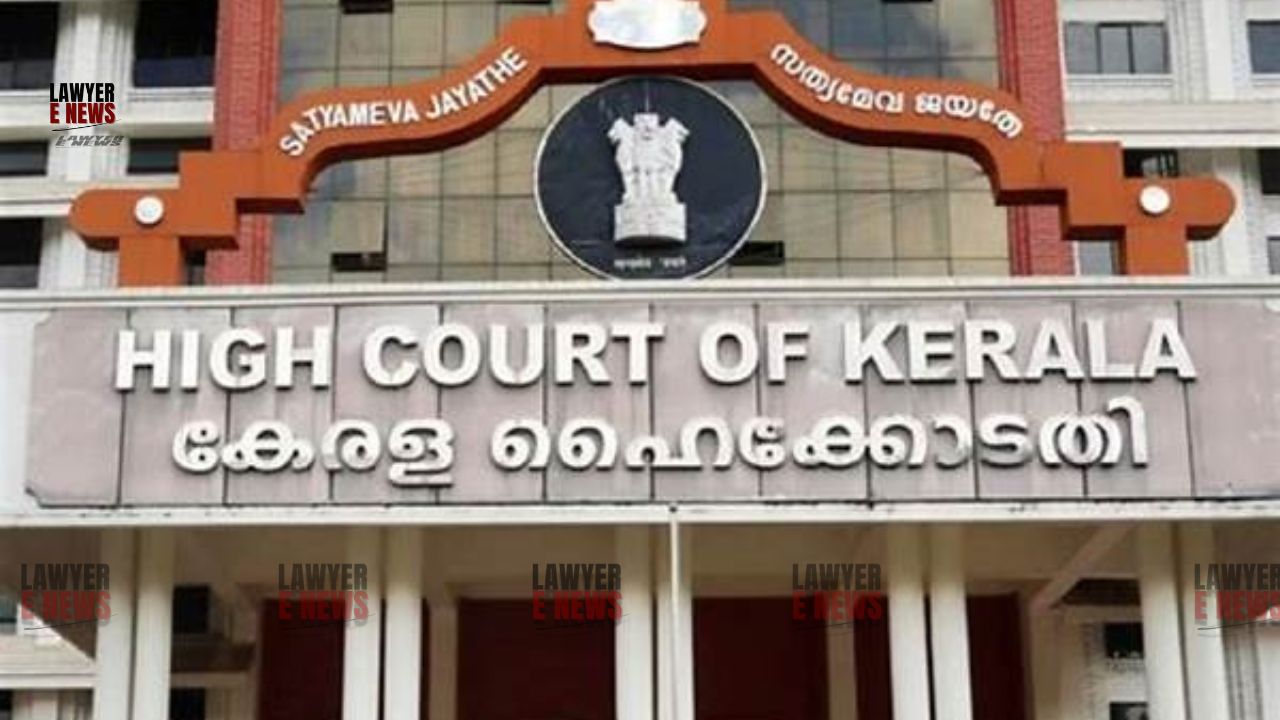
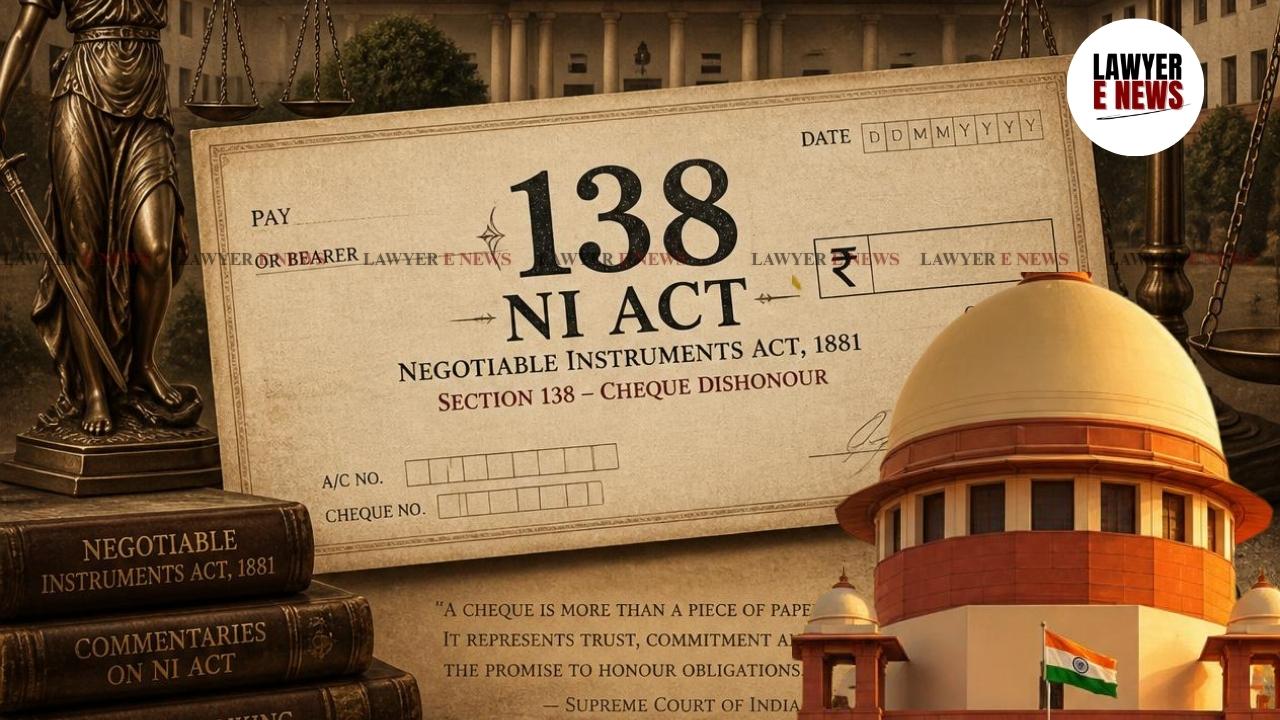
"If Criminal Courts Legalise Unaccounted Cash Loans, Even Black Money Can Be Laundered Through Them", In a landmark ruling Kerala High Court setting aside a conviction under Section 138 of the Negotiable Instruments Act, 1881. The Court held that a cheque issued to repay a cash loan of ₹9,00,000—accepted in violation of Section 269SS of the Income-Tax Act, 1961—did not represent a "legally enforceable debt", thus rendering the conviction unsustainable.
Justice P.V. Kunhikrishnan, in a detailed 35-paragraph judgment, observed:
“A debt created by a cash transaction above ₹20,000 in violation of the provisions of the Income-Tax Act, 1961 is not a ‘legally enforceable debt’ unless there is a valid explanation for the same.”
This decision is not just a reaffirmation of the law—it is a clear judicial endorsement of India’s digital economy goals, rejecting the idea that statutorily prohibited transactions can be regularised through the courts.
The revision petitioner, P.C. Hari, had been convicted by the Judicial First Class Magistrate, Pathanamthitta, for allegedly issuing a cheque of ₹9,00,000 in discharge of a debt owed to the complainant, Shine Varghese. The cheque was dishonoured for insufficiency of funds. After statutory notice and reply, the trial court convicted the accused, sentencing him to one year of imprisonment and ₹9,00,000 compensation under Section 357(3) CrPC, which was confirmed in appeal by the Sessions Court.
In revisional proceedings, however, a vital fact emerged—the entire transaction was in cash, and the complainant admitted he had not disclosed the loan in his income-tax returns, nor could he provide any justification for bypassing statutory banking channels.
Presumption under Section 139 NI Act Includes Legally Enforceable Debt
The Court began by affirming that the presumption in Section 139 of the NI Act covers the existence of a legally enforceable debt, in line with the Supreme Court’s judgment in Rangappa v. Sri Mohan (2010) 11 SCC 441:
“There is no doubt to the fact that the presumption under Section 139 of the NI Act covers legally enforceable debt also.”
But such a presumption, the Court emphasized, is rebuttable by a probable defence, and that threshold of rebuttal is "preponderance of probability", not proof beyond reasonable doubt.
Cash Loans Above ₹20,000 Violate Section 269SS—Debt Arising Therefrom Is Illegal
The central legal issue was whether a cheque issued for a cash loan of ₹9,00,000 could be enforced under Section 138. The Court answered in the negative:
“Can a criminal court justify a cash transaction above ₹20,000 treating it as a ‘legally enforceable debt’? When the Government of India aims for complete digital transactions by every citizen of this country instead of cash transactions, a court of law cannot turn its face and legalise cash transactions.”
Justice Kunhikrishnan rejected the view taken by a Division Bench of the Bombay High Court in Prakash Madhukarrao Desai v. Dattatraya Sheshrao Desai (2023 SCC OnLine Bom 1708), which held that violation of Section 269SS would not render a debt legally unenforceable.
“With great respect, I cannot agree with the finding of the Division Bench of the Bombay High Court... If criminal courts indirectly legalise such illegal transactions... even black money will be converted into white money through the courts.”
Violation of Income-Tax Law Touches the Root of Enforceability
The Court categorically held that when a transaction violates fiscal law, it cannot be sanctified under criminal law:
“If the debt arises through an illegal transaction, that debt cannot be treated as a legally enforceable debt. If the court regularises such transactions, that will encourage illegal transactions by the citizens.”
Quoting from an article by the late Advocate Alex M. Scaria, the judgment added:
“It is impossible to presume consideration under Section 118(a) or Section 139, when the disputed transaction is not in line with Section 269SS of the Income Tax Act.”
The Court agreed with this view, clarifying that the presumption in Section 139 still applies—but it can be rebutted if the complainant fails to justify the legality of the transaction, especially under Section 273B, which allows a defence for cash transactions in limited circumstances.
Findings on Facts: No Income Disclosure, No Explanation—Presumption Rebutted
The complainant admitted during cross-examination:
“ഞാൻ ഇൻകം ടാക്സ് അടച്ചിട്ടില്ല. ഇൻകം ടാക്സ് റിട്ടേൺ സമർപ്പിച്ചിട്ടില്ല.”
(“I have not paid income tax. I have not submitted any income tax return.”)
The Court found that this unaccounted loan, unsupported by any banking records or income declarations, was a clear breach of Section 269SS. Since no explanation under Section 273B was offered, the accused’s defence was held to have rebutted the presumption.
“The accused specifically cross-examined about the same... He has absolutely no explanation regarding the payment of the amount above ₹20,000 by cash. In such circumstances... the debt alleged to be due to the complainant cannot be treated as a legally enforceable debt.”
Earlier Precedents Overruled – Sugunan’s Case Declared Per Incuriam
The Court took the opportunity to correct its own course by declaring its earlier ruling in Sugunan v. Thulaseedharan (2014) as per incuriam, for failing to consider the binding precedents of the Supreme Court in Rangappa and Krishna Janardhan Bhat.
“The dictum laid down by this Court in the above judgment is per incuriam.”
Prospective Application to Avoid Reopening of Concluded Cases
To maintain judicial discipline, the Court clarified that this ruling would apply prospectively:
“In a concluded trial in which no such point is raised, [cases] need not be reopened based on this decision.”
In a ruling that underscores both fiscal responsibility and the integrity of the criminal justice system, the Kerala High Court has laid down that a cheque issued in repayment of a statutorily prohibited cash loan cannot be enforced through Section 138 of the NI Act—unless the payee proves a reasonable cause under Section 273B.
“Hereafter, if anybody pays an amount in excess of ₹20,000 to another person by cash in violation of the Act... the doors of the criminal court will be closed for such illegal transactions.”
The conviction and sentence imposed on the accused were quashed, and the accused was acquitted. Any amount deposited as part of appellate proceedings is to be refunded to him.
Date of Decision: 25 July 2025