-
by sayum
12 August 2026 1:53 PM







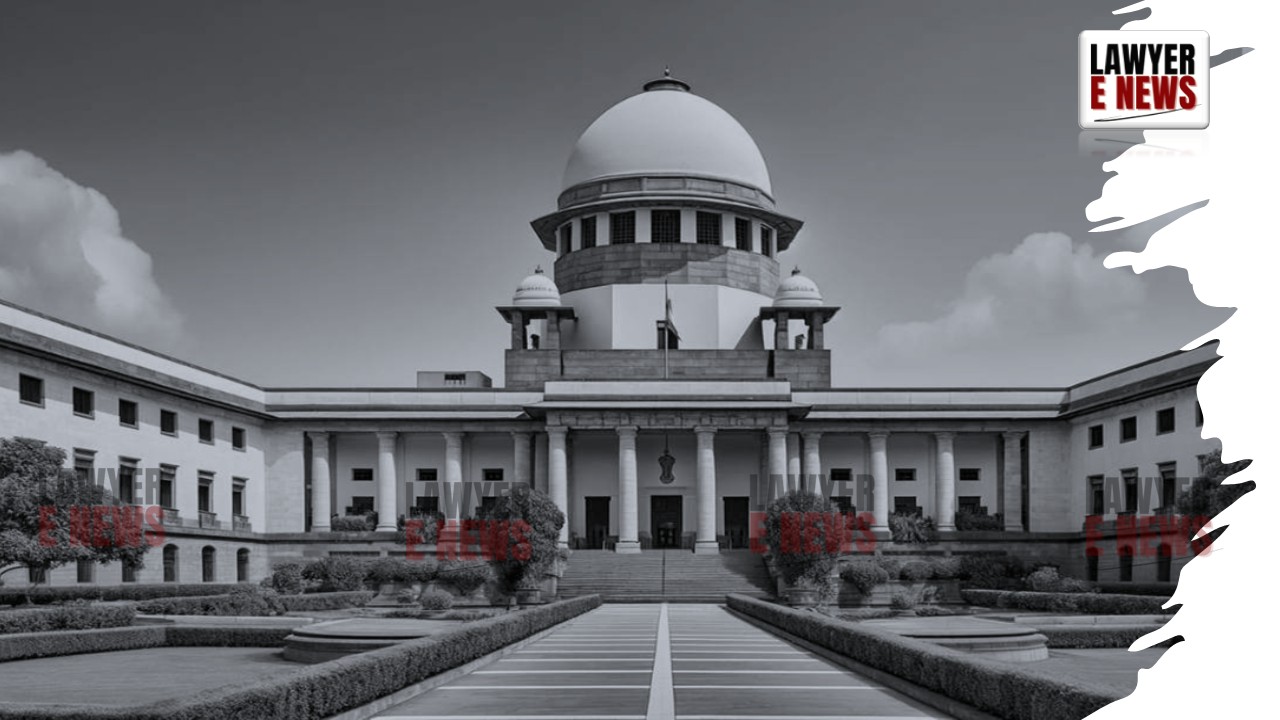
A Business Loan is a Commercial Transaction—Consumer Forums Cannot Entertain Such Disputes - Supreme Court of India, in a judgment delivered on February 28, 2025, ruled that a borrower of a project loan cannot claim the status of a ‘consumer’ under the Consumer Protection Act, 1986. The case, The Chief Manager, Central Bank of India & Ors. v. M/s AD Bureau Advertising Pvt. Ltd. & Anr., was heard by a bench comprising Justice Sudhanshu Dhulia and Justice Prashant Kumar Mishra.
Setting aside the order of the National Consumer Disputes Redressal Commission (NCDRC), the Court categorically held that business loans availed for commercial purposes fall outside the scope of consumer protection laws. Emphasizing the nature of the transaction, the Court declared:
“A financial transaction between two business entities does not create a consumer dispute. A borrower of a project loan cannot claim consumer protection under the Act.”
The ruling reiterates the well-established principle that banking and financial disputes must be adjudicated under financial laws, not under consumer forums.
Bank’s Wrongful Reporting to CIBIL Leads to NCDRC’s Order for Compensation
The dispute arose from a loan transaction between M/s AD Bureau Advertising Pvt. Ltd., an advertising firm, and the Central Bank of India. The bank had sanctioned a project loan of ₹10 crore on April 28, 2014, for the purpose of post-production work on the film "Kochadaiiyaan".
After the company defaulted on its loan, its account was classified as an NPA (Non-Performing Asset) on February 4, 2015. The bank proceeded with SARFAESI proceedings, and a case was filed before the Debt Recovery Tribunal (DRT), Chennai under the RDDBFI Act, 1993.
Following negotiations, the dispute was settled through a One-Time Settlement (OTS) of ₹3.56 crore, and the borrower paid an additional ₹14.43 lakh as delayed interest. The bank issued a No-Dues Certificate in January 2017.
Despite this, the borrower alleged that the bank wrongly reported its name to CIBIL as a defaulter, resulting in loss of reputation and financial harm. The borrower claimed that this led to the cancellation of an exclusive advertising tender from the Airports Authority of India, as its bank guarantee was rejected due to its classification as a defaulter.
In a complaint before the NCDRC, the borrower alleged deficiency in banking services and unfair trade practices, demanding compensation for the financial loss suffered due to the bank’s misreporting.
The NCDRC, in its order dated August 30, 2023, directed the bank to pay ₹75 lakh as compensation, ₹20,000 as litigation costs, and issue a certificate stating that the loan had been fully settled.
The Central Bank of India challenged the order, arguing that a borrower of a project loan does not qualify as a ‘consumer’ under the law. The borrower, in a separate appeal, demanded a higher compensation.
“A Loan Taken for Business Purposes Does Not Create a Consumer Dispute”
The Supreme Court examined the definition of "consumer" under Section 2(1)(d) of the Consumer Protection Act, 1986, which explicitly states:
“A consumer does not include a person who avails of any service for any commercial purpose.”
Rejecting the borrower’s contention that the loan was used for "self-use," the Court ruled: “Even if the loan was partly used for brand-building, the dominant purpose of the transaction was to generate revenue. A business loan is fundamentally a commercial transaction and does not qualify for consumer protection.”
The Court emphasized that a financial dispute between a borrower and a bank falls within the domain of banking laws and cannot be adjudicated under consumer protection laws.
Referring to Lilavati Kirtilal Mehta Medical Trust v. Unique Shanti Developers (2020) 2 SCC 265, the Court reiterated:m “A transaction is considered commercial when its dominant purpose is to generate profit or revenue. The mere branding or advertising intent does not alter its commercial nature.”
The judgment made it clear that a project loan is not a consumer transaction, stating: “A company borrowing funds to engage in post-production work for a commercial film is a business venture. Such financial transactions are not consumer disputes but business-to-business agreements governed by financial and contract law.”
“Consumer Forums Are Not the Appropriate Venue for Banking Disputes”
The Court further addressed the jurisdictional overreach of the NCDRC, stating that the commission had wrongly entertained a banking dispute under the Consumer Protection Act. The ruling reinforced that:
“When a loan agreement is breached, the borrower must seek relief under the SARFAESI Act, the RDDBFI Act, or contract law—not under consumer forums.”
Citing National Insurance Company Ltd. v. Harsolia Motors (2023) 8 SCC 362, the Court clarified that consumer protection laws do not apply to services availed with a direct nexus to profit-making. The judgment stated: “The key factor in determining whether a person is a ‘consumer’ is the dominant purpose of the transaction. If a service is availed to facilitate business operations and revenue generation, it is a commercial transaction, not a consumer grievance.”
Rejecting the borrower’s plea, the Supreme Court concluded: “The NCDRC had no jurisdiction to hear this complaint. Banking transactions involving business loans are commercial in nature and must be addressed through financial and banking laws.”
The Supreme Court allowed the appeal filed by the Central Bank of India and quashed the NCDRC’s order, holding that:
• “A borrower of a project loan does not fall within the definition of a ‘consumer’ under the Consumer Protection Act.”
• It further clarified that the borrower’s remedy lies in financial and banking laws, not consumer protection laws.
• The borrower’s cross-appeal demanding a higher compensation was dismissed outright, with the Court stating:
“Since the complaint itself was not maintainable, the question of increasing compensation does not arise.”
• While allowing the appeal, the Court left room for the borrower to seek other legal remedies, stating:
“We have not expressed any opinion on the merits of the dispute. This judgment does not prevent the borrower from pursuing appropriate remedies in accordance with law.”
The Supreme Court’s ruling sets a definitive precedent that:
• A borrower of a business or project loan is not a ‘consumer’ under the Consumer Protection Act.
• A financial transaction between a bank and a business entity is a commercial agreement, not a consumer dispute.
• Consumer forums cannot be used to litigate banking disputes arising out of business-to-business transactions.
• Borrowers must pursue remedies under banking and financial laws, not consumer protection laws.
This judgment serves as a safeguard against the misuse of consumer forums for commercial disputes and ensures that business banking conflicts are resolved in the appropriate legal forums.
Date of Decision: February 28, 2025