-
by sayum
28 August 2026 2:11 PM







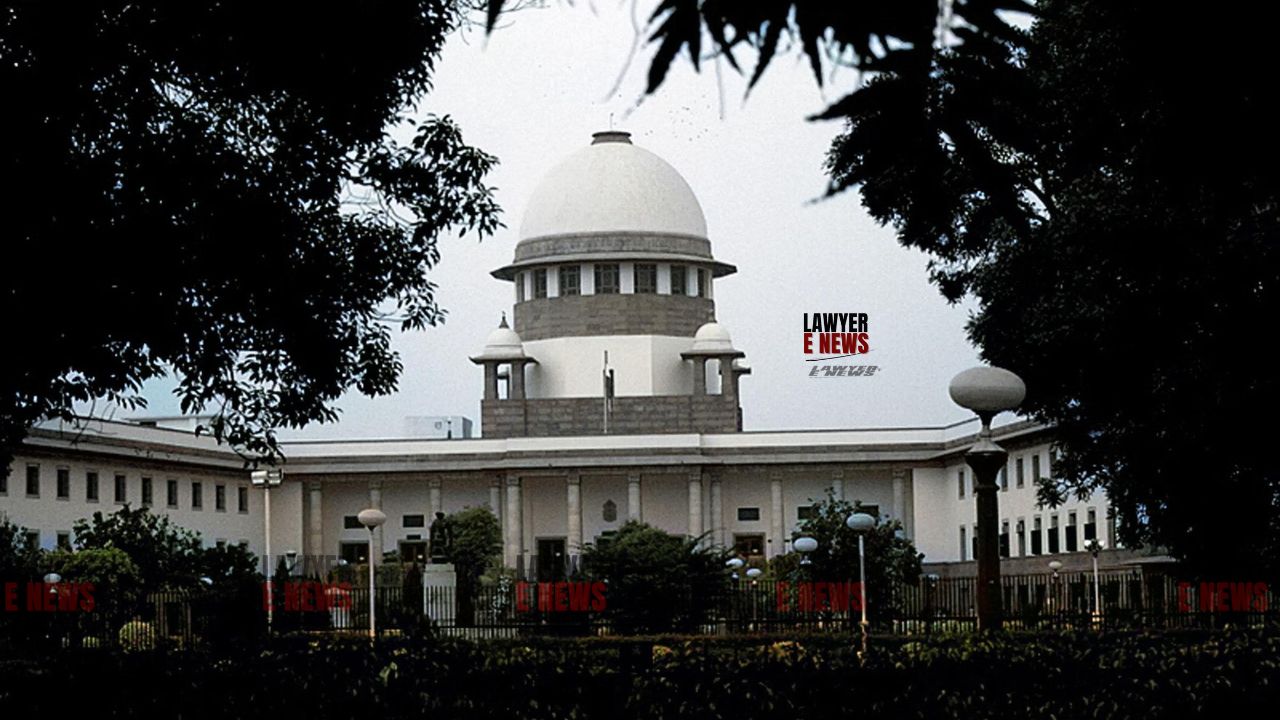
On September 18, 2025, the Supreme Court of India delivered a ruling that reasserted the caution courts must exercise when dealing with seized property in criminal trials. The bench of Justices Sanjay Karol and Prashant Kumar Mishra set aside a Gujarat High Court decision that had ordered the release of ₹50 lakh in cash seized from the accused, holding that such a direction was “premature” and contrary to the evidentiary safeguards of criminal procedure. The Court emphasized that where ownership of seized property is disputed, the trial—not interim proceedings—is the proper stage to determine entitlement.
“Muddamal Release at Pre-Trial Stage Is Unjustified Where Multiple Claims Exist”
The controversy began when one Chiragkumar Dilipbhai Natwarlal Modi filed a complaint alleging that the accused, through his firm Jay Gopal Trading Company, had defrauded him of ₹44,53,714 in a castor seeds transaction. The investigation revealed similar defaults with other merchants, inflating the alleged fraud to ₹3.49 crore. During the course of investigation, police seized ₹50 lakh in cash, treating it as “proceeds of crime.” One of the alleged victims, respondent No. 2, claimed that this exact sum belonged to him, submitting bills and ledgers of his own business dealings with the accused.
Both the Magistrate and Sessions Court rejected his application for release of the muddamal, observing that “it has become a matter of evidence as to whom the muddamal be handed over at this stage.” The Sessions Judge was categorical: “This amount relates to the proceeds of crime and hence, question of returning the said amount to the accused at this stage does not arise.”
“High Court Failed to Appreciate Sunderbhai: Currency Itself Was at the Heart of Controversy”
The Gujarat High Court, however, took a different route. Invoking Sunderbhai Ambalal Desai v. State of Gujarat (2002), it ordered the release of the seized money to respondent No. 2 against a bond, reasoning that “no prejudice is likely to be caused to the prosecution.” The Supreme Court found this reasoning flawed. While Sunderbhai had cautioned against keeping valuable property in police custody indefinitely, it had also stressed that ownership must be clear and uncontested. In the present case, the bench observed, “the money in question was recovered as part of an investigation in which the exchange of money is the subject matter of controversy… Simply because the amount owed to him matches the amount recovered does not establish that he is the only claimant to the said amount.”
The Court concluded that the High Court “failed to appreciate” the limited scope of Sunderbhai, noting that the seized cash was not like ornaments taken from a theft, but the very currency alleged to be proceeds of cheating involving multiple merchants.
“Ownership Can Only Be Determined After Trial, Not Before”
The Supreme Court restored the Magistrate and Sessions Court orders refusing release. In ringing words, it held: “The appropriate ownership of the sum of money can only be determined after consideration of all evidence and having taken into account the claims and views of all the other persons that the appellant-accused has allegedly played foul with in business.”
Since the High Court’s order had already allowed withdrawal of the money, the bench directed that the withdrawn amount, along with accrued interest, be deposited back with the trial court. It further required that the original currency notes, if still with the respondent, be produced and cross-verified with the panchnama prepared during seizure. Only thereafter could any withdrawal be permitted.
The judgment underscores the careful balance courts must strike between preserving property rights and ensuring the integrity of criminal trials. By insisting that ownership disputes over seized cash cannot be resolved at the interlocutory stage, the Supreme Court has reaffirmed the principle that criminal process must not be used to create premature entitlements. “Releasing the muddamal would be unjustified and premature,” the Court declared, thereby prioritizing evidentiary fairness over expediency.
Date of Decision: September 18, 2025