-
by sayum
29 August 2026 3:15 PM







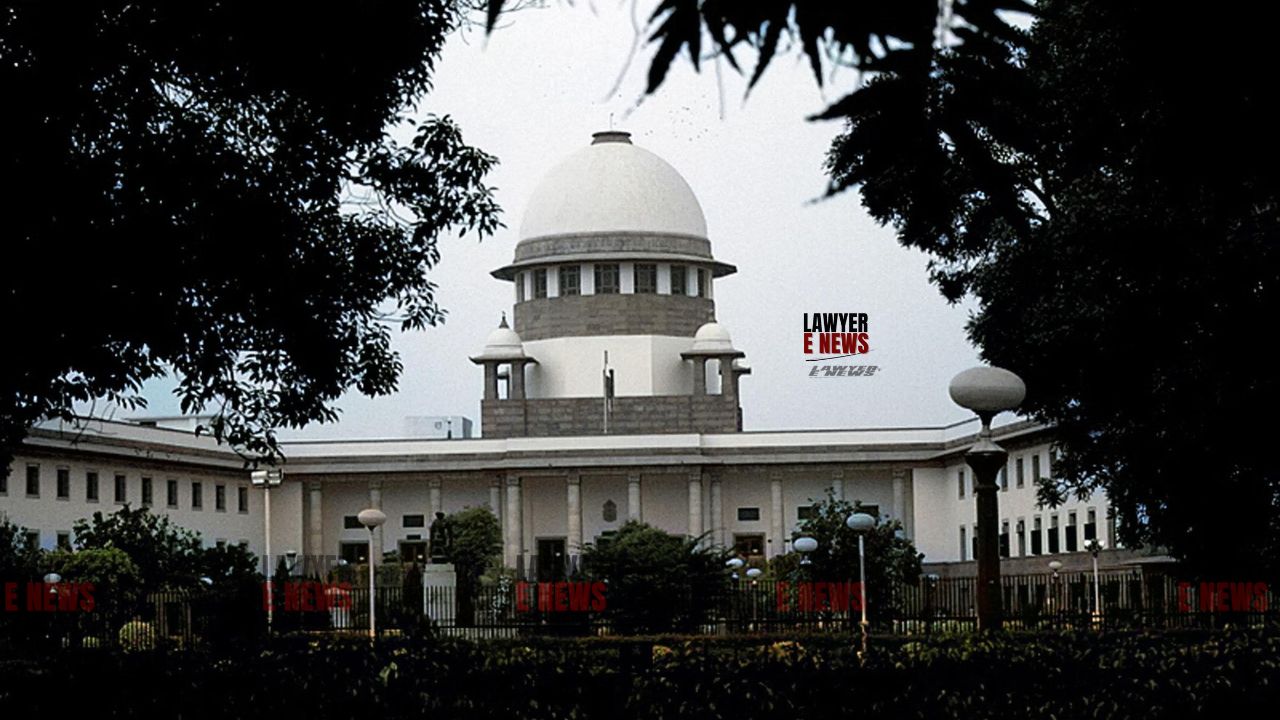
“Mens Rea Must Be of the Accused, Not Imputed From the Victim’s Mind” – SC Rejects Suicide Note as Unreliable, Affirms No Prima Facie Case Under Section 306 IPC. In a deeply consequential judgment delivered on August 18, 2025, the Supreme Court of India dismissed the criminal appeals filed by Abhinav Mohan Delkar, son of the late Member of Parliament Mohan Delkar, and upheld the Bombay High Court’s decision quashing an FIR against senior officials of Dadra and Nagar Haveli accused of abetment to suicide. The Supreme Court held that the allegations, even if taken at face value, did not disclose any proximate act, specific instigation, or mental intent (mens rea) necessary to attract Section 306 of the Indian Penal Code.
Justice K. Vinod Chandran, delivering the judgment with Chief Justice B.R. Gavai concurring, posed the central legal question in evocative terms:
“Whether every allegation or accusation levelled, a reprimand or rebuke made, an insinuation or insult voiced or even continuous acts of ill-treatment, harassment and defamation... would lead to a charge of abetment, if the person at the receiving end commits suicide, is a vexed question.”
The Court’s answer was emphatic—not unless there is clear, deliberate instigation backed by mens rea. The judgment reasserts the fundamental principle that criminal responsibility under Section 306 cannot arise from subjective despair alone.
The case arose from the suicide of Mohan Delkar, a seven-time independent MP, who was found dead in a Mumbai hotel room on February 22, 2021. A suicide note allegedly written by him accused several officers and administrators in the Union Territory of Dadra and Nagar Haveli of harassment, humiliation, and extortion. These individuals later moved the Bombay High Court under Section 482 CrPC, seeking quashing of the FIR registered against them.
The High Court quashed the FIR, holding that even if the contents of the suicide note were accepted in entirety, no offence under Section 306 IPC was made out. The matter reached the Supreme Court by way of appeal filed by Delkar’s son.
The appellant contended that the suicide note, combined with witness statements and previous complaints to Parliament’s Privileges Committee, established a pattern of systematic humiliation and intimidation, culminating in suicide.
However, the Supreme Court was not persuaded.
The Court examined the jurisprudence surrounding Section 306 and Section 107 IPC (now Sections 108 and 45 of the Bharatiya Nyaya Sanhita, 2023). It reiterated that instigation requires a direct or indirect act with intent, and mere harassment or institutional discourtesy would not suffice.
“To satisfy the requirement of instigation... a reasonable certainty to incite the consequence must be capable of being spelt out. A word uttered in the fit of anger or emotion... cannot be said to be instigation.” — Ramesh Kumar v. State of Chhattisgarh, cited at Para 13
The Court observed that Delkar’s complaints before the Lok Sabha’s Privileges Committee did not include the serious allegations later made in the suicide note, such as extortion or forced college takeover. The suicide note was, for the first time, introducing these allegations—a fact that cast doubt on its reliability.
“We cannot place any absolute reliance on the suicide note... allegations in which were not disclosed in the written complaint to the Hon’ble Speaker or the statements made before the Committee of Privileges.” [Para 36]
The Court found the recovery and production of the suicide note to be irregular, noting that the police had not seized it at the time of discovery of the body, nor had they verified the handwriting.
Further, the Court highlighted the absence of any proximate or recent incident leading up to the suicide. The events cited by the family—including being excluded from public functions or not being accorded protocol status—occurred months prior, and the deceased MP had already approached appropriate forums.
“After 10 days, on 22.02.2021, without any intervening circumstance or incident, the Parliamentarian committed suicide. Neither the incident of 02.08.2020 nor the failure of the administration in December 2020... can be seen as an instigation or causation of suicide or the proximate and prior trigger.” [Para 33]
On the Role of the Victim’s Sensitivity
In perhaps the most defining observation of the ruling, the Court drew a line between subjective distress and objective culpability.
“Mens rea cannot be gleaned merely by what goes on in the mind of the victim.” [Para 22]
The judgment cautioned against overextending criminal law into the realm of emotional fragility or personal despair, particularly in public life:
“True, a person unable to bear the pressure or withstand humiliation may succumb... but that would not necessarily mean that the alleged perpetrator had an intention to lead the victim to eventual death.” [Para 40]
The Court also invoked its earlier ruling in Prakash v. State of Maharashtra (2024), stating:
“To bring a charge under Section 306, the act of abetment would require the positive act of instigating or intentionally aiding another person to commit suicide.” [Para 20]
Rejection of Hearsay and Delayed Statements
The Court dismissed the statements of witnesses and associates of the deceased as hearsay, stating that only what was said or alleged by the deceased himself could be considered for establishing a case under Section 306.
“We are not convinced... since we cannot incorporate those statements made by others, a clear hearsay, into the written complaint.” [Para 38]
The Supreme Court's ruling is not just a verdict on one case—it is a powerful reaffirmation of the essential limits of criminal liability in cases of suicide, particularly involving public figures, and particularly where emotional anguish is not backed by criminal intent.
“However harsh or severe the harassment... unless there is a conscious deliberate intention to drive another person to suicidal death, there cannot be a finding of abetment.” [Para 22]
“A life is lost, leaving questions unanswered,” the Court acknowledged. “But despite our anxious reading... we are not convinced that there is any modicum of material to find abetment.”
In sum, the Court refused to allow emotion, speculation, or political overtones to substitute for legal thresholds of instigation, mens rea, and proximate cause.
Date of Decision: August 18, 2025