-
by sayum
24 August 2026 3:22 PM







“Forgery Allegations Must Be Investigated – Probate Cannot Block Criminal Law….Pendency of Civil Dispute No Shield Against Criminal Investigation” – Delhi High Court Upholds FIR in Alleged Will Forgery Case.
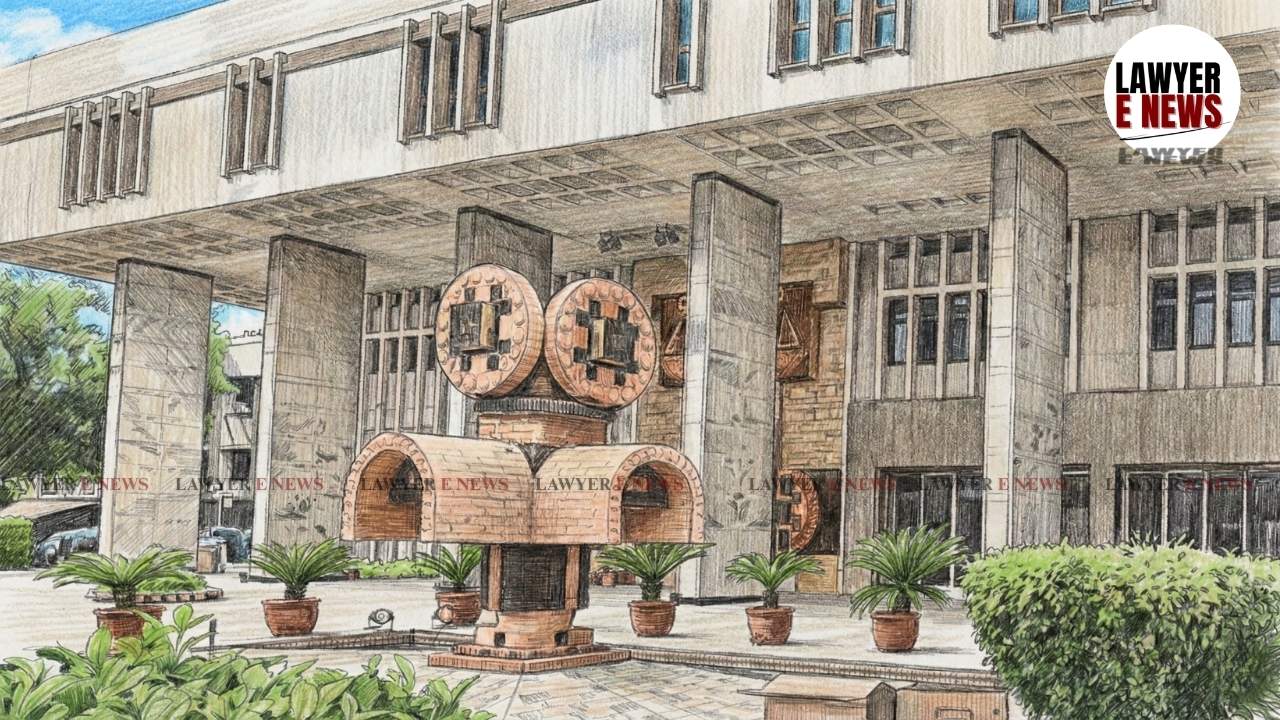
In a significant judgment Delhi High Court, presided over by Justice Neena Bansal Krishna, refused to quash an FIR registered against Babita Chopra, who is accused of forging a Will of her deceased brother to unlawfully exclude his wife and son from inheritance. The Court held that parallel civil and criminal proceedings can co-exist, and the registration of a criminal case based on prima facie material cannot be halted merely because a probate case is pending.
Quoting settled principles, the Court emphasized:
“Forgery, fabrication of documents and their use for wrongful gain are not mere matters of civil invalidity but constitute independent offences under criminal law.”
“Registered Will Does Not Immunize Against Forgery Charges”
The case revolves around a registered Will dated 29.04.2011, allegedly executed by the deceased Narender Kishore Khanna, bequeathing his estate to his mother and sister (Babita Chopra), excluding his estranged wife and son. While a probate petition was filed in 2014 and is still pending, the son (Nitesh Khanna) filed a criminal complaint in 2024, supported by a private handwriting expert’s report, alleging that the Will was forged, and the photograph and signatures were manipulated.
Justice Bansal Krishna ruled:
“Merely because the Will is subject to civil adjudication, does not mean criminal prosecution is precluded. Civil and criminal remedies operate on different thresholds and objectives.”
“High Court Cannot Conduct Mini-Trial at FIR Stage”
Rejecting Babita Chopra’s arguments that the FIR was based solely on an inconclusive expert opinion and that no ‘grave suspicion’ was made out, the Court reaffirmed that the High Court cannot evaluate the veracity of the expert report or evidence at the threshold.
“The FIR is not an encyclopaedia of all facts. At this stage, the Court cannot delve into disputed questions or the reliability of expert opinions. Those are matters of trial and investigation.”
Citing Bhajan Lal, Neeharika Infrastructure, and the recent C.S. Prasad (2026) ruling, the Court reiterated that quashing of FIR is an exception, not the norm, and can only be exercised in rare cases where no cognizable offence is disclosed.
“Forgery Is a Crime, Even If Will Is Valid Civilly”
The Court addressed the central issue—whether the existence of a registered Will, pending probate, and absence of conclusive proof, justified quashing of an FIR for forgery and use of a forged document under Sections 467 and 471 IPC.
Justice Bansal Krishna held:
“The standard of proof in probate (preponderance of probabilities) differs from criminal prosecution (proof beyond reasonable doubt). Even if the Will survives probate, forgery allegations can independently lead to conviction if criminal intent is proved.”
The Court cited Iqbal Singh Marwah v. Meenakshi Marwah and Kathyayini v. Sidharth Reddy (2025), emphasizing that the criminal justice system must take its own course, unimpeded by civil litigation.
“Handwriting Expert's Report May Not Be Final – But It’s Sufficient to Initiate Investigation”
Babita Chopra had argued that the private expert report lacked credibility, as it compared signatures from 2004 with those on the Will dated 2011, and was not yet proved in court. The Court disagreed with the contention that a non-govt expert report couldn’t trigger investigation.
The Court observed:
“At the FIR stage, conclusiveness of evidence is not a requirement. The expert opinion raises a prima facie suspicion. Whether it stands judicial scrutiny is for trial—not for quashing.”
The Court further noted that Babita had not opposed the comparison of signatures when allowed by the Court earlier in the probate proceedings, and hence, her challenge now appeared to be an afterthought.
“Probate Delay Cannot Stall Criminal Prosecution”
While the probate petition has been pending since 2014, the criminal complaint was filed in 2024, following a detailed expert analysis. The Court emphasized that delays in civil proceedings cannot be allowed to derail criminal justice, quoting the Supreme Court’s observations in M.S. Sheriff v. State of Madras:
“It is undesirable that a criminal prosecution should wait till civil matters are resolved. Public interest demands that criminal justice be swift and sure.”
“Police Investigation Must Be Allowed to Proceed”
Noting that the Magistrate had directed registration of FIR only after considering the seriousness of the allegations, and the need for police assistance to access records and signatures, the Court found no fault in the order under Section 156(3) CrPC.
“Where the facts alleged disclose commission of cognizable offences, the Magistrate is justified in ordering investigation. The High Court cannot usurp the function of investigating agency at this nascent stage.”
“Petition Dismissed – Let Law Take Its Course”
In conclusion, the Delhi High Court held that there was no exceptional ground to quash the FIR, and that the criminal investigation must continue, independently of the outcome of the probate proceedings.
“This is not a case where the FIR is entirely baseless or malicious. Allegations supported by expert report and longstanding objections require investigation. The petition, therefore, deserves to be dismissed.”