-
by sayum
05 August 2026 3:07 PM







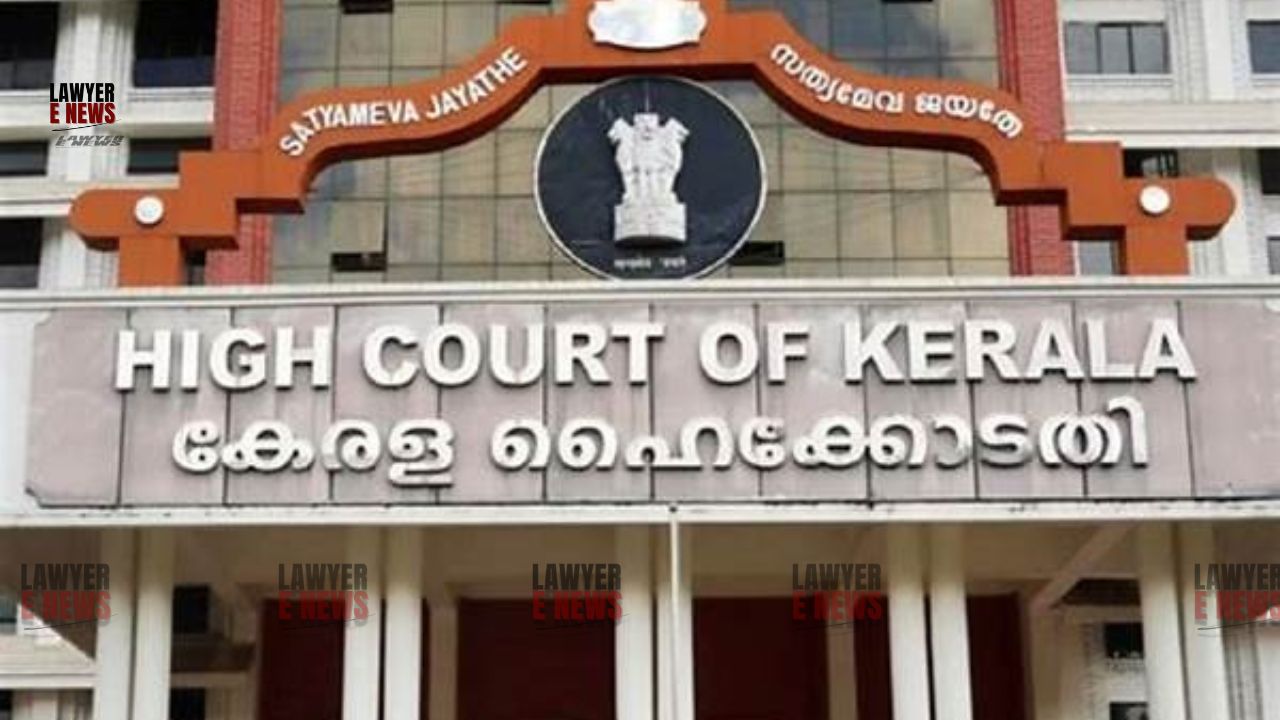
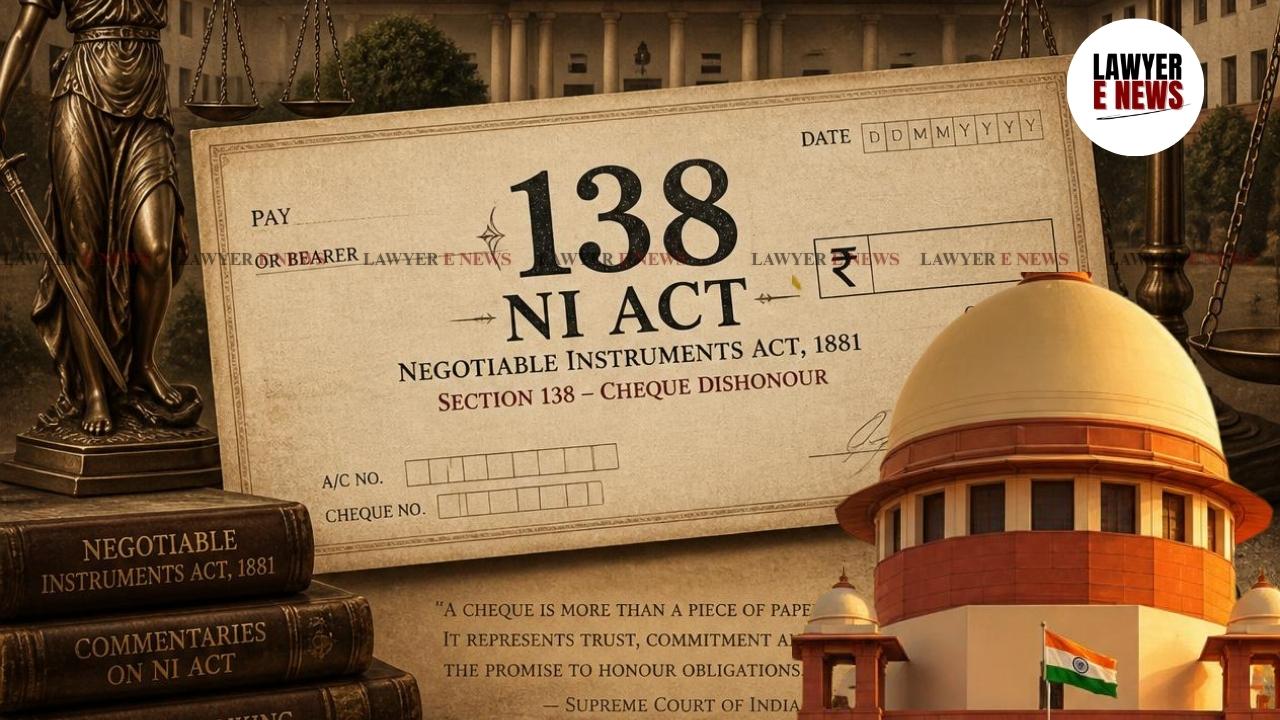
“Authorization of Joint Payee is a Legal Mandate, Not a Procedural Formality”—Kerala High Court, in a significant ruling on cheque dishonour jurisprudence, set aside the conviction of Jacob George under Section 138 of the Negotiable Instruments Act, 1881 (NI Act), holding that the complaint by a sole payee representing joint payees without valid authorization was legally untenable. Justice P.V. Kunhikrishnan remanded the matter to the trial court, clarifying that “authorization of the payee is not a mere procedural requirement, but a substantive precondition to sustain a prosecution under Section 138 of the NI Act.”
The Court further directed the immediate release of Jacob George, who was in custody for non-payment of ₹45,00,000 compensation, while allowing both parties to produce further evidence before the trial court. Importantly, the remand was limited to this specific issue without ordering a full retrial.
The case arose from a failed property transaction where complainant Santhosh and his associate Rijo had paid ₹52,02,864 to Jacob George. Following the collapse of the deal, a settlement was reached under which Jacob George issued a cheque for ₹45 lakhs to Santhosh alone. Upon dishonour of the cheque due to insufficient funds, Santhosh initiated proceedings under Section 138 NI Act before the Judicial First Class Magistrate Court, Muvattupuzha.
The trial court convicted Jacob George, sentencing him to six months simple imprisonment and directing him to pay ₹45 lakhs compensation under Section 357(3) of the Code of Criminal Procedure, 1973. On appeal, the Additional District & Sessions Judge modified the substantive sentence to “till rising of the court” but retained the default sentence on failure to pay compensation. Jacob George then approached the High Court in revision, raising a legal challenge concerning the maintainability of the complaint.
Maintainability of Complaint by Single Payee Representing Joint Payees Without Authorization
The High Court framed the pivotal legal issue: “Can one person prosecute a complaint under Section 138 NI Act when the cheque is issued towards a liability jointly owed to more than one person, without valid authorization from the others?”
Jacob George’s counsel relied on the precedent in Sunil K.J. v. State of Kerala (2020 (4) KHC 347), where the Kerala High Court had laid down the law governing joint payee prosecutions under Section 138 NI Act.
Justice Kunhikrishnan, after analysing the law, quoted from Sunil K.J. v. State of Kerala: “If the cheque is dishonoured, the prosecution can be initiated by the 'payee' or 'the holder in due course' of the cheque alone. But the 'payee' or 'the holder in due course' can prosecute a complaint in such a situation only if there is an authorization to him by the other persons.” [Para 6]
The High Court observed that the complainant had not proved any valid authorization from his co-payee Rijo. Though the complainant claimed such a document was produced, the same was not marked in evidence.
Authorization is a Substantive Ingredient, Not a Procedural Lapse
Justice Kunhikrishnan emphasized that Section 138 NI Act requires the cheque to be issued “for the discharge of any debt or other liability.” In cases of joint liability, this statutory requirement extends to ensuring the complainant has authority to prosecute on behalf of all interested parties.
The Court held: “In the light of the above principle, I think there is force in the argument of the accused.” [Para 7]
However, acknowledging the large amount involved and the potential production of authorization evidence, the Court balanced the equities by remanding the case back to the trial court for limited re-examination.
The High Court issued clear directions:
The conviction and sentence imposed by both the Magistrate and the Sessions Court were set aside.
The matter was remanded to the trial court strictly to consider the issue of valid authorization and to allow both parties to adduce additional evidence.
The trial court was directed not to conduct a de novo trial but to limit proceedings to the fresh evidence.
The accused Jacob George was directed to be released forthwith from custody unless required in any other case.
Justice Kunhikrishnan directed: “The Magistrate will try to dispose the case, as expeditiously as possible, at any rate, within three months from the date of receipt of a copy of this order.” [Para 7]
The High Court’s judgment reinforces an important principle under cheque dishonour law—when a cheque is issued for a joint liability, prosecution cannot be maintained by one individual in the absence of proven authorization. By observing,
“Without a power of attorney or authorization or any other evidence authorising the payee…he cannot accept the cheque on behalf of others and prosecute a complaint,” [Para 6]
the Court set a strict evidentiary standard in such prosecutions.
At the same time, the Court ensured fairness by permitting the complainant a fresh opportunity to produce valid evidence while protecting the accused’s liberty by ordering his release. The judgment marks a noteworthy affirmation of procedural fairness and statutory compliance in cheque bounce litigation.
Date of Decision: 21st July 2025