-
by sayum
29 August 2026 9:28 AM







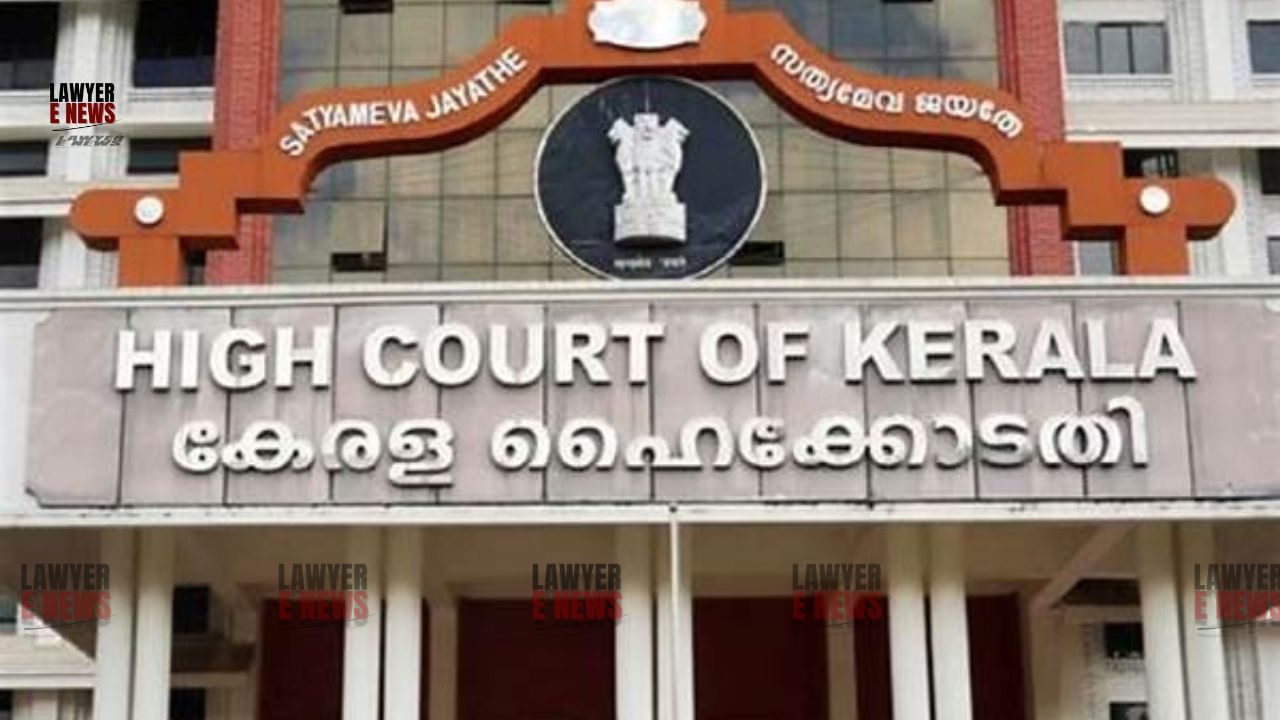
“Only the Payee or Holder in Due Course Can File Complaint Under Section 138 N.I. Act... A Company’s Manager Has No Personal Locus to Prosecute” — In a significant judgment Kerala High Court, presided by Justice A. Badharudeen, dismissed a criminal appeal filed by a complainant challenging the acquittal of the accused in a cheque dishonour case. The Court decisively held that “a company’s manager cannot institute a complaint under Section 138 of the Negotiable Instruments Act in his personal capacity when the cheque is issued towards the dues of the company.”
The decision crystallizes the legal principle that “the complainant must either be the payee or the holder in due course as defined under Sections 7 to 9 of the N.I. Act… a mere employee cannot step into that role unless duly authorised and the firm itself is the complainant.”
“Cheque Was Issued Towards Company’s Dues — Not Manager’s Personal Money” — Court Observes on Locus Standi
The dispute arose from a cheque dated 20.06.1997 for ₹65,000, drawn in favour of Kerala Roadways Ltd., which was dishonoured. Instead of the company filing the complaint, Ramachandran, the branch manager, filed the complaint in his individual capacity.
When the Judicial First Class Magistrate Court, Perinthalmanna, acquitted the accused on 04.04.2007, Ramachandran filed a criminal appeal challenging the acquittal.
However, the High Court, after closely examining the trial court records, framed the core question:
“Whether it is legally permissible for the manager of a company to sue in his individual capacity for a cheque dishonoured against the liability owed to the company?”
The answer was a clear NO.
The Court held, “Section 142(1)(a) of the N.I. Act mandates that the complaint must be made by the ‘payee’ or ‘holder in due course’… The complainant, being the branch manager, was neither the payee nor the holder in due course since the cheque was drawn in favour of Kerala Roadways Ltd., and the consideration was payable to the company — not to him personally.”
“Company Must Be The Complainant, Represented By Its Authorised Officer — Not The Officer Himself” — Court Explains The Legal Position
In unequivocal terms, Justice Badharudeen clarified, “When a cheque is issued towards the liability of a firm, the firm is the payee. The only competent person to file a complaint is the firm itself, represented through its authorised officer. The officer cannot file it in his personal name unless it is a sole proprietorship concern.”
The Court noted that this distinction is rooted directly in the statutory definitions under Sections 7 to 9 of the Negotiable Instruments Act, observing:
“A ‘payee’ under Section 7 is the person named in the instrument to whom money is directed to be paid. A ‘holder’ under Section 8 is any person entitled in his own name to possess the cheque and receive the amount. A ‘holder in due course’ under Section 9 is one who becomes the possessor for consideration.”
None of these definitions, the Court stressed, apply to the manager in his personal capacity when the cheque was drawn in the name of the company.
“A Defective Complaint Cannot Be The Foundation For Conviction” — High Court Upholds Trial Court’s Acquittal
Reaffirming the trial court’s reasoning, the High Court noted, “The prosecution was fundamentally defective because the complainant had no locus standi. Therefore, the trial court rightly concluded that the case must fail.”
The Court categorically declared, “In such cases, unless the company is arrayed as the complainant, represented by an authorised person, the prosecution does not satisfy the mandatory requirements under Section 142 of the N.I. Act.”
Conclusion — “A Company’s Debt Cannot Be Prosecuted In An Individual’s Name”
Dismissing the appeal, the Kerala High Court delivered an unequivocal message: “The prosecution, initiated by the complainant in his individual capacity, when the money was due to the firm, is defective and not as mandated by law. The trial court rightly found that the complainant’s case would not succeed, and the said finding is only to be justified. In the result, this appeal fails and is accordingly dismissed.”
This judgment serves as a vital precedent reinforcing the principle that corporate legal identity must be respected in cheque dishonour cases. Only the entity entitled to the cheque amount — whether a firm or company — can institute prosecution, and procedural compliance with Section 142 of the N.I. Act is mandatory, not optional.
Date of Decision: 16 June 2025