
-
by sayum
29 August 2026 3:15 PM







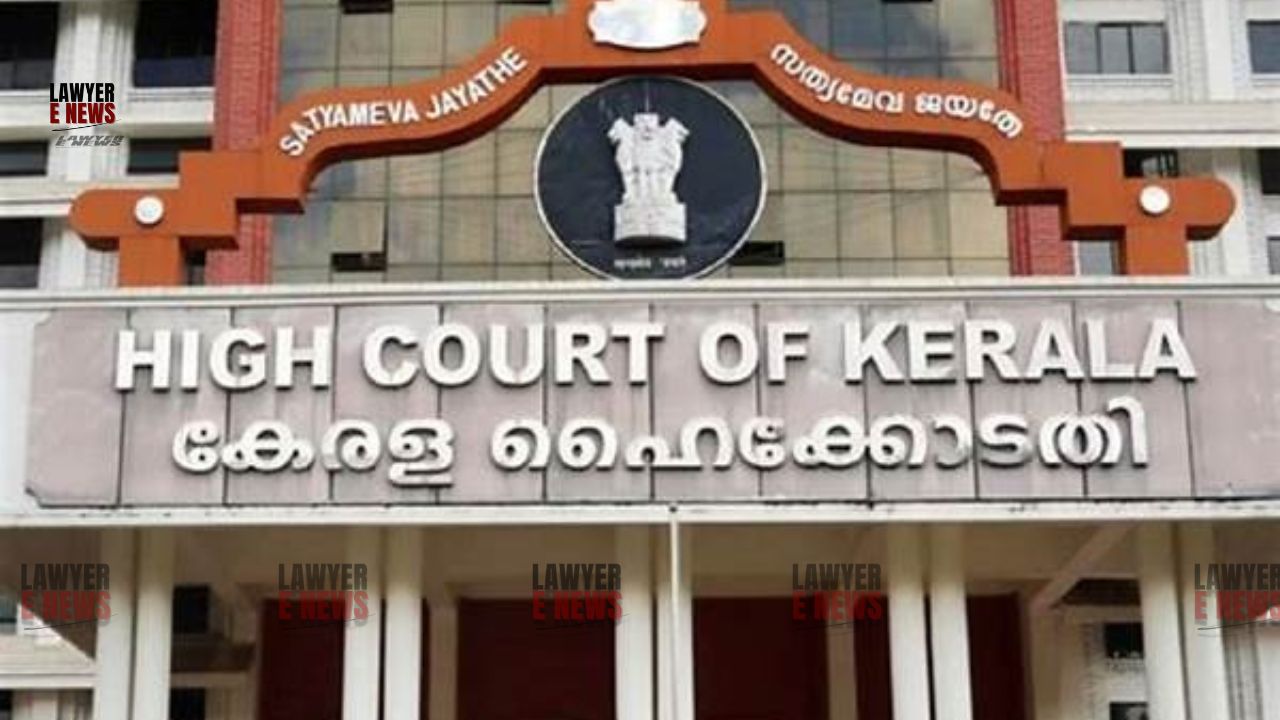
“The complainant has not disclosed the date of execution and issuance of the cheque in the complaint or in his chief affidavit… this omission creates serious doubt on the existence of any legally enforceable debt” — In a significant ruling on the scope of presumptions under the Negotiable Instruments Act, the Kerala High Court upheld the acquittal of an accused in a cheque dishonour case under Section 138 of the Negotiable Instruments Act, 1881, observing that the complainant failed to discharge his initial burden of proving the basic facts of the transaction, particularly the date of execution and issuance of the cheque.
Justice Johnson John dismissed the appeal, stating that the complainant’s omissions and contradictions in evidence severely undermined the statutory presumption in his favour and validated the accused’s defence that the cheques were issued for an entirely different purpose and misused later.
“Presumption Under Section 139 Can Be Rebutted Even Without Accused Entering Witness Box”: High Court Applies Basalingappa Principles
The case arose from a complaint filed by Sasidharan V.K., who claimed that the accused Viswanathan, a former colleague from the Ernakulam District Co-operative Bank, borrowed Rs. 1,80,000 and issued four cheques towards repayment. The cheques were dishonoured for insufficiency of funds, prompting legal action under Section 138.
The complainant alleged that:
Cheque No. 158783 dated 23.8.2004 for Rs. 70,000
Cheque No. 112887 dated 27.8.2004 for Rs. 47,000
Cheque No. 106583 dated 1.9.2004 for Rs. 25,000
Cheque No. 112888 dated 4.9.2004 for Rs. 33,000
were issued by the accused in partial discharge of the loan amount, with the remaining Rs. 5,000 to be paid in cash. However, despite statutory notice, the accused did not repay the amount.
The Judicial Magistrate of First Class-II, North Paravur, acquitted the accused, finding that the complainant failed to establish the basic ingredients of Section 138. The complainant then filed an appeal before the High Court.
“Complainant's Own Evidence Supports Accused's Version”: Court Finds Probable Defence Made Out
Justice Johnson John noted that in cross-examination, the complainant admitted that both he and the accused were colleagues at the bank during the relevant period. The accused’s defence was that the cheques were handed over in 2003 as security for an overdraft facility, not towards any private debt. The complainant allegedly misused the security cheques later to initiate criminal proceedings.
Crucially, the Court emphasized the complainant’s failure to disclose even the date of execution or issuance of the cheques, either in his complaint or chief affidavit. The Court held:
“The evidence of PW1 in cross-examination probabilizes the version of the defence… especially in view of the fact that the complainant has not disclosed the date of execution and issuance of cheque in the complaint or in his chief affidavit.”
The Court found the lack of any explanation for issuing four separate cheques on different dates for a single debt suspicious and unexplained. The complainant’s testimony was found unreliable on this aspect, weakening the statutory presumption of liability under Section 139.
“Accused Need Not Prove Defence Beyond Reasonable Doubt”: Presumption Rebutted on Preponderance of Probabilities
Citing the landmark decision in Basalingappa v. Mudibasappa [(2019) 5 SCC 418], the High Court reiterated that:
“The presumption under Section 139 is a rebuttable presumption and the standard of proof is that of preponderance of probabilities… The accused can rely on the material brought on record by the complainant himself.”
The Court further referred to APS Forex Services Pvt. Ltd. v. Shakti International and ANSS Rajashekar v. Augustus Jeba Ananth, highlighting that where the financial capacity of the complainant is questioned, or where the source of funds is doubtful, the presumption under Section 139 stands rebutted.
In this case, the accused did not adduce any direct evidence but relied entirely on the complainant’s cross-examination, which cast serious doubt on the transaction’s legitimacy.
Appeal Dismissed, Acquittal Affirmed
Concluding that the trial court rightly acquitted the accused, Justice Johnson John held:
“I find no reason to interfere with the finding in the impugned judgment that the complainant has not succeeded in proving the offence under Section 138 of the N.I. Act against the accused. Therefore, I find that this appeal is liable to be dismissed.”
The appeal was accordingly dismissed, reinforcing the view that statutory presumptions under the NI Act do not operate in a vacuum and can be rebutted effectively by inconsistencies and omissions in the complainant’s own case.
Date of Decision: August 26, 2025