Disciplinary Authority Cannot Override Enquiry Officer’s Clean Chit Without Hearing the Employee: Madhya Pradesh High Court Remands Termination for Procedural Lapse Appointment Secured by Misstating Marks Is Void Ab Initio; Human Error No Excuse Where Advantage Gained: Allahabad High Court Appeal Maintainable Despite Modified MACT Award — Kerala High Court Clarifies Scope of Appellate Review in Motor Accident Claims No Notice, No Blacklist: Calcutta High Court Quashes Debarment Over Breach of Natural Justice Prosecution Must Elevate Its Case From Realm Of ‘May Be True’ To Plane Of ‘Must Be True: Orissa High Court Strict Compliance Is the Rule, Not Exception: Himachal Pradesh High Court Dismisses Tenant's Plea for Late Deposit of Rent Arrears When Accused Neither Denies Signature Nor Rebuts Presumption, Conviction Must Follow Under Section 138 NI Act: Karnataka High Court A Guardian Who Violates, Forfeits Mercy: Kerala High Court Upholds Natural Life Sentence in Stepfather–POCSO Rape Case Married and Earning Sons Are Legal Representatives Entitled to Compensation: Punjab & Haryana High Court Enhances Motor Accident Award to ₹14.81 Lakh Driver Must Stop, Render Aid & Report Accident – Flight from Scene Is an Offence: Madras High Court Convicts Hit-And-Run Accused Under MV Act Delay May Shut the Door, But Justice Cannot Be Locked Out: Gauhati High Court Admits Union of India’s Arbitration Appeal Despite Time-Bar Under Section 30 PC Act | Mere Recovery of Money Is Not Enough—Demand and Acceptance Must Be Proved Beyond Reasonable Doubt: Delhi High Court Allahabad High Court Slams Bar Council of U.P. for Ex Parte 10-Year Suspension of Advocate Supreme Court Invokes Article 142 to End Discrimination Against Ad-Hoc Employees in Allahabad High Court: Orders Reinstatement and Regularizationi Supreme Court Declares CSR a Constitutional Duty to Protect Environment: Orders Undergrounding of Powerlines in Great Indian Bustard Habitat A Minor’s Sole Testimony, If Credible, Is Sufficient for Conviction: Supreme Court Upholds Child Trafficking Conviction Under IPC and ITPA You Can’t Invent Disqualifications After the Bid: Supreme Court Holds Joint Venture Experience Can’t Be Ignored in Tenders High Court Can't Re-Appreciate Evidence or Rewrite Contract to Set Aside Arbitral Award: Supreme Court Reinstates Award Under Quantum Meruit Once Arbitration Invoked, Criminal Prosecution Cannot Be Weaponised in Civil Disputes: Supreme Court Quashes FIR Against Former Director in Rent Row Section 319 CrPC | Pursuing Legal Remedies in Higher Forums Is Not ‘Evasion of Trial’; Custody Not Required for Summoned Accused: Supreme Court Order 21 Rule 90 CPC | Undervaluation or Procedural Lapses Constitute ‘Material Irregularity’, Not ‘Fraud’; Separate Suit to Bypass Limitation Impermissible: Supreme Court Order 21 CPC | Separate Suit Challenging Auction Sale Barred for Pendente Lite Transferees; Remedy Lies in Execution Proceedings: Supreme Court Non-Signatories Cannot Force Arbitration: Supreme Court Blocks Claim by Sub-Contractor Against HPCL Resignation Forfeits Pension Rights, But Gratuity Is Statutory: Supreme Court Partly Allows Appeal of DTC Employee’s Legal Heirs Appellate Courts Can’t Blanket-Exempt Convicted Directors from Deposit under NI Act Merely Because Company Wound Up: Supreme Court Refers Interpretation of Section 148 to Larger Bench Agreement to Sell Does Not Create Any Right in Property, Hence No Right to Compensation on Acquisition: Allahabad High Court

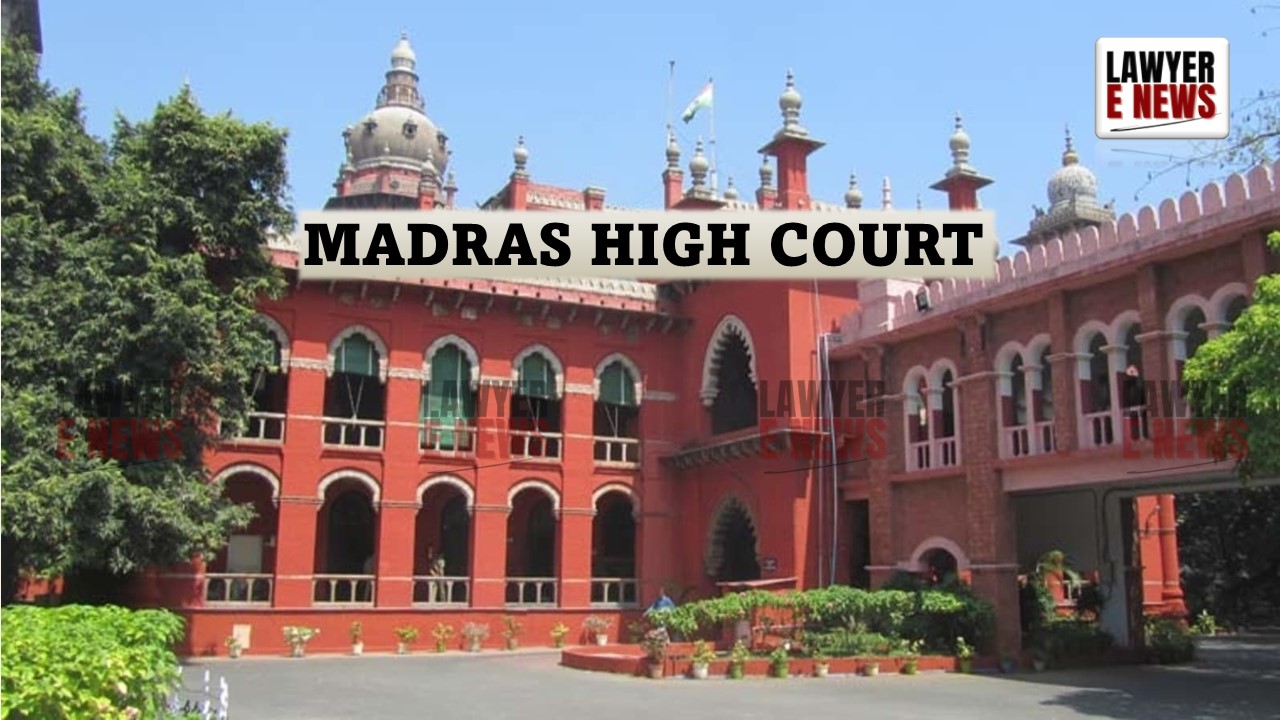
138 N.I. Act | Appellate Court Should Not Interfere With Acquittal Unless Findings Are Perversely Unreasonable: Madras High Court Refuses To Reverse Acquittal

27 July 2025 7:25 PM

By: Deepak Kumar


Madras High Court upheld the acquittal of the accused in a cheque dishonour case, reiterating that “unless the findings of the trial Court are manifestly perverse or unreasonable, the High Court, in exercise of appellate jurisdiction, ought not to disturb the acquittal.”

Justice D. Bharatha Chakravarthy, delivering the judgment, noted that the complainant's conduct—marked by the complete denial of his involvement in finance business despite contrary documentary proof—seriously undermined his credibility. The Court held, “When a complainant completely denies material facts which are proved otherwise by unimpeachable documents, the Court is justified in doubting the truthfulness of his case.”

The case arose from a complaint filed under Section 138 of the Negotiable Instruments Act by the appellant Karunanidhi, alleging that the respondent Vasanthamani borrowed ₹2,00,000 and issued a cheque in discharge of the debt. The cheque was dishonoured and the complaint followed. The trial Court, after appreciating evidence, acquitted the accused on the grounds that the complainant had suppressed his identity as a money lender, had failed to produce the promissory note, and the cheque appeared to have been issued in the course of a previous finance transaction rather than for discharge of a legally enforceable debt.

The High Court emphasised, “It is a settled position that the statutory presumption under Section 139 of the NI Act is rebuttable by the accused by preponderance of probability.” Referring to Ex.D4, an RTI reply exposing the unregistered money lending activities of the complainant, the Court found the defence version plausible and corroborated.

Justice Bharatha Chakravarthy observed, “A complete denial of existence of financial business by the complainant stands demolished by unimpeachable documentary proof. Such suppression casts a serious cloud on the entire transaction.”

The Court also commented on the complainant’s failure to produce the promissory note, despite alleging its execution as part of the loan arrangement, noting: “Non-production of primary evidence, especially when the complainant himself pleaded its existence, justifiably leads to adverse inference.”

Critically, the Court observed that the complainant sent notice to an obsolete address, further weakening the chain of evidence. “When the entire case rests on the veracity of oral testimony, and the complainant’s testimony is found false in material particulars, the trial Court’s refusal to convict is fully justified,” the Court concluded.

Dismissing the appeal, the Court pronounced, “In an appeal against acquittal, this Court cannot substitute its own view merely because another conclusion is possible. In the present case, the findings of the trial Court are sound, well-reasoned, and supported by evidence.”

The judgment strengthens the protection available to accused persons in cheque dishonour cases from unfounded claims, particularly where complainants fail to establish the existence of a legally enforceable debt.

Date of Decision: 2nd July 2025

Latest Legal News