-
by sayum
05 August 2026 3:07 PM








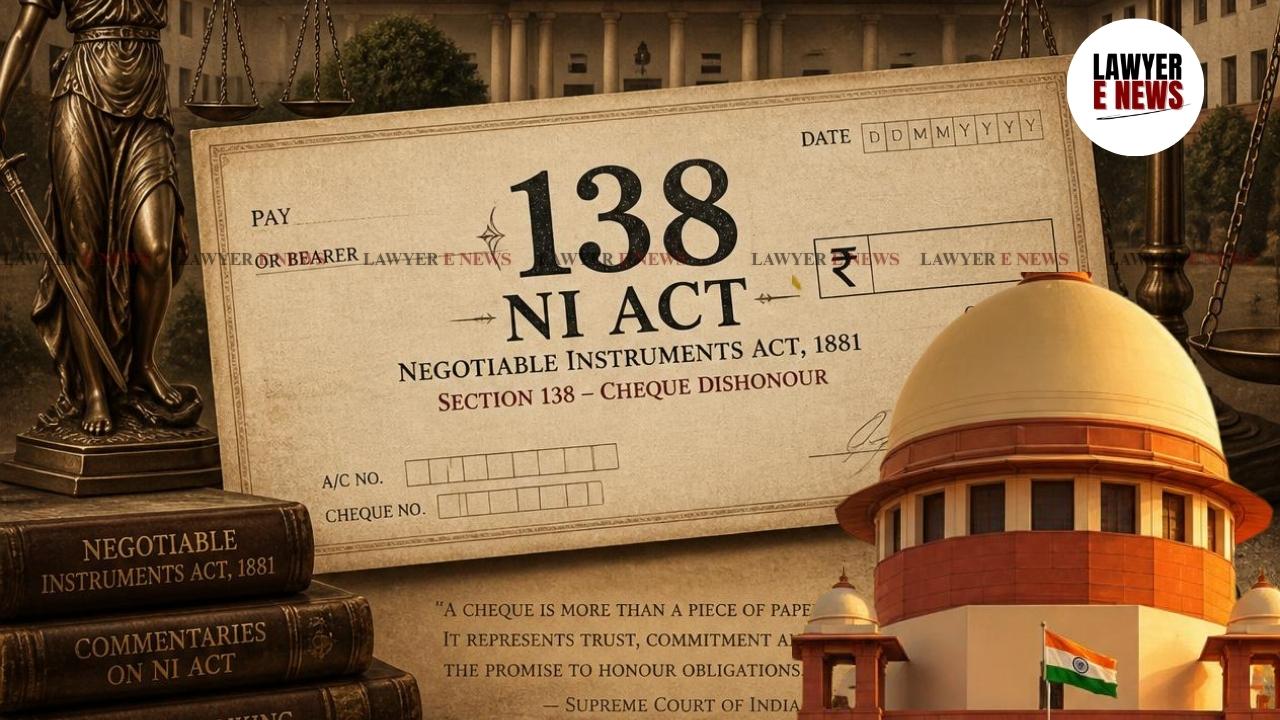
“Closing Bank Account Won’t Close the Case”: In a powerful affirmation of the commercial integrity of the Negotiable Instruments Act, the Madras High Court set aside the acquittal of an accused who attempted to dodge liability after his cheque was dishonoured on the ground of “account closed.” Justice D. Bharatha Chakravarthy, delivering the verdict in Criminal Appeal, ruled, “Closing an account after issuing a cheque is no defence under Section 138 of the NI Act. Such conduct strikes at the heart of financial credibility.”
The case involved the dishonour of a cheque for ₹3,20,000. The Trial Court had surprisingly acquitted the accused, holding that a cheque returned with the endorsement “account closed” did not attract penal consequences under the Negotiable Instruments Act. It also took the view that the complainant was not entitled to the presumption since the accused had ‘denied’ the signature on the cheque.
The High Court categorically rejected both conclusions, terming them “contrary to established legal principles and binding precedents.” Referring to the landmark Supreme Court judgment in Laxmi Dyechem v. State of Gujarat (2012) 13 SCC 375, Justice Bharatha Chakravarthy declared, “The endorsement ‘account closed’ is included within the fold of Section 138. The moment a drawer issues a cheque, he authorises the payee to draw funds from the account. If the account stands closed, it is a clear case of return for insufficiency of funds.”
On the issue of the accused’s denial of signature, the Court held that the defence fell woefully short. Justice Bharatha Chakravarthy recorded, “A bare suggestion in cross-examination about the misuse of a cheque is not sufficient to rebut the statutory presumption under Section 139. The accused did not even produce minimal evidence to establish misuse or absence of debt.”
The Court further clarified, “Presumption under Section 139 of the NI Act is mandatory unless rebutted. When the accused himself failed to enter the witness box or produce any supporting material, the presumption remains in full force. The cheque must be deemed to have been issued in discharge of a legally enforceable debt.”
Recognising that significant time had passed since the incident, the Court adopted a compensatory approach to sentencing. Justice Bharatha Chakravarthy directed the accused to pay ₹3,20,000 to the complainant on or before 31st August 2025. The Court warned, “Failure to make the payment within the stipulated time shall result in simple imprisonment for one month.” The judge underlined, “Cheque bounce cases are intended to secure commercial accountability and restitution. The judicial focus is not on retribution but on ensuring the rightful dues reach the complainant.”
The verdict underlines a critical message in cheque dishonour disputes — technicalities and feeble defences cannot defeat the fundamental presumption of debt and liability enshrined in the law. The High Court’s ruling reinforces, as Justice Bharatha Chakravarthy put it, “Financial discipline and commercial morality are the bedrock of the NI Act — an account closed after issuing a cheque is a breach of this trust.”
Date of Decision: 07/07/2025