-
by sayum
05 August 2026 3:07 PM








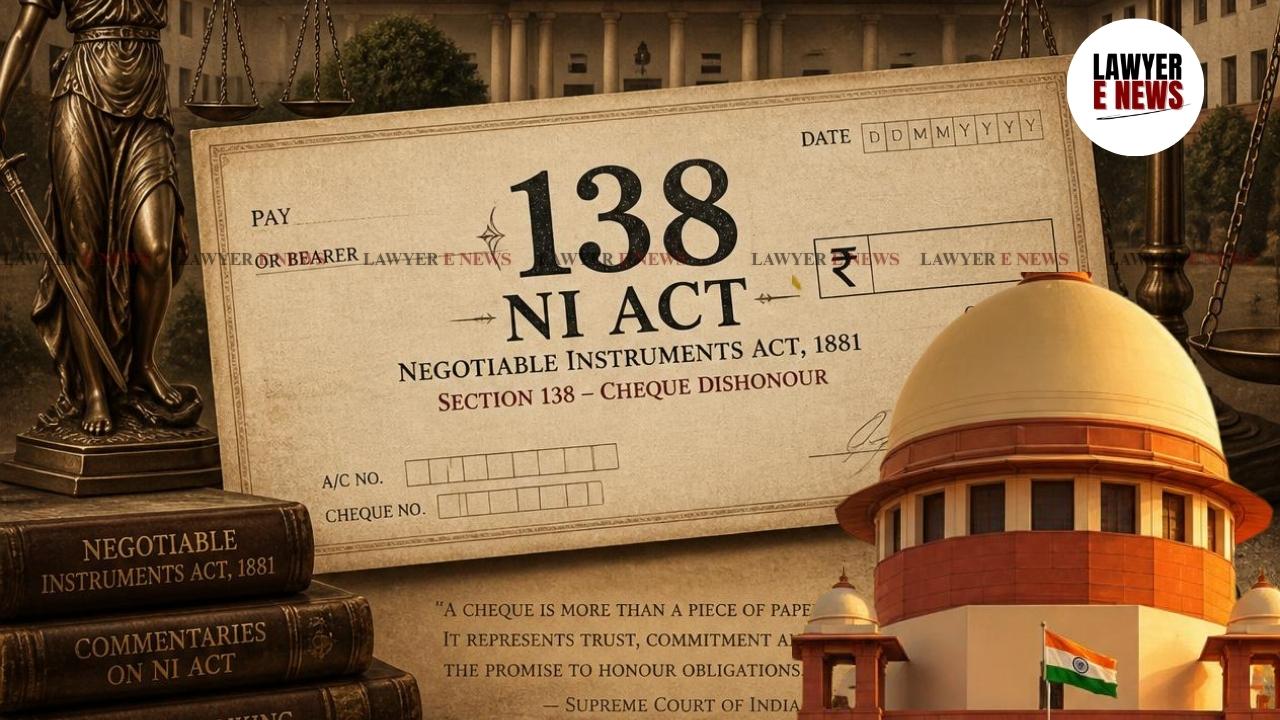
“Presumptions Under NI Act Stand Rebutted Once Accused Shows Probable Defence”, Delhi High Court Dismissing an appeal filed by the complainant against the acquittal of the accused under Section 138 of the Negotiable Instruments Act, 1881, the Court upheld that “the moment the accused raises a probable defence, the statutory presumption under Sections 118(a) and 139 of the NI Act ceases to operate, shifting the burden back to the complainant, who in this case failed to discharge it.” This judgment reiterates the crucial principle that mere issuance of a dishonoured cheque does not guarantee conviction under Section 138 unless the complainant establishes subsisting liability.
The appellant, Shri Ashok Gaur, alleged advancing a friendly loan of ₹10,00,000 to Respondent No. 2 (accused) on 24.07.2015, part in cash and part through RTGS. To secure repayment, the accused issued a post-dated cheque for the same amount, which got dishonoured due to insufficient funds. Following the issuance of a legal notice and non-payment within the stipulated period, the appellant filed a complaint under Section 138 of the NI Act.
The Metropolitan Magistrate, South, Saket Courts, New Delhi, after trial, acquitted the accused. The Trial Court held that the accused successfully rebutted the presumption under Sections 118(a) and 139 of the NI Act by demonstrating repayment of the loan amount.
Aggrieved, the complainant preferred this appeal challenging the acquittal.
The central legal question before the High Court was whether the acquittal was perverse, warranting appellate interference, especially in light of the statutory presumption under Sections 118(a) and 139 of the NI Act.
The Court meticulously examined established jurisprudence on the subject. Referring to the Supreme Court’s decision in Rangappa v. Sri Mohan (2010) 11 SCC 441 and Rajesh Jain v. Ajay Singh (2023) 10 SCC 148, the High Court reiterated: “Once the execution of cheque is admitted, a presumption under Section 118 of the NI Act as to consideration and under Section 139 as to legally enforceable debt arises. This presumption, however, is rebuttable by the accused raising a probable defence, shifting the burden back to the complainant.” [Para 12-14]
The Court emphasized that the standard of proof on the accused is not beyond reasonable doubt but based on the preponderance of probabilities.
The Court observed: “Even if the complainant’s case is taken at its highest, once the accused raised a probable defence by showing repayment of the entire cheque amount, the burden shifted to the complainant to affirmatively prove the continued existence of debt, which he failed to do.” [Para 19]
Contradictions in Defence Are Not Decisive Against the Accused
One of the primary contentions raised by the complainant was the contradictory stance of the accused—initially admitting partial borrowing, later denying any transaction, and giving conflicting explanations about issuance of the cheque.
However, the Court held: “In Section 138 cases, contradictions in defence do not automatically revive the presumption if the accused demonstrates credible circumstances rebutting liability. The complainant’s failure to prove his own claim renders contradictions in defence inconsequential.” [Para 19]
Notably, the Court underscored that ₹9,00,000 transferred from the accused’s mother’s account and ₹1,00,000 paid in cash were acknowledged, and the complainant could not substantiate his assertion that these payments related to a different transaction.
Scope of Appellate Interference in Acquittal under NI Act
The Court, while examining the contours of appellate review, referred to Rohitbhai Jivanlal Patel v. State of Gujarat (2019) 18 SCC 106:
“Although appellate courts possess wider powers in appeals under Section 138, interference with acquittal is only permissible where perversity or grave legal error is demonstrated. An appellate court cannot substitute its opinion merely because another view is possible.” [Para 11]
In this context, the High Court concluded: “The trial court's conclusion that the complainant failed to prove the subsisting liability is not perverse or contrary to settled law; hence, interference in acquittal is unwarranted.” [Para 21]
The Court noted that both RTGS transfer of ₹5,00,000 and cash payment of ₹5,00,000 were claimed by the complainant, yet apart from the RTGS, there was no cogent proof regarding the cash component.
The accused effectively demonstrated that ₹10,00,000 was returned (₹9,00,000 via bank transfer from his mother and ₹1,00,000 in cash), shifting the evidentiary burden to the complainant, which remained undischarged.
The Court opined that contradictions in the accused’s narrative, though present, did not nullify his probable defence in light of the unexplained credit transaction acknowledged by the complainant.
Ultimately, the appeal was dismissed, and the acquittal was upheld.
The Delhi High Court affirmed that the legal framework under Sections 118(a) and 139 of the NI Act presumes liability upon issuance of a cheque, but this presumption is effectively displaced once the accused demonstrates a probable defence. Mere execution of a cheque does not entitle the complainant to conviction under Section 138 without substantiating enforceable debt at the time of cheque presentation.
This judgment is a valuable reaffirmation of the principle that in cheque dishonour cases, the focus ultimately rests on the existence of legally enforceable debt and not merely on technical issuance of negotiable instruments.
Date of Decision: 03 July 2025