-
by sayum
25 August 2026 11:12 PM







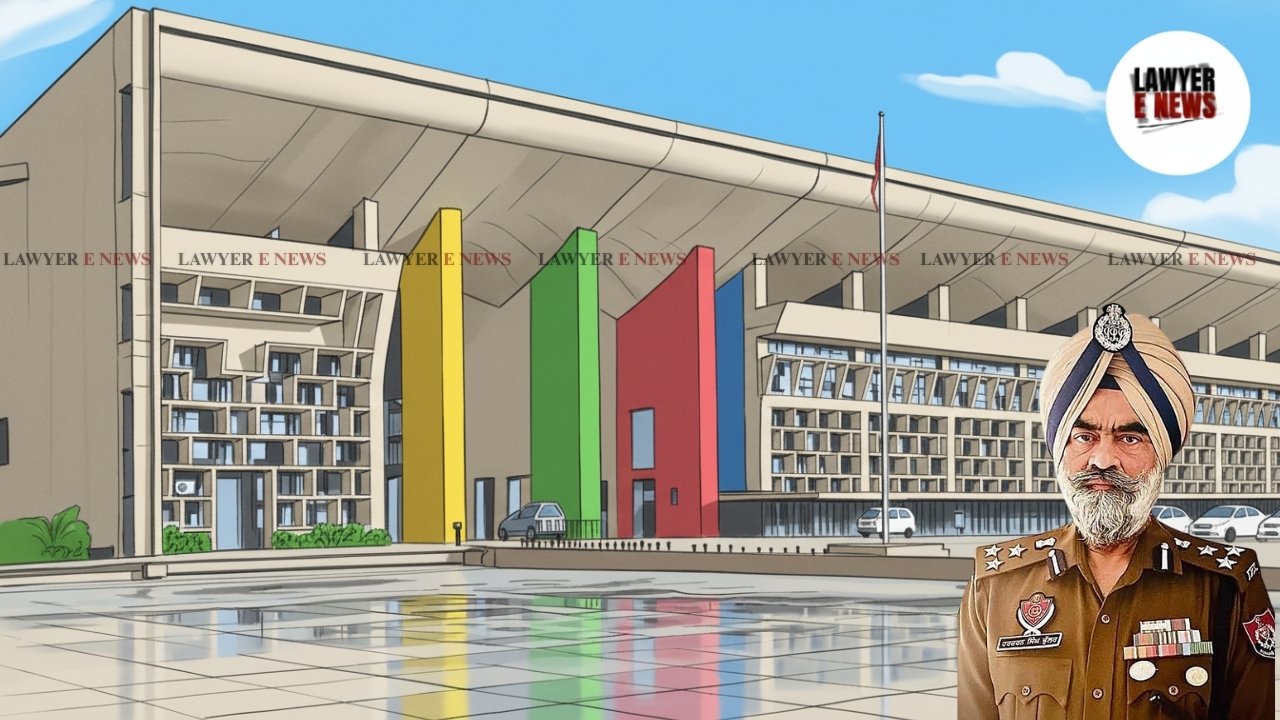
“Recovery Through Intermediary Does Not Dilute Prima Facie Case Under Section 7A PC Act”, In a significant ruling underscoring the judiciary’s stern approach towards corruption at high public offices, the Punjab and Haryana High Court on 16.02.2026 dismissed a petition for regular bail filed by Harcharan Singh Bhullar @ H.S. Bhullar, a DIG-rank officer of Punjab Police, in a corruption case registered by the Central Bureau of Investigation.
The Court, in Harcharan Singh Bhullar @ H.S. Bhullar vs. Central Bureau of Investigation, declined relief under Section 483 of the Bharatiya Nagarik Suraksha Sanhita, 2023, holding that the “prima facie material collected during verification and trap proceedings cannot be brushed aside at this stage.” The judgment was delivered by Hon’ble Mr. Justice Sumeet Goel.
The case revolved around allegations of demand and acceptance of illegal gratification amounting to ₹8,00,000/- through an intermediary for extending official favour and preventing coercive police action. The Court ruled that given the gravity of the allegations and the stage of the trial, the petitioner did not deserve the concession of regular bail.
Complaint, Controlled Call and Trap at Chandigarh
The FIR dated 16.10.2025 stemmed from a written complaint submitted by one Akash Batta on 11.10.2025. The complainant alleged that the petitioner, while posted as DIG, Ropar Range, demanded illegal gratification through a private intermediary, Krishanu Sharda, to ensure favourable treatment in FIR No. 155/2023 registered at Police Station Sirhind and to prevent coercive steps against his business.
The complaint was subjected to discreet verification by the CBI. During verification, conversations between the complainant and the intermediary were recorded. A controlled call allegedly captured the petitioner instructing the intermediary to collect ₹8,00,000/-. On the basis of the verification report dated 15.10.2025, the FIR was registered and a trap was laid at Chandigarh on 16.10.2025.
The co-accused intermediary was apprehended while allegedly accepting ₹5,00,000/- as part of the demanded bribe. The petitioner was arrested the same day. A final report under Section 193 of the BNSS was filed on 03.12.2025. His earlier plea for bail had been rejected by the Special Judge, CBI, Chandigarh.
The petition raised multiple legal grounds. The petitioner argued absence of recovery from him, reliance solely on electronic evidence, alleged procedural irregularities in arrest, and lack of CBI jurisdiction under Section 6 of the Delhi Special Police Establishment Act, 1946. It was further contended that he was already on bail in a disproportionate assets case, was under suspension, and therefore posed no risk of influencing witnesses.
The prosecution countered that recorded conversations, WhatsApp data, the controlled call and trap recovery established prima facie demand and acceptance. It was argued that the offence under Sections 7 and 7A of the Prevention of Corruption Act, 1988 was clearly attracted, even where acceptance was through an intermediary.
The Court also considered the stage of trial, noting that charges had not yet been framed, and that the complainant and shadow witness were yet to depose.
Court’s Observations on Corruption and Bail Principles
Justice Sumeet Goel prefaced the analysis by invoking constitutional values, observing in an earlier cited judgment that, “Where corruption takes roots, the Rule of Law is replaced by the Rule of Transaction.” Quoting the Supreme Court in Niranjan Hemchandra Sashittal and Manoj Narula, the Court reiterated that corruption “erodes the fundamental tenets of the rule of law.”
The Court meticulously restated settled bail jurisprudence as laid down in State through CBI vs. Amaramani Tripathi and Kalyan Chandra Sarkar vs. Rajesh Ranjan, emphasizing that discretion must be exercised judiciously, keeping in view “prima facie satisfaction of the court in support of the charge,” gravity of offence, likelihood of influencing witnesses and danger of justice being thwarted.
Recovery from Intermediary and Electronic Evidence: Prima Facie Sufficient
Addressing the argument that no recovery was effected from the petitioner, the Court held that this contention did not advance the petitioner’s case at the bail stage. It observed that Section 7A of the Prevention of Corruption Act “squarely covers any person who accepts or obtains undue advantage to influence a public servant by corrupt or illegal means.”
The Court noted that recorded conversations, digital communication and the controlled call “prima facie indicate a demand for illegal gratification and the collection of part of the bribe amount through a co-accused.” At the stage of bail, detailed scrutiny of electronic evidence was unwarranted and its veracity would be tested at trial.
Significantly, the Court observed that “the argument that no recovery has been effected from the petitioner does not, by itself, entitle him to bail when the prosecution alleges acceptance through an intermediary.”
Stage of Trial and Apprehension of Influence
The Court found the proceedings to be at a nascent stage. Charges had not yet been framed. The complainant and shadow witness, described as forming the substratum of the prosecution case, were yet to be examined. The sanction order, though stated to have been granted, had not yet been formally placed on record.
Given the petitioner’s senior rank in the police hierarchy, the Court held that apprehension of influence over subordinate police officials could not be dismissed lightly. It ruled that suspension “does not ipso facto neutralize the possibility of influencing of the witnesses and tampering with the evidence.”
The grant of bail in a separate disproportionate assets case was held not to create parity. Each case, the Court emphasized, must be evaluated on its own factual matrix.
Jurisdictional Objection Under DSPE Act
On the challenge to CBI jurisdiction under Section 6 of the DSPE Act, the Court observed that substantial part of the cause of action, including the trap proceedings, occurred at Chandigarh. The objection was not considered sufficient at the bail stage to outweigh the gravity of allegations and prima facie material.
Bail Refused, Liberty After Examination of Key Witnesses
Considering “the gravity of the allegations, the prima facie material collected during verification, trap laid by the police, the role attributed to the petitioner through an intermediary, the stage of the proceedings, the vulnerability of material witnesses, the continuing investigation under Section 193(9) BNSS and the potential influencing of the witnesses,” the Court dismissed the petition.
However, liberty was granted to the petitioner to apply afresh for regular bail before the Special Court after examination of the material witnesses, namely the complainant and shadow witness. The Court clarified that its observations shall not affect the merits of the trial.
The ruling reinforces a consistent judicial message: allegations of corruption at high public offices demand cautious scrutiny at the stage of bail, particularly where electronic evidence, trap recovery and vulnerability of witnesses coalesce to form a prima facie case.
Date of Decision: 16/02/2026