-
by sayum
25 August 2026 11:12 PM







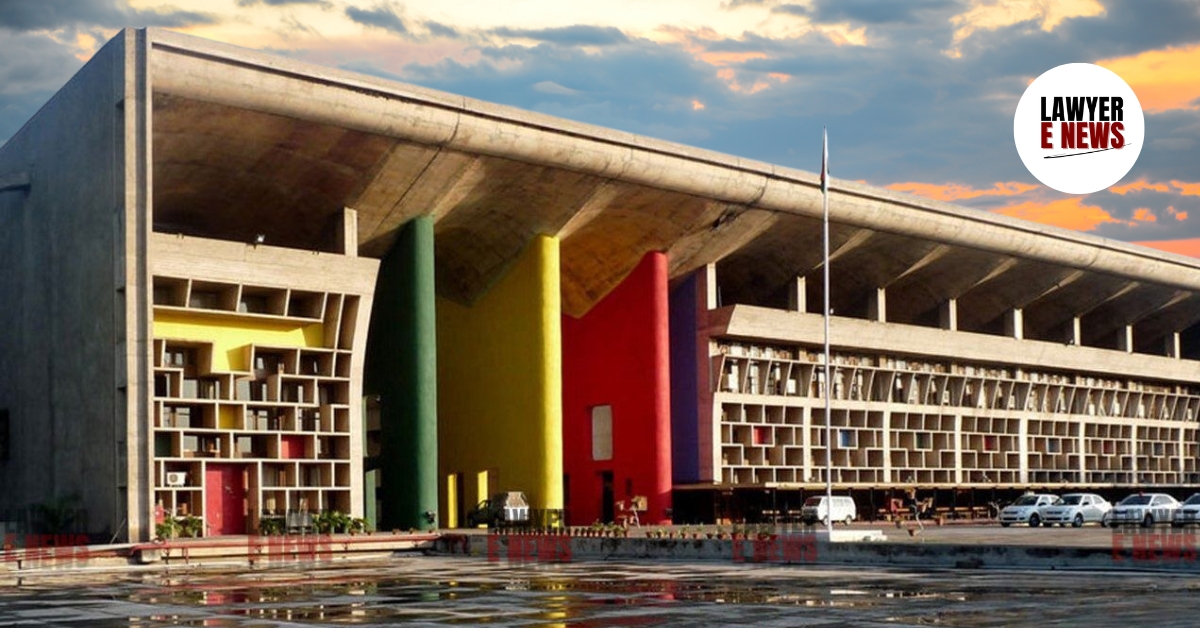
“Mere Representations Do Not Revive a Stale and Time-Barred Claim” - Punjab & Haryana High Court at Chandigarh dismissed a writ petition seeking implementation of a departmental order granting pay parity with a junior and consequential pensionary benefits. Exercising jurisdiction under Articles 226 and 227 of the Constitution, Justice Namit Kumar held that the petition suffered from “gross and unexplained delay,” reiterating that writ courts will not entertain stale service claims resurrected after decades.
The Court declined to grant mandamus for implementation of an office order dated 03.03.2006, observing that repeated representations and legal notices cannot breathe life into a claim long buried by inaction.
The petitioner, a retired Punjab Government employee who superannuated on 30.11.2004, had initially submitted a representation on 16.01.2001 seeking pay protection. His grievance was that his junior, promoted on 30.01.1989, had been fixed at a higher pay scale.
The department accepted his claim and passed an office order dated 03.03.2006 directing that his pay be fixed at par with his junior with effect from 30.01.1989. However, according to the petitioner, the order was never implemented. Though his case for re-fixation of salary and pension was forwarded to the Accountant General and the Treasury in 2006, no arrears or revised pension were released.
The petitioner asserted that he made repeated visits, sent letters in 2017, filed an RTI application, supplied a copy of his service book when it was allegedly misplaced, responded to a departmental query in 2024, and even issued a legal notice in August 2025. Yet, implementation remained pending. He approached the High Court only in 2026—nearly 36 years from the original cause of action in 1989 and almost 19 years after the departmental order in his favour.
The principal issue before the Court was whether the writ petition seeking enforcement of a departmental order and consequential pensionary benefits could be entertained despite extraordinary delay.
The petitioner contended that since his pension continued to be adversely affected, the cause of action was recurring in nature. He relied upon Union of India v. Tarsem Singh (2008) to argue that claims involving pay and pension constitute continuing wrongs.
The State, on the other hand, argued that the petition was hopelessly barred by delay and laches. The Court was urged to decline discretionary relief under Article 226.
Justice Namit Kumar undertook an extensive survey of precedents including Yunus (Baboobhai) A. Hamid Padvekar v. State of Maharashtra, State of Uttaranchal v. Shiv Charan Singh Bhandari, Jagdish Lal v. State of Haryana, Chairman, U.P. Jal Nigam v. Jaswant Singh, and recent decisions of the same High Court.
Quoting the Supreme Court in Yunus (Baboobhai), the Court reiterated that “Delay or laches is one of the factors which is to be borne in mind by the High Courts when they exercise their discretionary powers under Article 226.” It emphasized that equitable jurisdiction cannot be invoked where negligence and prolonged inaction prejudice settled positions.
The Court drew strength from the observation that “Every representation to the Government for relief, may not be replied on merits… The replies to such representations, cannot furnish a fresh cause of action or revive a stale or dead claim.”
Recurring Cause of Action – Distinguished from Tarsem Singh
Addressing the reliance on Tarsem Singh, the Court held that the judgment was distinguishable. In Tarsem Singh, the Supreme Court had restricted arrears but did not condone inordinate delay spanning decades without explanation.
Justice Namit Kumar observed that the doctrine of continuing wrong was unavailable to a petitioner who had “remained silent for nearly two decades” even after the order dated 03.03.2006 was passed in his favour.
The Court categorically held that “Mere submission of representations or issuance of a legal notice does not extend the period of limitation nor does it revive a stale and time-barred claim.”
Detailed Findings and Reasoning
The Court noted that the petitioner approached the writ court after more than 36 years from the date his junior was promoted and 19 years after the departmental order granting him relief. There was no convincing explanation for this prolonged silence.
Invoking the principle reiterated in Shiv Charan Singh Bhandari, the Court emphasized that “Anyone who sleeps over his rights is bound to suffer the consequences,” and echoed the metaphor that an employee who awakens like a “Rip Van Winkle” cannot seek judicial indulgence at his convenience.
The judgment underscores that Article 14 cannot be invoked to claim parity at a belated stage. Equality must be asserted within a reasonable time. Even in the absence of a statutory limitation for writ petitions, courts insist on reasonable diligence.
Importantly, the Court observed that once an employee retires and fails to agitate pay-related grievances during service, the benefit of continuing wrong doctrine becomes unavailable in many circumstances. The reliance on repeated representations was rejected, with the Court stating that such attempts “defeat the very object of equitable relief.”
Dismissing the petition, the Court held that the writ was barred by gross delay and laches. Despite acknowledging that the departmental order had accepted the petitioner’s claim for pay parity, the Court declined to exercise discretionary jurisdiction due to unexplained inaction spanning decades.
The petition was dismissed, with parties left to bear their own costs.
The ruling reaffirms a consistent judicial stance that writ courts are courts of equity, and equitable relief under Article 226 is not meant to resurrect dormant service claims after prolonged silence.
Date of Decision: 12.02.2026