
-
by sayum
26 August 2026 1:49 PM







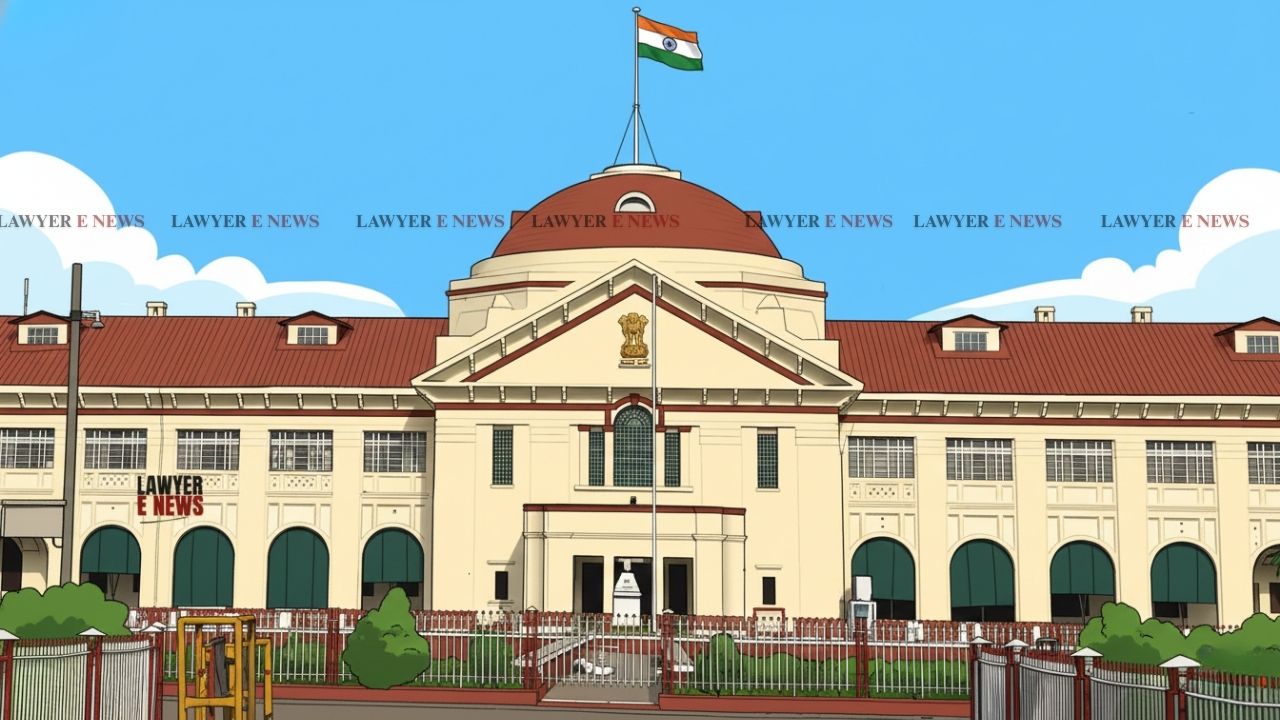
"A Judicial Decision Invalidating an Unconstitutional Amendment Cannot Inadvertently Nullify a Valid and Constitutional Provision Which the Legislature Would Never Have Repealed Without Providing a Replacement", Patna High Court has settled a vexed question that had left excise and customs lawyers without a clear appellate forum for nearly two decades — holding that the Supreme Court's 2014 declaration of the National Tax Tribunal Act as unconstitutional automatically revived Section 35G of the Central Excise Act, 1944 and Section 130 of the Customs Act, 1962, restoring to the High Court its jurisdiction over substantial questions of law in tax matters.
A Division Bench of Justice Bibek Chaudhuri and Justice Dr. Anshuman, disposing of a batch of four appeals, rejected the respondents' preliminary objection and held that no fresh legislation is required to breathe life back into a statutory provision that was omitted solely because Parliament was replacing it with an unconstitutional substitute.
The Legislative Sequence That Created the Problem
Section 35G of the Central Excise Act and Section 130 of the Customs Act were the two provisions that gave the High Court appellate jurisdiction over substantial questions of law arising from orders of the Customs, Excise and Service Tax Appellate Tribunal. They were the practising advocate's primary gateway to the High Court in Central Excise and Customs litigation.
Parliament enacted the National Tax Tribunal Act, 2005, effective 28 December 2005, creating a National Tax Tribunal to be interposed between the Appellate Tribunal and the Supreme Court. To make way for this new body, the NTT Act omitted Section 35G, Section 130, and several analogous provisions — stripping the High Court of its appellate jurisdiction in tax matters.
The NTT Act was then challenged before the Supreme Court. In Madras Bar Association v. Union of India, (2014) 10 SCC 1, a Constitution Bench struck down the entire NTT Act as unconstitutional, holding that the jurisdiction to decide substantial questions of law is vested under the Constitution exclusively in the High Courts and the Supreme Court and "cannot be vested in any other body as a core constitutional value would be impaired thereby."
That left a legal puzzle with real consequences for pending and future litigation: Section 35G and Section 130 had been omitted from the statute book. The NTT that was meant to replace them was dead. Was there any forum at all for substantial questions of law between the Appellate Tribunal and the Supreme Court?
The Respondents' Objection: No Forum, No Appeal
When the Commissioner of Central Excise and Service Tax, Patna filed appeals under Section 35G before the Patna High Court, the respondents — Indian Oil Corporation Limited and others — raised a pointed preliminary objection. Section 35G, they argued, had been validly omitted by Parliament on 28 December 2005. The Supreme Court's subsequent declaration of unconstitutionality of the NTT Act could not, by itself, automatically revive a provision that Parliament had repealed. Without fresh legislation expressly restoring Section 35G, the provision simply did not exist and the appeals were not maintainable.
The respondents relied on an earlier Division Bench ruling of the Patna High Court itself in Prabhat Jarda Factory India v. Commissioner of Central Excise Patna (Tax Case No. 2 of 2010, dated 18.07.2019), where the Court had acknowledged that Section 35H of the Central Excise Act stood deleted and had directed the petitioner to seek whatever remedy may be available — effectively declining jurisdiction.
The Appellants' Answer: The Doctrine of Automatic Revival
The Commissioner-appellants, through Additional Solicitor General Dr. K.N. Singh, advanced a constitutional argument grounded in the Supreme Court's nine-judge Constitution Bench ruling in Property Owners Association v. State of Maharashtra, (2024) 18 SCC 1.
That case had addressed an analogous question in the constitutional domain. Article 31-C of the Constitution had been amended by the 42nd Amendment. The 42nd Amendment was struck down by the Supreme Court in Minerva Mills Ltd. v. Union of India, (1980) 3 SCC 625. The question was whether the original text of Article 31-C stood revived, or whether the provision was left in limbo. The Supreme Court in Property Owners Association held definitively that "if an amended text is invalidated, the only valid expression of legislative intent is revival of the original text."
The ASG argued that the same principle applied with full force to the present case. Section 35G was a valid, constitutional provision. Parliament omitted it only to make way for the NTT. The NTT having been declared unconstitutional, the sole reason for the omission fell away — and the original provision must automatically revive.
"A Legal Vacuum Was Never the Legislative Intent"
The Court accepted the appellants' argument in full. It reasoned that the practical consequence of the respondents' position would be the creation of precisely the kind of legal vacuum that constitutional law abhors.
Quoting from Property Owners Association, the Court underlined the principle: "The practical effect of such an outcome would be that a judicial decision invalidating an unconstitutional amendment would also inadvertently nullify a valid and constitutional provision, which the legislature would never have repealed without providing a replacement."
Parliament omitted Section 35G because it was providing a replacement — the NTT. Once the replacement was constitutionally invalidated, there was simply no basis to allow the omission to stand. To do so would produce what the Court called a "third outcome" — neither the original provision surviving nor the NTT substitute operating — which was never contemplated by any legislature at any stage.
High Court's Jurisdiction Over Substantial Questions of Law Is Constitutionally Mandated
The Court drew additional strength from the Constitution Bench's own reasoning in Madras Bar Association, which had made clear that the NTT Act was unconstitutional precisely because it sought to vest the High Court's jurisdiction over substantial questions of law in a body that lacked the constitutional characteristics of a superior court.
"The jurisdiction to decide substantial questions of law vests under our Constitution only with the High Courts and the Supreme Court and cannot be vested in any other body as a core constitutional value would be impaired thereby," the Court quoted. Once the usurping body was struck down, that jurisdiction had to revest automatically in the High Court — not hang suspended in a vacuum awaiting fresh legislation.
The Court held that no further legislative or judicial direction was required. The revival was automatic, immediate, and complete upon the Supreme Court's declaration of unconstitutionality of the NTT Act.
The preliminary objection to maintainability was rejected. All four appeals under Section 35G of the Central Excise Act and Section 130 of the Customs Act were held maintainable. The Court directed that each appeal be listed separately for hearing on merits on 6 April 2026.
Date of Decision: 18 March 2026





