-
by sayum
27 August 2026 3:32 PM







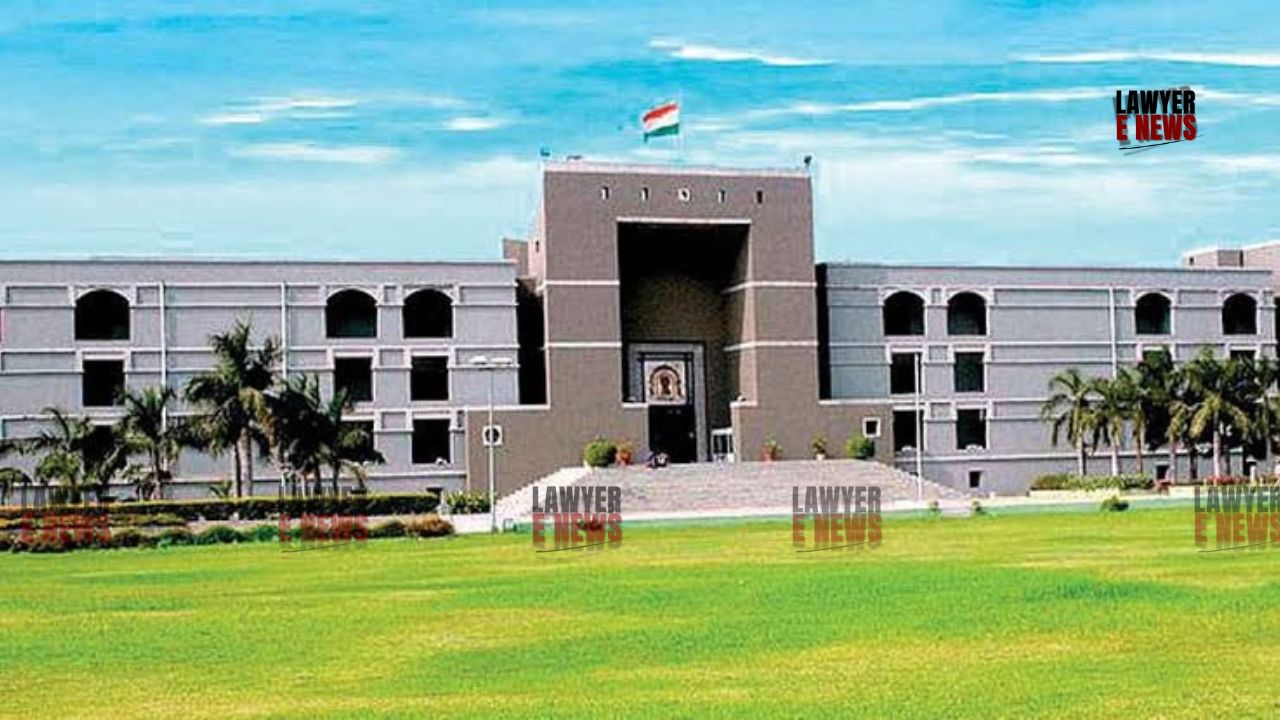
"A Noble Profession of Advocacy Cannot Be Allowed to Be Tarnished in Such a Manner", In a case exposing a brazen impersonation racket targeting litigants, the Gujarat High Court rejected the anticipatory bail application of an LLB final-semester student who allegedly posed as an enrolled advocate of the Supreme Court of India, used a fabricated Bar Council of Gujarat enrollment card, and along with other accused is alleged to have defrauded victims of approximately Rs. 80,00,000/-.
The applicant, an LLB final-semester student working as a junior intern, was alleged to have represented herself as an enrolled advocate before unsuspecting litigants. The FIR was registered on February 1, 2026, covering incidents alleged to have occurred between January 22, 2025 and February 1, 2026. During investigation, a panchanama was conducted at the shop and residence of the applicant's husband, and a startling array of incriminating material was recovered. Multiple other victims subsequently came forward, and the total alleged fraud by all accused in connivance was placed at Rs. 80,00,000/-. A notice under Section 35(3) of the BNSS had also been issued to the applicant.
The Court was required to determine whether anticipatory bail under Section 482 of the Bharatiya Nagarik Suraksha Sanhita, 2023 ought to be granted, applying the principles laid down by the Constitution Bench in Gurubaksh Singh Sibbia & Others, (1980) 2 SCC 665, and whether custodial interrogation was necessary given the scale and nature of the alleged fraud.
A Haul of Forged Instruments
The Court noted in detail the material recovered during the panchanama conducted at the shop and residence of the applicant's husband. Visiting cards bearing the applicant's name as an advocate were recovered. A fabricated identity card purportedly issued by the Bar Council of Gujarat bearing Enrollment No. G/356F/2019 in the applicant's name was seized — this at a time when the applicant had not even completed her LLB degree. A case register recording case details, a board proclaiming the applicant as an advocate of the Supreme Court of India, seals of the Kalol Taluka Police Station, notarial seals, a notarial register, a calendar and a handbag both displaying the applicant's name as an advocate of the High Court along with her WhatsApp number and email address were all recovered during the same panchanama.
The Court found that the material prima facie established the applicant's active participation in presenting herself as a qualified, enrolled advocate to unsuspecting victims.
Custodial Interrogation Necessary to Reach the Roots
The prosecution pointed out that after the FIR was registered, statements of several other victims had already surfaced, taking the total amount allegedly swindled by all accused in connivance to Rs. 80,00,000/-. The Court accepted this submission, holding that custodial interrogation was essential not merely to investigate the present complainant's grievance but to uncover the full network, trace other victims, and determine the involvement of other persons.
"Custodial interrogation would be required to reach to the roots of the alleged offence and involvement of the other persons, if any, and to trace out other victims in all sum of Rs. 80,00,000/- which is alleged to have been swindled by all the accused in connivance with one another."
Dignity of the Profession
The Court did not confine itself to the facts alone. It made a pointed observation on the broader harm caused by such impersonation to the legal profession itself.
"It transpires that a noble profession of advocacy cannot be allowed to be tarnished in such a like manner."
This observation, though brief, underscores the Court's view that impersonation of advocates strikes not merely at the victims defrauded but at the institutional integrity of the Bar and the trust that litigants repose in their legal representatives.
Defence Submissions Rejected
The applicant's counsel had argued that the applicant was falsely implicated, that she was merely handling revenue work as a junior intern under her brother-in-law who is an enrolled advocate, that no Vakalatnama was ever filed in her name before any court, and that the complainant himself had paid Rs. 3,27,000/- in cash and had filed the complaint only because he did not wish to pay the fees. The counsel also pointed to the delay in registration of the FIR as a ground of doubt.
The Court was not persuaded by any of these submissions. The physical recovery of a fabricated enrollment card, police station seals, notarial seals, and multiple instruments bearing the applicant's name as an advocate left little room for the defence narrative at this stage.
Constitution Bench Principles Applied
Testing the case on the touchstone of the Constitution Bench judgment in Gurubaksh Singh Sibbia & Others, (1980) 2 SCC 665 — which lays down that anticipatory bail is an extraordinary remedy to be granted in exceptional circumstances — the Court found no exceptional ground warranting exercise of discretion in favour of the applicant. The application was accordingly rejected and the rule discharged.
The applicant's counsel further requested that the order be stayed to enable a challenge before the Supreme Court. The Court rejected that request as well, given the facts and circumstances of the case.
The Gujarat High Court's order is an unambiguous judicial rebuke of the growing menace of fake advocates defrauding vulnerable litigants. The recovery of a fabricated Bar Council enrollment card, police station seals, and notarial instruments from the residence of a student yet to complete her law degree presented a prima facie case that the Court found left no room for pre-arrest protection. The observation that the noble profession of advocacy cannot be permitted to be tarnished in such a manner signals that Courts will take a firm view in cases where the credibility of the legal profession is weaponised against the very litigants it is meant to serve.
Date of Decision: April 8, 2026