-
by sayum
27 August 2026 3:32 PM







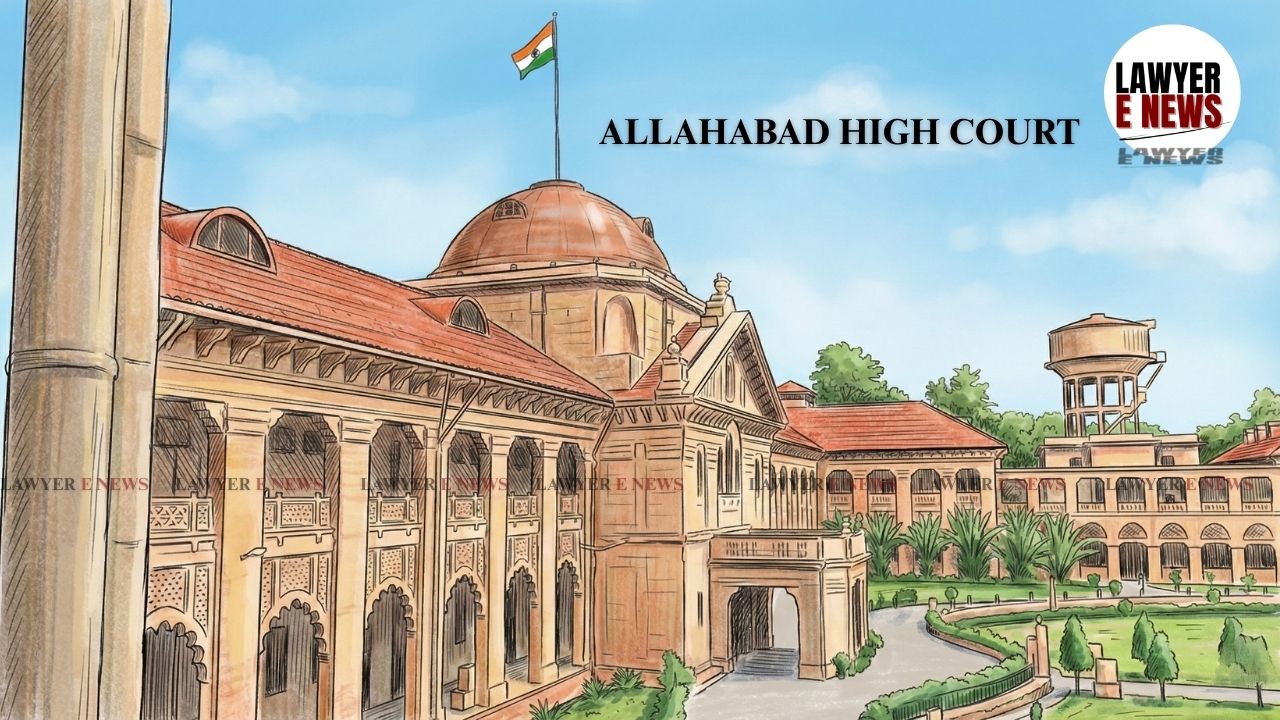
"It cannot be said that one or two of the Board of Directors were not having any knowledge of the aforesaid fact or that they have nothing to do with the treatment plant", Allahabad High Court has refused to quash criminal proceedings against Directors of M/s Simplex Infrastructures Limited impleaded in a complaint filed by the U.P. Pollution Control Board for operating construction activities at the Panki Thermal Power Plant without obtaining the mandatory consent under the Air (Prevention and Control of Pollution) Act, 1981.
Justice Brij Raj Singh dismissed both Section 482 CrPC applications, holding that obtaining environmental consent is a collective function of the entire Board of Directors and that the defence of cessation of directorship raises disputed questions of fact that cannot be adjudicated in quashing proceedings.
The Court was called upon to decide whether the summoning order against Directors who claimed to have ceased holding office prior to the project could be sustained, and whether the principle of collective liability of the Board of Directors under Section 40 of the Air Act applied regardless of individual Directors' claims of non-involvement.
Section 40 Imposes Collective Liability on the Entire Board
The Court examined the scheme of Section 40 of the Air Act, which mirrors the language of similar provisions under the Water Act. Drawing from the Supreme Court's ruling in U.P. Pollution Control Board v. Dr. Bhupendra Kumar Modi (2009) and this Court's own coordinate bench ruling in S.P. Rastogi v. State of U.P. (2009), Justice Singh held that obtaining consent under pollution control legislation is not an individual act that can be attributed to a specific Director — it is a collective obligation of the entire Board.
The Court quoted at length from the S.P. Rastogi ruling: "The obtaining of consent is not individual action and the Board of Directors were duty bound to take action in this regard. The Mill was set up and was run without any consent order and the Board of Directors persistently knew that they are running the Mill without any consent order and without setting up any treatment plant."
Applying this principle, the Court held that the entire Board must be held responsible for running a unit in deliberate violation of the Air Act. Directors cannot insulate themselves by claiming that consent-compliance was someone else's departmental responsibility.
Sunita Palita Ruling Distinguished — Pollution Law Operates Differently
The applicants heavily relied upon the Supreme Court's 2022 ruling in Sunita Palita v. Panchami Stone Quarry, which had held in the context of Section 138/141 of the Negotiable Instruments Act that a Director can be prosecuted only if specifically in-charge of and responsible for the day-to-day conduct of business at the relevant time. The Court firmly rejected this analogy.
"The subject matter of the said judgement is pertaining to Sections 141 and 138 of Negotiable Instrument Act, whereas in the present case, there is violation of the Air Act and each and every Director is responsible in case of violation of the Act. Therefore, the case of Sunita Palita is not applicable to the present case."
The Court's reasoning reflects a fundamental difference in statutory philosophy: cheque dishonour liability is transaction-specific and individual, while pollution law imposes a continuing, collective duty on the governance of the enterprise as a whole.
Board Verified Directorship Through MCA Website at Time of Filing — Prima Facie Sufficient
The applicants argued that the Board had failed to conduct due diligence before impleading them, pointing to the fact that they had ceased to be Directors years before the project commenced. The Court noted, however, that when the Pollution Control Board filed the complaint in 2021 — and the offence itself pertained to the year 2020 — the Board had specifically verified the status of Directors through the Ministry of Corporate Affairs website, which showed the applicants as Directors of the company at the relevant time.
The Court held that the complaint contained specific averments that the applicants were in-charge and responsible for the day-to-day conduct of business of the company. Whether they had in fact ceased to be Directors, and whether that cessation preceded the project, are disputed questions of fact. "The applicants may take their defence before the trial court, but certainly this Court cannot go into the merit of the case."
No Mini Trial at Section 482 Stage
The Court reiterated the well-settled limits of Section 482 CrPC jurisdiction. At the stage of summoning, the Magistrate is only required to form a prima facie opinion that the case is fit to be committed for trial. It is not the function of this Court to weigh competing versions of facts or to adjudicate the veracity of the defence that the Directors had resigned prior to the project.
Relying on the coordinate bench ruling in Nagarajan Krishna Murthy v. State of U.P. (2023), the Court held: "All the submissions made relate to the disputed question of fact, which cannot be adjudicated upon by this Court. At this stage, only prima facie case is to be seen." The Court clarified that the applicants retain the right to file a discharge application before the trial court where all factual defences — including cessation of directorship and absence of day-to-day control — can be fully ventilated.
The Allahabad High Court dismissed both applications under Section 482 CrPC, upholding the summoning order dated 14.03.2022. The Court crystallised the governing principles: under pollution control statutes, consent-compliance is a collective duty of the Board of Directors and not an individual function; the Sunita Palita doctrine applicable to Negotiable Instruments Act cases cannot be transplanted to environmental offences; and claims of ceased directorship or non-involvement in day-to-day affairs are disputed facts for the trial court to adjudicate, not grounds for quashing at the threshold. The interim order, if any, was vacated.
Date of Decision: 15th April, 2026