-
by sayum
19 August 2026 1:58 PM







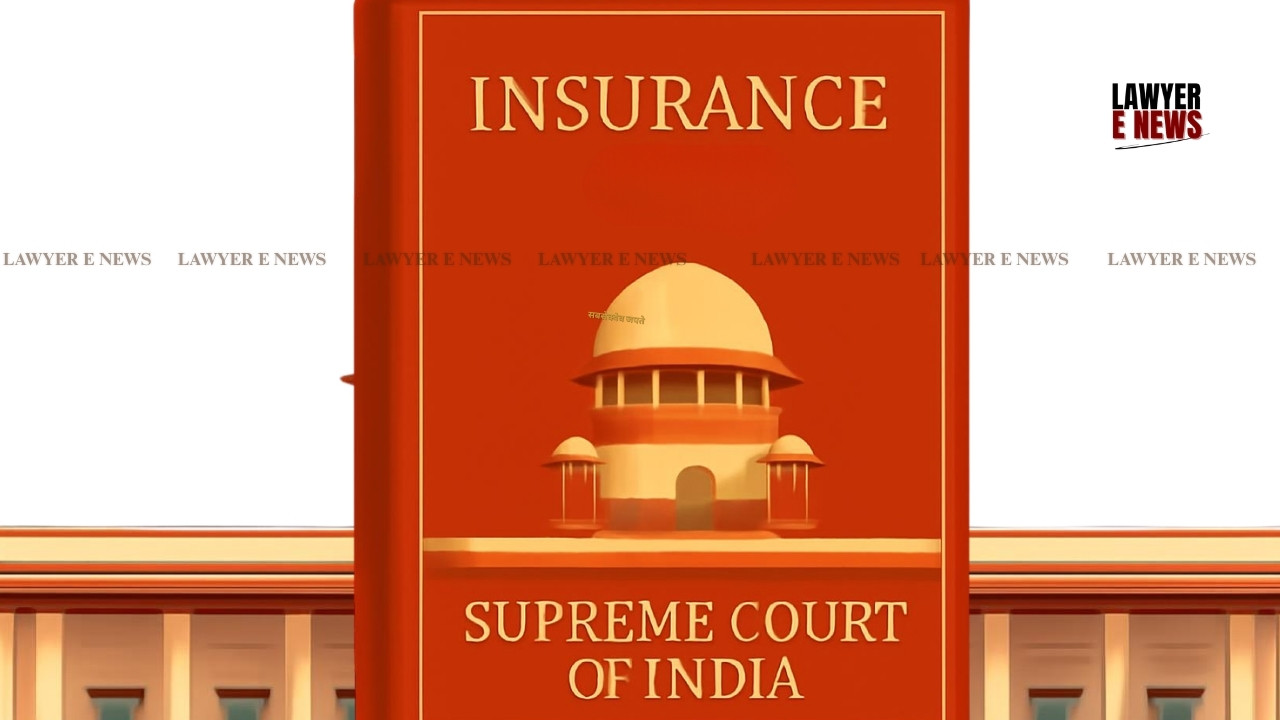
"The application of Order II Rule 2 cannot be construed to be a ground for rejection of the plaint under Order VII Rule 11(d) of the Code", In a significant ruling that clarifies a long-contested procedural question in civil law, the Supreme Court has held that a plea under Order II Rule 2 of the Code of Civil Procedure — which curtails the right to sue for omitted reliefs — cannot constitute a valid ground for rejection of a plaint under Order VII Rule 11(d) CPC. The Court drew a sharp doctrinal distinction between a "bar to sue" and a suit being "barred by law," holding that the two operate on entirely different planes and cannot be conflated.
A bench of Justice B.V. Nagarathna and Justice Ujjal Bhuyan delivered the ruling on April 16, 2026, allowing an appeal filed by a widow and her daughters whose second suit — challenging a Power of Attorney allegedly obtained by fraud from her deceased husband — had been rejected by the Madras High Court at the very threshold.
The dispute arose within a family over properties left behind by M. Sokkalingam, a member of the Chettinad community in Chennai. On 04.11.2011, when Sokkalingam was allegedly in a semi-conscious state due to heart and kidney ailments, his son Ramanathan (defendant No.1) allegedly obtained a Power of Attorney in favour of his friend and fellow advocate E.J. Ayyappan (defendant No.2), who then executed settlement deeds transferring valuable properties at Ooty (Nilgiris) and Pudukottai in favour of the son.
Sokkalingam and his wife filed the first suit (OS No.4722/2012) before the City Civil Court, Chennai, seeking injunction restraining the son from interfering with the Chennai house property and the Standard Chartered Bank account. That suit pertained to entirely different properties and a different cause of action.
Sokkalingam passed away on 13.03.2013. Thereafter, his widow S. Valliammai and two daughters filed the second suit (OS No.2320/2013) seeking a declaration that the Power of Attorney dated 04.11.2011 was illegal, null and void, having been obtained by fraud, coercion and undue influence when Sokkalingam was incapacitated, and seeking injunction against alienation of the Ooty and Pudukottai properties.
The son and his power attorney holder filed an application under Order VII Rule 11 CPC for rejection of the plaint, arguing the second suit was barred by Order II Rule 2 CPC. The Trial Court dismissed the application and granted interim injunction. The Madras High Court reversed, holding the cause of action in both suits was one and the same, and rejected the plaint. The widow and daughters approached the Supreme Court.
Two interconnected legal questions fell for determination: first, whether Order II Rule 2 CPC can constitute a valid ground for rejection of a plaint under Order VII Rule 11(d) CPC; and second, whether the cause of action in the two suits was, in fact, the same.
The Foundational Distinction: Bar to Sue vs. Bar by Law
The Court laid down the critical doctrinal framework with precision. Order VII Rule 11(d) CPC mandates rejection of a plaint where the suit "appears from the statement in the plaint to be barred by any law." This bar — whether express or implied — must be discernible from a meaningful reading of the plaint and annexed documents alone. Classic examples include the bar under Section 34 of the SARFAESI Act, which expressly ousts civil court jurisdiction.
Order II Rule 2, by contrast, operates entirely differently. It does not bar the filing of a suit at all. What it does is curtail the plaintiff's right to sue for claims that were relinquished, or reliefs that were omitted without leave of court, in an earlier suit founded on the same cause of action.
"Under Order II Rule 2, a suit can be dismissed after recording evidence depending upon the facts and circumstances of the case... but it does not result in rejection of the plaint under Order VII Rule 11(d) of the Code."
The Court held that where Order II Rule 2 is invoked, the defendant must establish by evidence — not mere pleadings — three things: first, that the subsequent suit is based on the same cause of action as the earlier suit; second, that the plaintiff was entitled to more than one relief on that cause of action; and third, that the plaintiff omitted to claim such relief without leave of court. This evidential exercise cannot be undertaken at the stage of Order VII Rule 11, without trial.
"In a case where Order II Rule 2 applies, there is no legal bar to filing a suit but the reliefs sought for or the claims made therein cannot be granted if the conditions mentioned therein apply. For arriving at such a conclusion, there has to be evidence let in."
The Test for Identity of Cause of Action
Drawing upon the Privy Council's classic exposition in Mohammad Khalil Khan v. Mahbub Ali Mian (1948) and the recent decision in Cuddalore Powergen Corporation Ltd. v. Chemplast Cuddalore Vinyls Limited (2025), the Court restated the governing tests: the cause of action means every fact necessary for the plaintiff to prove in order to support his right to judgment; if the evidence required to support the claims in the two suits is different, the causes of action are different; and the technical bar under Order II Rule 2 cannot be presumed on inferential reasoning — it must be satisfactorily established.
The Two Suits Had Distinct Causes of Action
Applying these principles to the facts, the Court found that the High Court had fallen into fundamental error. The first suit was filed by Sokkalingam and his wife during his lifetime, concerning the Chennai house property and Standard Chartered Bank account, against the son's interference. The second suit was filed after Sokkalingam's death by his widow and daughters concerning the Ooty and Pudukottai properties, challenging a Power of Attorney executed when the original owner was mentally incapacitated. The parties, the properties, the reliefs, and the cause of action were materially different. Critically, the cause of action for the second suit itself arose only upon Sokkalingam's death on 13.03.2013, when the widow and daughters became his legal heirs entitled to the properties.
High Court Analysed Plaint Averments as Evidence — Approach Held Impermissible
The Court also found the High Court's methodology fundamentally flawed. The High Court had scrutinised the averments of the second plaint as if they were evidence, drawing inferences about what the plaintiffs knew and when — including that the daughters had signed as witnesses to the Power of Attorney documents. The Supreme Court held this approach to be impermissible. At the stage of Order VII Rule 11, only the plaint and annexed documents can be read. Written statement and other materials placed by the defendant are wholly irrelevant.
"The High Court has analysed the averments in the second suit, as if it is evidence. The above approach of the High Court in analysing the averments made in the second suit as if it is evidence... is improper."
The Court distinguished two earlier decisions — N.V. Srinivasa Murthy v. Mariyamma (2005) and State Bank of India v. Gracure Pharmaceuticals (2014) — where plaints were rejected on facts showing either limitation or identical causes of action arising simultaneously, finding those situations to be materially different from the present case.
Allowing the appeal and setting aside the High Court's order, the Supreme Court restored the Trial Court's order in OS No.2320/2013 along with the plaint, enabling the widow and daughters to proceed with their suit challenging the allegedly fraudulent Power of Attorney. The Court clarified that all observations in this judgment are confined to disposal of the appeal and shall not bear on the merits of the suit during trial.
The ruling firmly establishes that Order II Rule 2 CPC is a rule of evidence and trial — not a threshold bar that can be used to reject a plaint at the very outset, depriving a plaintiff of the opportunity to have her case heard on merits.
Date of Decision: April 16, 2026