-
by sayum
04 August 2026 1:39 PM







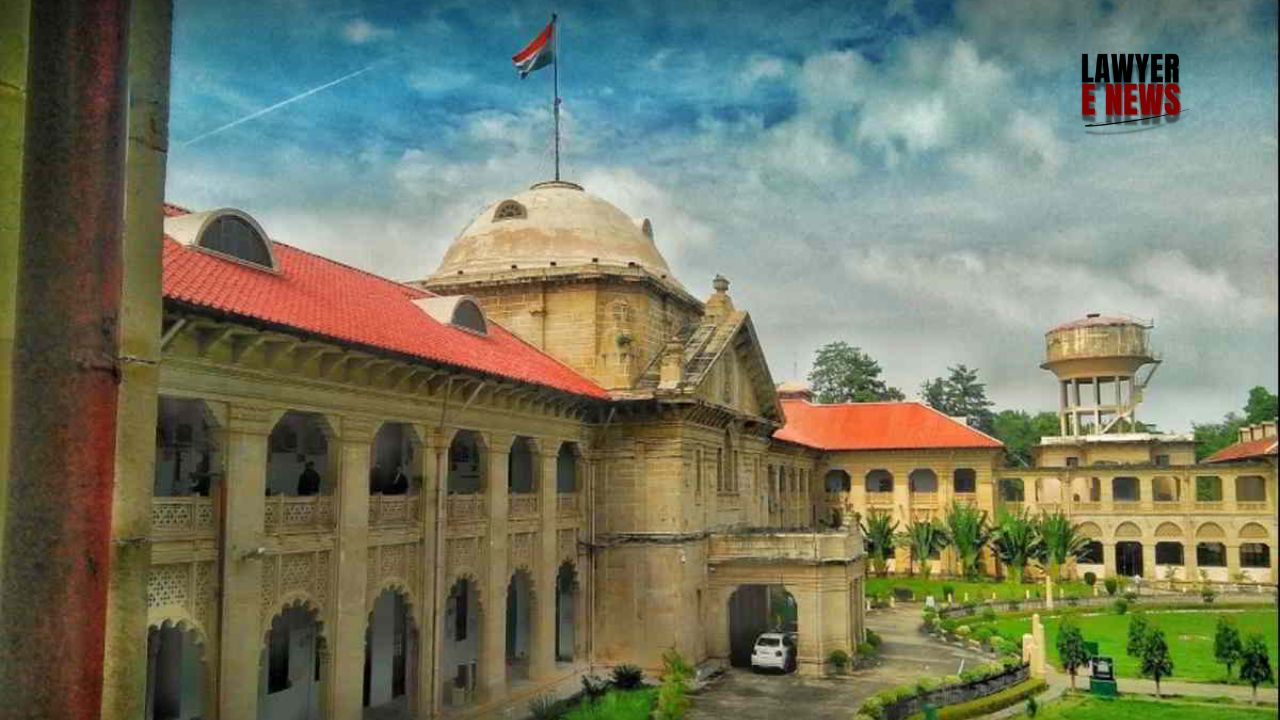
“It Is Highly Improbable That A Girl Remained Unconscious For 49 Days While Being Taken Across Three States”: Allahabad High Court acquitting three men who had been sentenced to life imprisonment under Sections 376-D IPC and Section 4 POCSO Act. The Division Bench of Justice Saumitra Dayal Singh and Justice Sandeep Jain held that the conviction was based solely on the victim’s testimony, which was filled with “material improvements,” contradictions, and improbabilities. In a strong rebuke to the prosecution’s case, the Court observed:
“It is highly improbable that from 31.03.2014 to 19.05.2014, a duration of 49 days, the victim remained unconscious and was not in a physical and mental condition to resist the accused, moreso, when she was living in public places and travelling in public transport.”
The FIR was registered on 8 April 2014, based on a typed application allegedly given by the victim’s mother, claiming her minor daughter (‘X’), a Class X student, had been kidnapped and raped by Shailendra Kushwaha, Manvendra Singh @ Jhamman Pal, and Malik Chandra. The incident allegedly occurred on 31 March 2014, and the victim was recovered 49 days later, on 19 May 2014, from Jhansi Railway Station.
However, the very foundation of the FIR was later shaken when the mother herself, during trial, stated:
“The application paper No. 5Ka (on which FIR was registered) does not bear my signature, and I did not submit it to the police.”
The pivotal issue before the High Court was whether the prosecutrix’s evidence, which shifted dramatically between two sworn statements under Section 164 CrPC, could be the sole basis for conviction in a case involving such serious charges.
In her first statement on 22.05.2014, the prosecutrix stated:
“I had run away from home, of my own sweet will, with Malik Chandra... He didn't do any wrong act with me. I want to stay with him.”
But in a second statement a month later on 03.07.2014, she made a complete reversal:
“All three accused kidnapped me, rendered me unconscious, and raped me repeatedly in Gujarat, Delhi, and Hyderabad.”
The Court noted this volte-face and stated:
“In view of such material improvement, the victim cannot be relied upon and her evidence requires careful scrutiny and corroboration, which is absent in this case.”
The Court was also disturbed by the lack of procedural explanation behind the second statement:
“It is very surprising that in the absence of any application on behalf of the investigating officer, why the second statement of the victim under Section 164 CrPC has been recorded by the Court suo motu.”
Medical and Evidentiary Gaps:
The medical evidence, too, failed to support the charges. The examining doctor (P.W.-3) found no injuries on the victim’s body or genitals, and the victim herself had reportedly told the doctor:
“I went with my aunt’s son-in-law to Gujarat and married him in a temple.”
There was no supplementary medical report to conclusively establish her age. The only available evidence was a school certificate showing her date of birth as 10 May 1998, making her a few weeks shy of 16 years at the time of the incident.
Still, the Court made it clear that:
“Even if the prosecutrix was minor, the prosecution must prove its case beyond reasonable doubt. The testimony of the victim ‘X’ has failed to inspire confidence.”
The Court highlighted glaring inconsistencies in the prosecutrix’s narrative.
She claimed that she was sedated and remained unconscious for nearly 49 days, while being taken through multiple cities — Gujarat, Delhi, and Hyderabad — raped daily, but failed to give any detail about locations, vehicles used, or identities of landlords and neighbours.
The Court expressed disbelief:
“She has deposed that she had raised alarm but no person residing nearby ever came to help her. That is not reliable.”
“She has also stated that she telephoned the police from Gujarat, Haryana and Delhi on 100 number, but none came to her rescue — this is also improbable.”
Having examined both the inconsistencies and the improbabilities in her narrative, the Court held:
“The victim gave her second statement under Section 164 CrPC and evidence in the Court under pressure from her parents, which does not inspire confidence.”
“The improvements made by her are material, and in absence of corroboration, her testimony is unreliable.”
In view of these findings, the High Court set aside the conviction and life sentence imposed by the trial court, and directed the immediate release of all three accused.
The Court concluded:
“The trial court has committed illegality in relying upon the sole testimony of the victim and convicting the accused persons. The impugned judgment is wholly perverse and is liable to be set aside.”
Date of Decision: 14 May 2025