-
by sayum
26 August 2026 10:38 AM







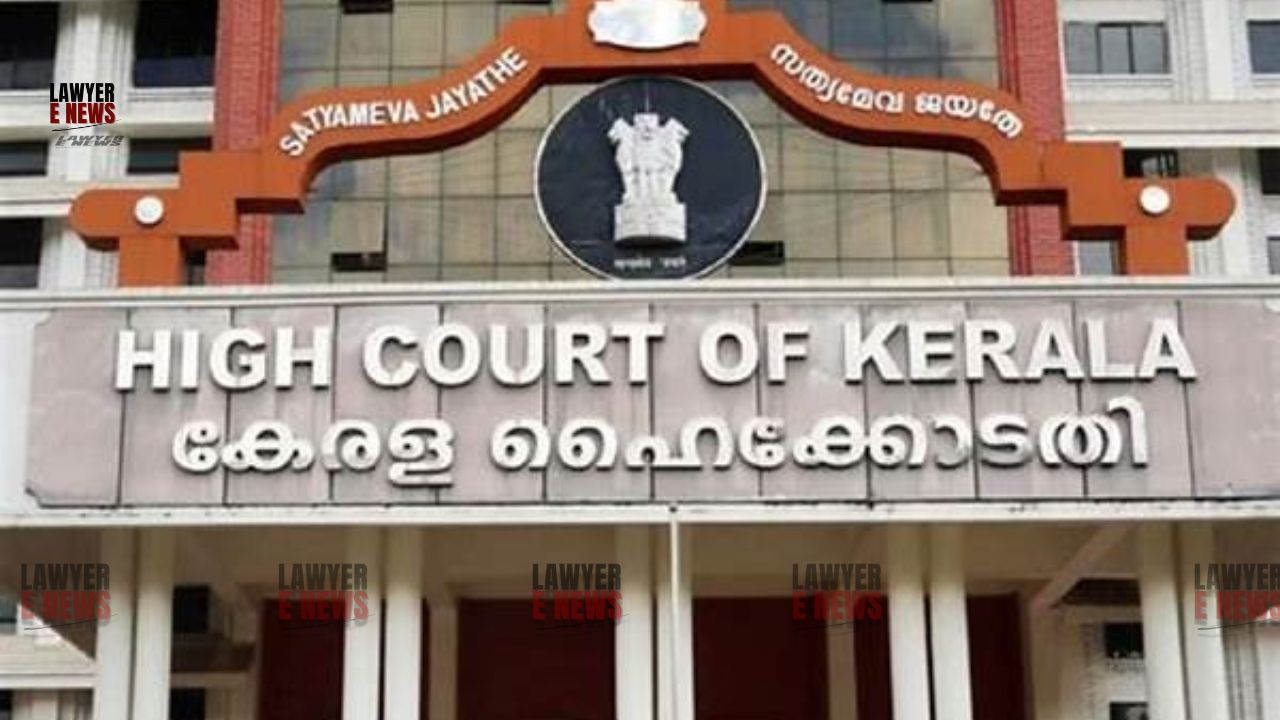
“Presence of State Does Not Tantamount to Hearing the Victim” – In a significant ruling strengthening victim rights jurisprudence, the Kerala High Court set aside a bail order granted to an accused in a POCSO case on the ground that no notice was issued to the victim before granting bail. Justice C. Pratheep Kumar held that under Section 40 of the POCSO Act, Rule 4(13) to (15) of the POCSO Rules, 2020, and Section 483(2) of the BNSS, the victim is entitled to be heard at the stage of bail.
Declaring that denial of such opportunity amounts to violation of statutory and human rights, the Court cancelled the bail bonds and directed the accused to surrender within seven days. The Sessions Court has been directed to reconsider the bail application afresh after hearing the victim.
The petition was filed by the father of a 14-year-old minor boy, challenging the Sessions Court’s order granting bail to the accused without issuing notice to the victim.
The offences alleged include Section 351 of the Bharatiya Nyaya Sanhita, 2023 and Sections 4(2), 3(d), 8 read with 7 of the Protection of Children from Sexual Offences Act, 2012, involving allegations of penetrative sexual assault.
The High Court set aside the bail order solely on the ground of non-compliance with the mandatory requirement of hearing the victim.
According to the prosecution, the accused trespassed into the residence of the 14-year-old victim on 14.11.2025 and committed penetrative sexual assault, threatening him not to disclose the incident. The accused was arrested on 15.11.2025 and later granted bail by the Sessions Court.
The father of the victim approached the High Court under Section 528 BNSS, contending that no notice was issued to the victim before granting bail. Upon direction, the learned Public Prosecutor confirmed that no such notice had been given.
The accused opposed the petition, claiming false implication arising from a property dispute and wage-related altercation. It was also argued that the victim’s mother was present in court at the time of bail hearing. The petitioner countered that her presence as an advocate clerk cannot substitute the mandatory requirement of hearing the victim.
Statutory Scheme: “Complete Information at Every Stage”
The Court examined Section 40 of the POCSO Act, which entitles the family or guardian of the child to the assistance of a legal counsel of their choice. Rule 4(13), (14) and (15) of the POCSO Rules, 2020 impose a duty on the SJPU or local police to keep the child and guardian informed of developments including arrest, applications filed, and “the bail, release or detention status of an offender.”
Section 483(2) BNSS further mandates:
“The presence of the informant or any person authorised by him shall be obligatory at the time of hearing of the application for bail…”
Relying on the Bombay High Court decision in Arjun Kishanrao Maige v. State of Maharashtra, the Court reiterated that the legislative mandate is to ensure “complete information to be made available, of all the proceedings and its progress… to safeguard the interest and well being of the child at every stage of the judicial process.”
Supreme Court on Victimology: “A Voice Has Been Given to Victims”
Justice Pratheep Kumar placed heavy reliance on the Supreme Court’s landmark judgment in Jagjeet Singh v. Ashish Mishra.
The Apex Court had observed:
“The ‘victim’ — the de facto sufferer of a crime had no participation in the adjudicatory process and was made to sit outside the Court as a mute spectator.”
It further declared:
“The presence of ‘State’ in the proceedings, therefore, does not tantamount to according a hearing to a ‘victim’ of the crime.”
The Supreme Court recognized that victim rights are “substantive, enforceable, and are another facet of human rights,” and that a victim has a legally vested right to be heard “at every step post the occurrence of an offence,” including at the stage of bail.
The Kerala High Court held that these principles squarely apply to POCSO prosecutions.
Bail Vitiated for Procedural Illegality
The Court held that in serious and heinous offences under the POCSO Act, the victim is entitled to notice and opportunity of hearing before bail is granted.
It observed:
“In this case the victim/petitioner was entitled to be heard, before granting bail to the accused.”
Since no notice was issued and no opportunity was given, the bail order was found procedurally illegal. The Court clarified that it was unnecessary to examine the merits of the bail application once statutory violation was established.
Cancellation of Bail: Fresh Consideration Directed
Following the principles laid down in Jagjeet Singh, the Court cancelled the bail without foreclosing the accused’s right to seek fresh consideration.
The order records:
“Since the learned Sessions Judge has not given notice to the victim and the victim was not heard… the same is liable to be set aside on that ground alone.”
The accused has been directed to surrender within seven days, and the Sessions Court must reconsider the bail application after hearing the victim within one month.
The Kerala High Court’s ruling reinforces the evolving jurisprudence of victim participation in criminal proceedings, particularly in cases involving child sexual assault. The judgment underscores that procedural safeguards under the POCSO Act and BNSS are not ornamental but mandatory.
By affirming that victims cannot be reduced to silent observers in bail proceedings, the Court has strengthened the participatory rights framework in India’s criminal justice system.
Date of Decision: 26 February 2026