-
by sayum
19 August 2026 7:06 AM







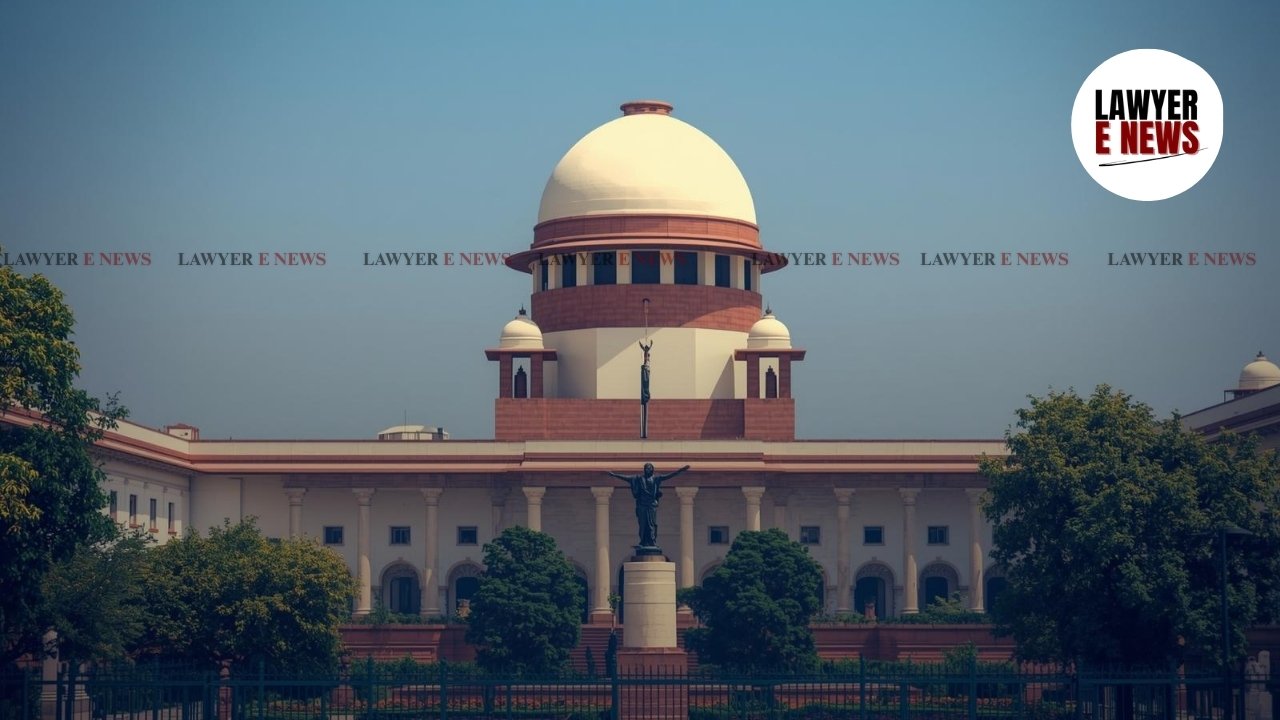
"Dowry deaths are indeed a profound disgrace and a major social evil representing a severe violation of human rights and dignity." Supreme Court, in a significant ruling, cancelled the bail granted to a husband in a dowry death case, coming down heavily on High Courts for adopting a "mechanical approach" when dealing with such grave offences.
A bench comprising Justice J.B. Pardiwala and Justice Vijay Bishnoi observed that courts are duty-bound to undertake deeper scrutiny before granting relief in crimes of this nature, warning that a superficial application of bail parameters not only undermines the gravity of the offence but risks weakening public faith in the judiciary's resolve to combat crimes against women.
The dispute arose after a young woman, married for merely one and a half years, was found dead under suspicious circumstances at her matrimonial home with severe external and internal injuries. The mother of the deceased lodged an FIR alleging persistent dowry demands—including a motorcycle and a refrigerator—and severe harassment by the husband and his family. Although the Patna High Court initially rejected the husband's bail application, it subsequently granted him bail seven months later, citing his prolonged custody and the slow progress of the trial. Aggrieved by this relief, the deceased's mother approached the Supreme Court.
The primary question before the court was whether a High Court is justified in granting bail in a dowry death case based solely on the period of custody and the pendency of trial, while ignoring material evidence and statutory presumptions of guilt. The court was also called upon to determine if the defence of a suicidal death mitigates the gravity of an offence charged under the new criminal statutes.
A Mechanical Exercise of Discretion
The bench scrutinized the Patna High Court's order and found it completely lacking in legal merit and judicial application of mind. The judges noted that the High Court failed to provide any substantive reasoning and was improperly swayed by the mere fact that the accused was in custody and only two witnesses had been examined. The Supreme Court emphasized that in serious crimes like dowry death, a constitutional court must exercise its discretionary powers with profound caution and comprehensive analysis rather than cursorily granting relief based on trial delays. "In a very serious crime like dowry death, the High Court should have been very careful in exercising its discretion. The High Court in its impugned Order has not discussed anything."
Ignoring Crucial Forensic Evidence
The court observed that the High Court entirely overlooked critical forensic evidence, specifically the post-mortem report which detailed horrific and fatal injuries, including a ruptured sternum, ruptured heart, and multiple bone fractures. Furthermore, the bench pointed out that the lower court ignored the explicit presumption of the commission of the offence mandated under Section 114 of the Bharatiya Sakshya Adhiniyam, 2023. By failing to weigh the severity of the bodily injuries against the statutory presumption, the High Court fundamentally erred in its judicial assessment. "The High Court lost sight of many important aspects of the matter, more particularly the post-mortem report indicating number of injuries on the body of the deceased, and the presumption of commission of offence as provided under Section 114 of the Bharatiya Sakshya Adhiniyam, 2023."
"The social message emanating from judicial orders in such cases cannot be overstated: when a young bride dies under suspicious circumstances within barely two years of marriage, the judiciary must reflect heightened vigilance and seriousness."
Judicial Vigilance and the Social Message
Relying heavily on its recent jurisprudence in Shabeen Ahmed v. State of Uttar Pradesh, the Supreme Court reiterated its deep concern over the casual handling of dowry death bail applications. The bench underscored that the judiciary must send a strong social message through its orders, as superficial bail decisions risk normalizing heinous offenses. The sudden death of a young bride under unnatural conditions demands heightened judicial vigilance, and releasing an accused without addressing the material gravity of the allegations severely damages the institutional perception of justice. "A superficial application of bail parameters not only undermines the gravity of the offence itself but also risks weakening public faith in the judiciary’s resolve to combat the menace of dowry deaths."
Suicide Defence Holds No Ground For Bail
Addressing the defense counsel's argument that the deceased was mentally unstable and had jumped from the sixth floor of a building, the court quickly dismantled this as a valid ground for granting bail. The bench clarified the legal position under the newly enacted criminal laws, stating that even if the death was suicidal, it remains a heavily punishable offence under Section 80 of the Bharatiya Nyaya Sanhita, 2023 (BNS), which penalizes dowry deaths regardless of whether the fatality was homicidal or suicidal in nature. "Even suicidal deaths are punishable under Section 80 of the BNS, 2023. We are informed that the trial is in progress. On this ground alone, the High Court should have declined bail."
The Ongoing Blot of Dowry
Taking a moment to reflect on the broader societal implications of the crime, the Supreme Court unequivocally condemned the ongoing practice of dowry. The judges noted that greed-driven demands continue to claim innocent lives despite strict legal prohibitions across the country. The court framed dowry deaths not just as statutory offences, but as urgent human rights violations that courts must treat with the utmost severity to protect women's dignity and lives. "Dowry deaths are indeed a profound disgrace and a major social evil representing a severe violation of human rights and dignity... Dowry deaths are a
The Supreme Court allowed the appeal, set aside the impugned order of the Patna High Court, and cancelled the bail granted to the accused-husband. Directing the accused to surrender before the jail authorities within one week, the court also ordered the trial court to conclude the proceedings within six months, firmly establishing that prolonged custody alone cannot act as a shortcut to bail in grave crimes against women.
Date of Decision: 25 March 2026