-
by sayum
29 August 2026 3:15 PM







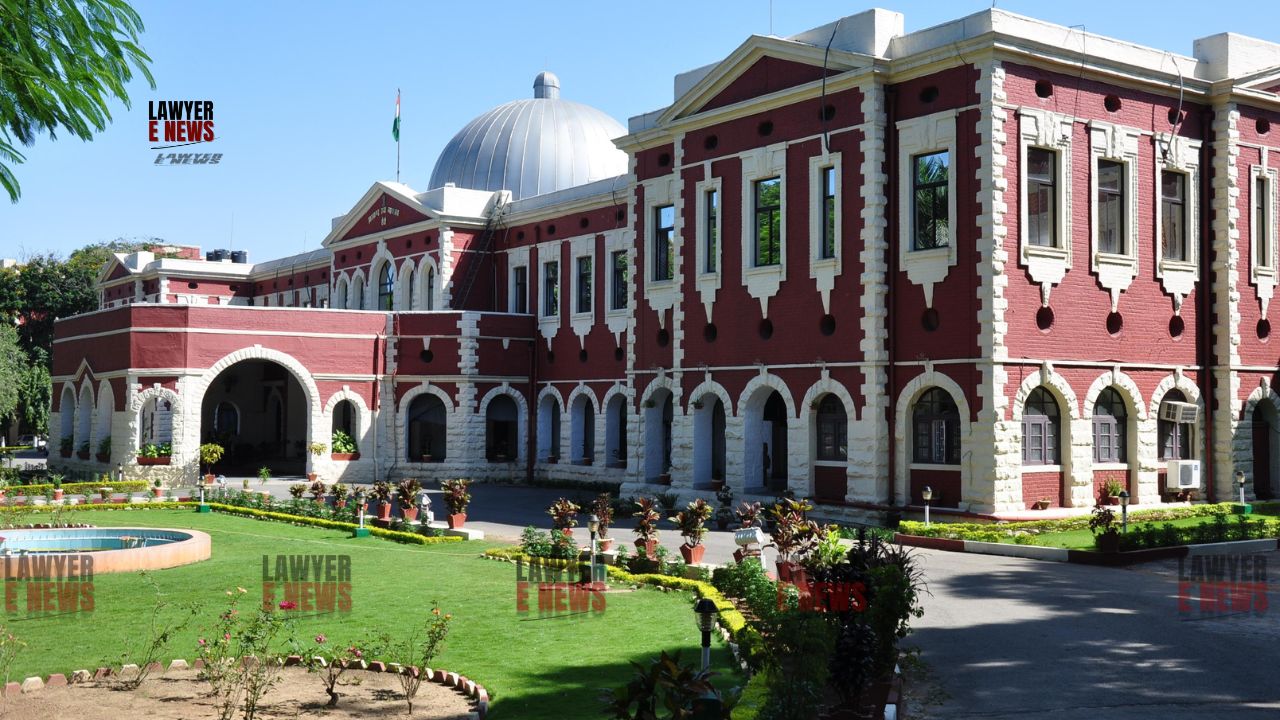
"In a welfare State, the constitutional mandate of providing effective medical care cannot be satisfied by the mere existence of buildings if they lack the life-saving machinery and trained manpower essential for treating specialised trauma such as burn injuries." Jharkhand High Court, in a significant ruling dated April 1, 2026, held that the fundamental right to health under Article 21 of the Constitution remains illusory if the State fails to provide functional, time-sensitive medical infrastructure for specialized trauma.
A bench comprising Chief Justice M.S. Sonak and Justice Rajesh Shankar directed the state government to operationalise dedicated burn units across all 24 district hospitals and government medical colleges within 120 days, observing that the right to life inherently includes the right to a dignified recovery and the prevention of permanent disfigurement.
The Public Interest Litigation was initially instituted by Onkar Vishwakarma following a tragic 2021 kerosene fire incident in Hazaribagh, which resulted in four deaths and grievous burn injuries to fifteen others. The disaster was allegedly caused by highly adulterated kerosene supplied through the Public Distribution System, possessing a flash point drastically below mandatory safety standards. During the hearings, the scope of the petition was proactively expanded by the High Court after it came to light that the victims were deprived of adequate treatment due to a complete absence of specialized burn care facilities across the entire state.
The primary question before the court was whether the State's failure to operationalise sanctioned burn care infrastructure constitutes a violation of the fundamental right to health guaranteed under Article 21 of the Constitution. The court was also called upon to determine whether specific monetary compensation for the Hazaribagh fire victims could be directly quantified and awarded within a writ proceeding.
Expanding PIL Scope to Protect Right to Life T
he High Court observed that once a matter of grave public importance is brought before it, the court is duty-bound to expand the inquiry to protect the fundamental rights of a larger class of citizens. Addressing the State's shocking admission that no specialized burn wards existed in government hospitals, the bench noted that burn injuries represent a significant public health crisis carrying massive global mortality burdens. Relying on the expansive interpretation of Article 21 in Maneka Gandhi v. Union of India, the court emphasised that the right to life encompasses the right to live with human dignity, which in turn necessitates immediate access to specialized medical interventions.
"If, as admitted, no specialised burn care facility with modern infrastructure exists in the Government hospitals across the entire State of Jharkhand, then the constitutional guarantee of life with dignity remains largely illusory for victims of fire trauma."
Positive Obligation and Rejection of Financial Constraints
Delving into the constitutional obligations of a welfare state, the bench invoked the Supreme Court's landmark rulings in Consumer Education and Research Centre v. Union of India and Paschim Banga Khet Mazdoor Samity v. State of West Bengal. The court firmly rejected any notion that financial or administrative constraints could justify the absence of emergency medical infrastructure. The judges highlighted that the operational guidelines under the National Programme for Prevention and Management of Burn Injuries (NPPMBI) constitute a voluntary standard of care that the State is constitutionally obligated to fulfill, especially given that burn mortality in India drastically exceeds that of Malaria and Tuberculosis.
"The State cannot plead financial constraints to shirk its primary obligation of providing emergency medical care."
Judicial Rebuke of Paper-Based Compliance
The court took strong exception to the glaring inconsistencies in the State's supplementary affidavits, which superficially claimed the existence of "adequate logistics" across district hospitals. Comparing these claims with a 2021 Comptroller and Auditor General (CAG) performance audit report, the bench noted that 20 completed burn units could not be made functional merely due to the non-procurement of equipment. The court heavily criticized this bureaucratic apathy, noting that establishing infrastructure solely in budgetary allocations while it remains practically absent in clinical settings is an unacceptable dereliction of constitutional duties under Articles 21, 39(a), 41, and 47.
"Such a 'paper-based' compliance mechanism, where infrastructure exists in budgetary allocations and structural completions but remains absent in clinical practice, risks rendering the fundamental right to health under Article 21 illusory."
Limitations on Quantifying Victim Compensation in PILs
Addressing the petitioner's plea for specific monetary compensation for the Hazaribagh victims, the court acknowledged the well-entrenched compensatory jurisprudence under public law established in cases like Rudul Sah v. State of Bihar and Nilabati Behera v. State of Orissa. However, the bench reasoned that fixing a specific quantum of compensation requires a definitive factual determination of negligence and liability, which cannot be adequately adjudicated in a PIL. Since a criminal trial was already underway in the jurisdictional court, the court deferred the immediate quantification of damages but explicitly protected the victims' rights to seek statutory redress.
"These are matters which ordinarily require the adjudication of evidence and cannot appropriately be undertaken in the present Public Interest Litigation under Article 226 of the Constitution."
"The 'Right to Health' under Article 21 is a positive mandate that requires the State to provide specialized, time-sensitive medical infrastructure, particularly for burn trauma, a condition where mortality and disability are directly linked to the immediacy of specialized care."
Directing Legal Aid for Statutory Compensation T
o ensure the fire victims were not left remediless, the High Court directed them to invoke the Victim Compensation Scheme under Section 357-A of the Code of Criminal Procedure, 1973, and the corresponding Section 396 of the Bharatiya Nagarik Suraksha Sanhita, 2023. Recognizing the potential vulnerability of the affected families, the bench mandated the District Legal Services Authority (DLSA), Hazaribagh, to proactively identify victims and assist them in filing applications through Para Legal Volunteers. The jurisdictional court was concurrently directed to process these claims for interim and final compensation expeditiously within three months.
"To ensure that this right does not remain illusory, we shall issue appropriate directions... mandating that the jurisdictional court and the concerned District Legal Services Authority (DLSA) act with the requisite urgency to provide necessary succour."
Disposing of the PIL, the High Court issued comprehensive directions mandating the State to fully operationalise dedicated burn units, exclusively treating burn patients with trained staff and essential medicines, across all districts within 120 days. A State Implementation Committee headed by the Principal Secretary (Health) was ordered to be constituted within four weeks to oversee this massive infrastructural overhaul, ensuring that the constitutional right to emergency medical care is functionally realized in Jharkhand.
Date of Decision: 01 April 2026