-
by sayum
15 August 2026 2:23 PM







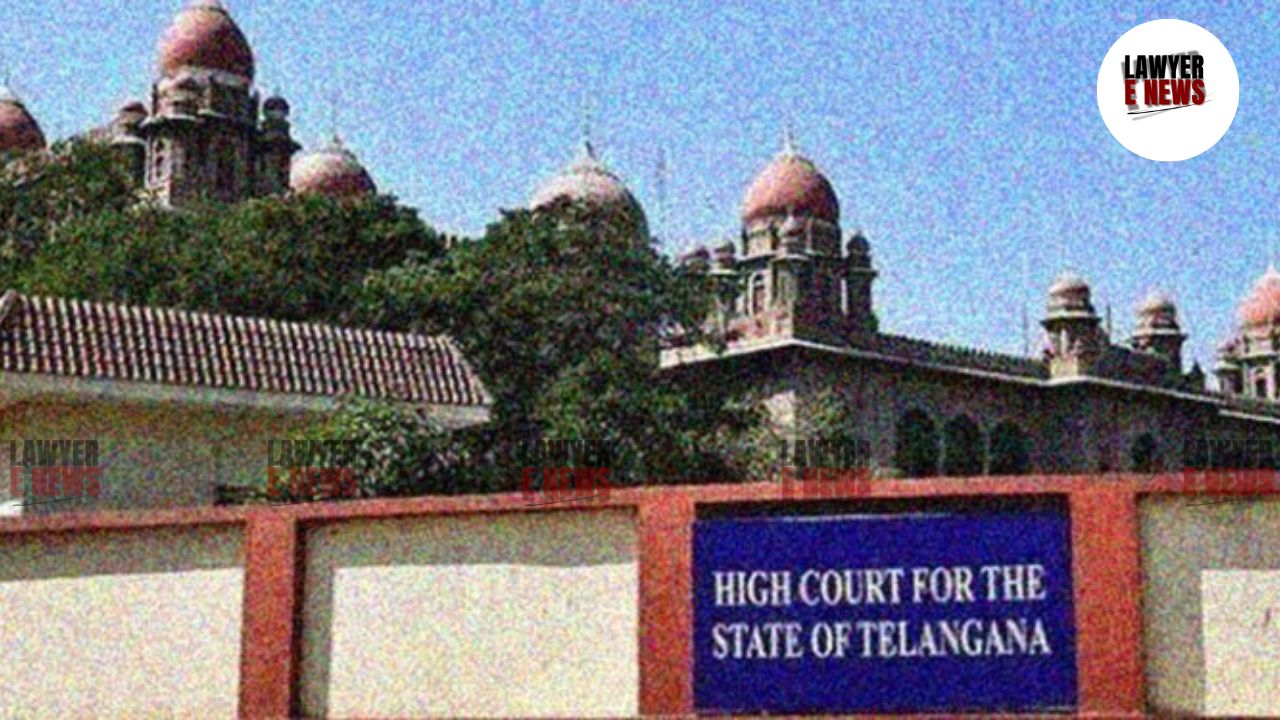
"The grounds raised by the defendants do fall under substantial defence or positively good defence and therefore they are entitled to grant of leave to defend unconditionally." High Court for the State of Telangana, in a significant ruling, held that a defendant in a summary suit is entitled to unconditional leave to defend if they successfully demonstrate a substantial or "positively good" defence.
A Single Judge bench of Justice Renuka Yara observed that while Order XXXVII of the CPC provides an expedited mechanism for recovery, triable issues—such as questioning the financial capacity of the lender—cannot be shut out by imposing severe conditions like the deposit of the entire principal amount.
The case arose from three summary suits filed by a plaintiff for the recovery of a total of Rs. 1.5 crore based on promissory notes. Although the trial court granted the defendants leave to defend the suits, it imposed a condition requiring them to furnish security for the principal amount of Rs. 50 lakhs in each suit. The defendants challenged this condition, while the plaintiff filed a revision petition arguing that leave should not have been granted at all due to the defendants' failure to appear within the statutory ten-day period.
The primary question before the court was whether the trial court was justified in imposing a condition of furnishing security when the defendants had raised triable issues regarding the plaintiff's financial capacity. The court also considered whether a delay in entering appearance by the defendant automatically entitles the plaintiff to a decree if the plaintiff themselves failed to take diligent steps for the passing of such a decree.
Failure To Appear Within 10 Days Not An Absolute Bar To Defence
The court first addressed the plaintiff's contention that the defendants lost their right to defend because they did not enter an appearance within ten days of the service of summons. The bench noted that while Order XXXVII Rule 3(1) of the CPC prescribes a ten-day limit, Rule 3(7) specifically empowers the court to excuse the delay in entering an appearance or applying for leave to defend for sufficient cause shown.
Lapses By Both Parties Negate Plaintiff’s Claim For Instant Decree
The bench observed that the plaintiff remained silent for almost two months after the defendants' default and only moved for a decree after the defendants had already appeared and filed for leave to defend. The court noted that "the plaintiff herein did not file any application for passing a decree immediately after 10 days of serving of notice... instead, the plaintiff waited for almost a period of two months." Consequently, the court held that the plaintiff could not rely on technical lapses when they themselves failed to strictly adhere to the procedural timeline.
Guidelines For Granting Leave To Defend - Categorisation Of Defences Under Order XXXVII CPC
The High Court relied heavily on the landmark Supreme Court decision in IDBI Trusteeship Services Limited v. Hubtown Limited, which refined the principles for granting leave to defend. The court reiterated that if a defendant satisfies the court that they have a substantial defence likely to succeed, they are entitled to unconditional leave. Conversely, conditions such as payment into court or furnishing security are reserved for cases where the defence is "plausible but improbable" or where the court doubts the defendant’s good faith.
Financial Capacity Of Lender Constitutes A Substantial Defence
The court found that the defendants had raised a potent challenge by questioning the plaintiff's financial capacity to lend Rs. 1.5 crore in cash on a single day. The defendants pointed out that the plaintiff himself had borrowed small amounts from family members and financial institutions to meet his own needs. The bench observed that "questioning the financial capacity of the plaintiff to lend huge amount of money when he himself is indebted to the family members and financial institutions constitutes a substantial defence."
Non-Compliance With Income Tax Reporting As A Triable Issue
The bench further noted the defendants' argument regarding the violation of Income Tax Act provisions, which require transactions exceeding Rs. 2,00,000 to be reported. While the plaintiff claimed the funds were derived from agricultural income and thus exempt, the court held that the validity of this exemption could only be decided after a full trial. This uncertainty contributed to the finding that a "fair or reasonable defence" was available, necessitating an unconditional trial.
Trial Courts Must Not Shut Out Triable Issues With Severe Orders
Severe Conditions On Leave To Defend Should Be Avoided For Good Defences
The High Court expressed its disagreement with the trial court’s decision to impose a security condition of Rs. 50 lakhs. It held that the grounds raised by the defendants fell under the category of a "positively good defence." The court emphasized that the object of summary suit provisions is to assist expeditious disposal, but care must be taken to ensure that "triable issues are not shut out by unduly severe orders as to deposit or security."
In its final order, the High Court dismissed the plaintiff’s revision petition (C.R.P. No. 11 of 2026) and allowed the defendants' petitions (C.R.P. Nos. 4709, 4728, and 4731 of 2025). The court set aside the condition of furnishing security for Rs. 50 lakhs and granted the defendants unconditional leave to defend the summary suits. The court concluded that the trial court’s order was not legally sustainable to the extent that it burdened a substantial defence with a heavy financial condition.
Date of Decision: 25 June 2026