-
by sayum
15 August 2026 5:59 AM







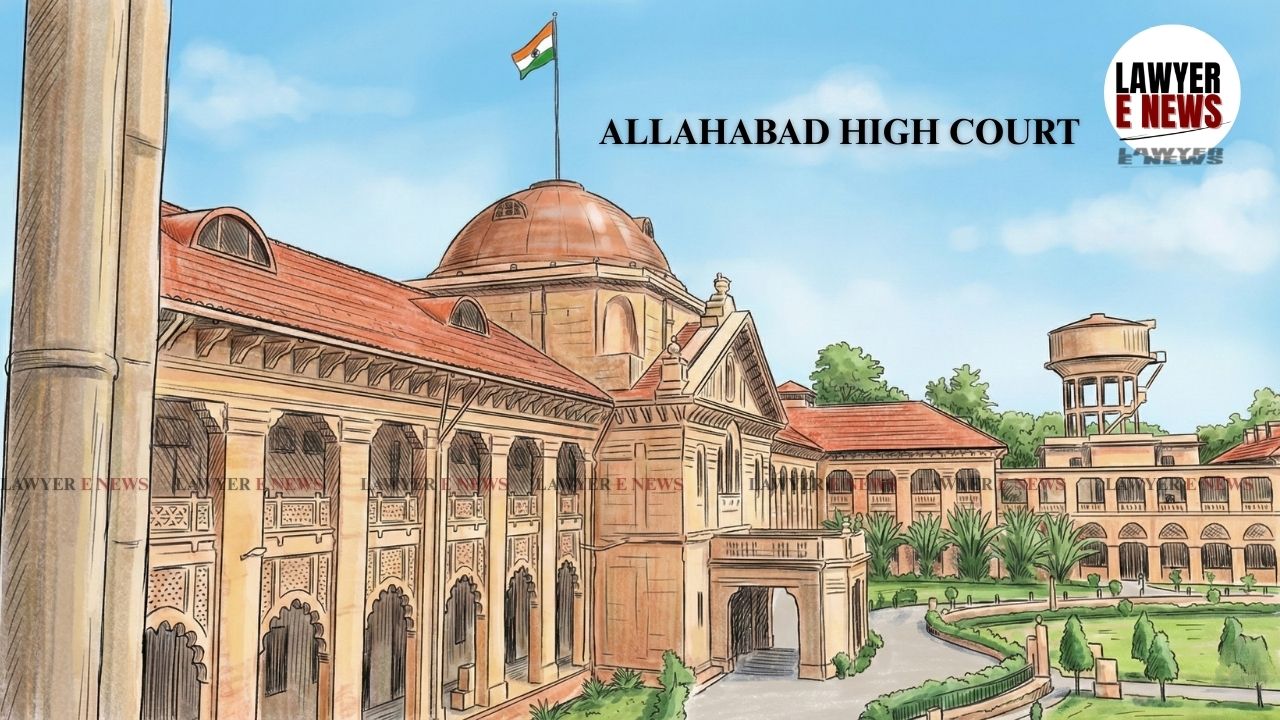
"No fundamental or statutory right to stop another operator coming in business near his petrol pump. We are not inclined to exercise our discretionary jurisdiction where the claim of the petitioner is essentially aimed at eliminating healthy competition and for perpetuating his monopoly in the area." Allahabad High Court, in a significant ruling, held that an existing retail fuel outlet operator lacks the locus standi under Article 226 of the Constitution to challenge the No Objection Certificate (NOC) and statutory approvals granted to a rival petrol pump in its vicinity.
A division bench comprising Justice Shekhar B. Saraf and Justice Abdhesh Kumar Chaudhary observed that commercial rivalry and the apprehension of a financial dip do not constitute the infringement of a legally protected right.
The petitioners, operating a petrol pump under the name "D.K. Automobiles" in Bahraich, Uttar Pradesh, approached the court by filing a writ petition challenging an approval order and an NOC issued by the district authorities in favor of private respondents for setting up a competing fuel station on an adjoining plot. The challenge was primarily raised on the ground of alleged non-compliance with distance norms and service lane requirements under the applicable State guidelines, alongside contentions that a proximate rival outlet would adversely impact their business profitability and financial health.
The primary question before the court was whether an existing commercial enterprise has the locus standi to invoke the extraordinary writ jurisdiction of the High Court solely to prevent a competitor from establishing a business in close proximity. The court was also called upon to determine whether economic competition from a new entrant infringes upon the fundamental rights of an existing business owner under Article 19(1)(g) of the Constitution of India.
Court Reaffirms Settled Doctrine On Locus Standi In Commercial Disputes
The bench firmly established that rival business operators cannot maintain a writ petition to stifle market competition under the guise of public interest or statutory violations. Relying on the landmark Constitution Bench ruling of the Supreme Court in Jasbhai Motibhai Desai v. Roshan Kumar, (1976) 1 SCC 671, the court emphasized that to invoke certiorari jurisdiction, a petitioner must be an "aggrieved person" whose legally protected interest is directly affected.
"Petitioner Cannot Maintain Petition Solely To Perpetuate Monopoly"
The court highlighted that economic harm resulting from lawful business competition does not injure a legally recognized right. Citing consistent judicial precedent, including Nagar Rice and Flour Mills v. N.T. Gowda and Mithilesh Garg v. Union of India, the bench reiterated that the constitutional right to carry on trade or business does not extend to shutting out competitors or creating local monopolies.
Court Declines To Act As An Insurance Agency For Business Health
Addressing the petitioner's apprehension concerning diminished commercial revenues, the bench delivered a stern observation regarding the limits of judicial interference in commercial markets. The court noted that it cannot function as an insurance company tasked with guaranteeing the financial viability or profitability of existing commercial establishments.
"This Court Cannot Act As An Insurance Company To Insure Business Health"
The bench underscored that market forces and healthy competition must be permitted to operate unhindered so long as new entrants comply with statutory prerequisites and licensing frameworks established by the competent authorities.
Absence Of Fundamental Right Infringement Bars Writ Jurisdiction
Invoking the foundational principle established nearly 75 years ago in State of Orissa v. Madan Gopal Rungta, AIR 1952 SC 12, the court reiterated that the existence of an infringed right under Part III of the Constitution is the sine qua non for exercising jurisdiction under Article 226. Because the private respondents possessed an equal fundamental right to establish and operate a business in accordance with law, no constitutional injury was inflicted upon the petitioners.
Abuse Of Process Via Proximate Litigation
The court further noted the conduct of the petitioner in orchestrating a parallel public interest litigation through a proxy to stall the rival fuel station on identical distance grounds—a challenge that had already been rendered infructuous upon the construction of the mandatory seven-meter service road. Concluding that the petition was a veiled attempt to abuse judicial process for anti-competitive ends, the division bench dismissed the writ petition in its entirety, finding no merit in the challenge.
Date of Decision: 11 August 2026