-
by sayum
15 August 2026 10:03 AM







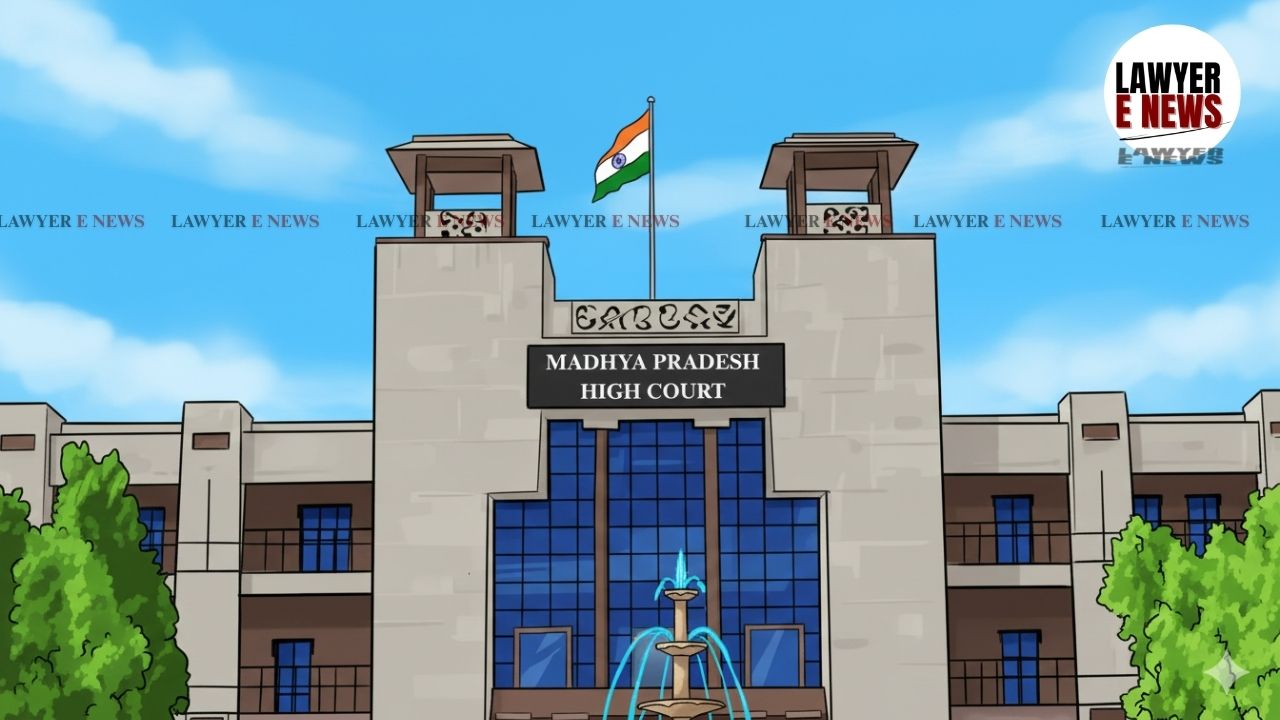
"It is evident from the aforesaid recital in the reply to the notice that the defendants, in fact, denied their liability to pay interest. A mere one-line statement in the concluding paragraph asking the plaintiff to supply a copy of the agreement, if any, would not amount to an acknowledgement of liability." Madhya Pradesh High Court, in a significant civil appellate ruling dated August 11, 2026, held that a civil suit for the recovery of interest filed beyond the prescribed period of three years is barred by limitation, clarifying that a mere request for a copy of an agreement in a reply to a legal notice does not constitute an acknowledgment of liability under Section 18 of the Limitation Act, 1963.
A single bench of Justice Ashish Shroti observed that the effect of words used in a document must be read in its entirety within the proper context and cannot be twisted to infer an acknowledgment of a subsisting debt where the primary tenor of the communication is a categorical denial.
The litigation arose from a bunch of four first appeals filed by the State of Chhattisgarh against concurrent trial court judgments and decrees that had decreed suits for recovery of interest filed by respondent firm M/s Jaya Kits Udyog. The plaintiff firm had supplied goods to the state authorities under various purchase orders between 1990 and 1994, but the principal amounts were cleared only in August 1996 without any interest. The plaintiff subsequently issued a statutory notice under Section 80 of the CPC on June 27, 1998, which was answered by the authorities on September 1, 1998, leading to the institution of recovery suits in November 1999.
The primary questions before the court were whether a part of the cause of action arose within the territorial jurisdiction of the Morena court under Section 20(c) of the CPC, and whether a suit for recovery of interest filed more than three years after the payment of the principal amount was saved from limitation by virtue of an alleged acknowledgment under Section 18 of the Limitation Act. The court was also called upon to determine whether the service of a notice under Section 80 CPC independently extends the limitation period.
Court Affirms Territorial Jurisdiction
Addressing the threshold objection on territorial jurisdiction, the court noted that the purchase order was placed, the goods were dispatched through a carrier, and the payment via demand draft was processed within the local limits of Morena. Invoking Section 39 of the Sale of Goods Act, 1930, the bench underscored that delivery of goods to a carrier constitutes delivery to the buyer. "Thus, delivery of goods to carrier would also be a cause of action for filing suit at Morena," the court held, rejecting the state's challenge to territorial jurisdiction.
Section 80 CPC Notice Does Not Extend Limitation
Turning to the core limitation issue, the court established that the cause of action to claim interest commenced on August 19, 1996, when the principal sum was cleared without interest, making the three-year limitation expire in August 1999. Since the suit was instituted on November 24, 1999, it was prima facie time-barred. Relying on the Delhi High Court precedent in Rakman Industries Limited v. Sumaja Electro Infra Private Limited, the bench reiterated that the mere issuance or service of a legal notice demanding payment does not give a fresh start to the limitation period.
"It is settled law that mere demand for the repayment does not extend the period of limitation. It is also equally well settled that merely sending a legal notice to repay the amount does not assist the plaintiff for the purpose of calculation of the period of limitation," the court observed, agreeing fully with the Delhi High Court's ratio.
Contextual Reading Of Reply Refutes Acknowledgment
Examining the plaintiff's alternative argument that a sentence in the defendants' reply dated September 1, 1998, asking the plaintiff to supply a copy of any agreement regarding interest amounted to an acknowledgment under Section 18 of the Limitation Act, the bench undertook a rigorous textual analysis. Citing the Supreme Court's foundational pronouncements in Khan Bahadur Shapoor Fredoom Mazda v. Durga Prasad Chamaria and IL&FS Financial Services Ltd. v. Adhunik Meghalaya Steels (P) Ltd., the court emphasized that an acknowledgment must relate to a present, subsisting liability and evince a clear intention to admit a jural relationship.
"The effect of words used in a particular document must inevitably depend upon the context in which the words are used and would always be conditioned by the tenor of the said document," the bench noted, pointing out that the preceding paragraphs of the state's reply vehemently denied any liability to pay interest or the existence of any stipulation to that effect.
Distinguishing FCI Precedent
The court distinguished the apex court ruling in Food Corporation of India v. Assam State Co-operative Marketing and Consumers' Federation, noting that while that case involved an unequivocal admission of a specific sum due, the instant case featured a categorical denial of liability by the government officials. The concluding request for a copy of the agreement was merely conditional and investigatory, falling far short of a conscious acknowledgment of a subsisting debt.
Concluding that the trial court erred in extending the benefit of limitation through a strained reading of the official correspondence, the Madhya Pradesh High Court set aside the impugned judgments and decrees. All four first appeals preferred by the State of Chhattisgarh were allowed, and the corresponding recovery suits filed by the respondent firm were dismissed as barred by limitation.
Date of Decision: 11 August 2026