-
by sayum
15 August 2026 10:03 AM







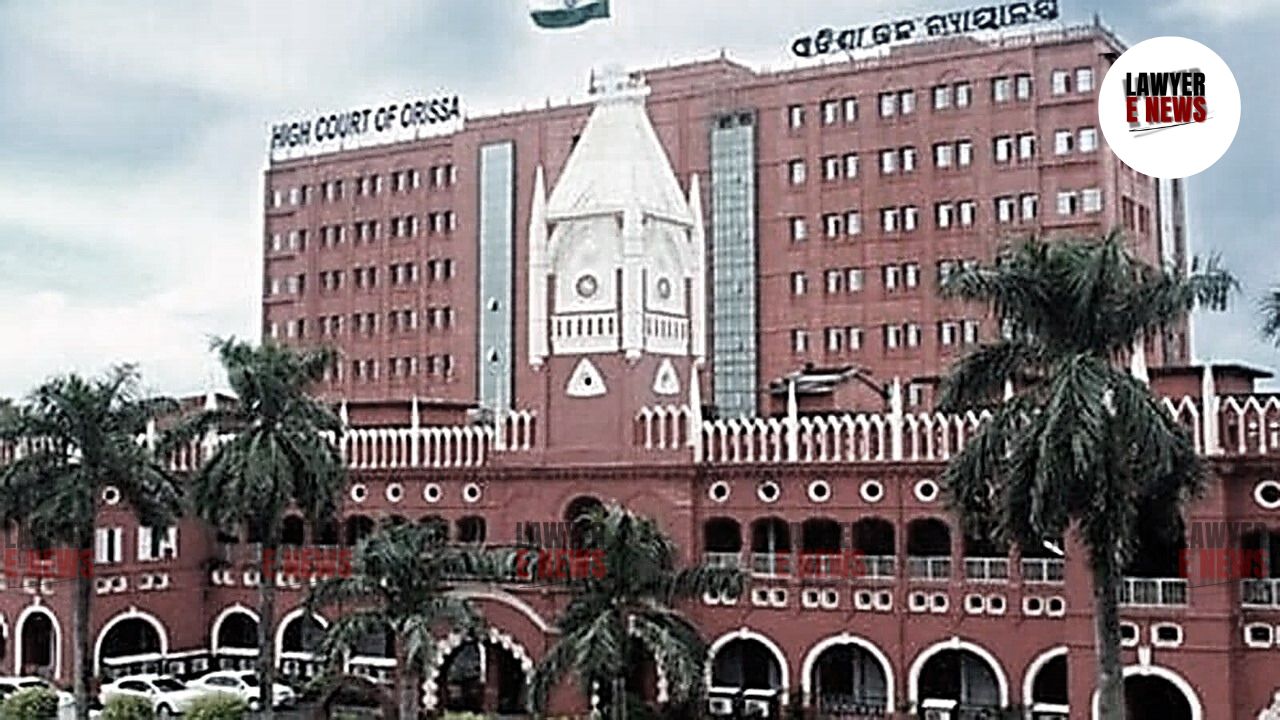
"Merely because the Petitioner has filed an application seeking condonation of delay of 2 days as per the office note that does not ipso facto lend legitimacy to the office note pointing out the delay, which, on the face of it is not tenable" Orissa High Court, in a judgment, held that while special statutes like the Orissa Gram Panchayats Act are self-contained codes where Section 5 of the Limitation Act cannot be invoked, statutory provisions for excluding time to obtain certified copies and computing limitation when courts are closed continue to apply.
A bench of Justice V. Narasingh observed that the exclusion of time taken for obtaining certified copies under Section 12(2) and the computation of limitation under Section 4 of the Limitation Act remain available to litigants in statutory election appeals.
The dispute arose from an election petition challenging the election of the petitioner as the Sarpanch of Naikatiguda Gram Panchayat under the Orissa Gram Panchayats Act, 1964. The Election Tribunal dismissed the election petition on July 14, 2025, prompting the defeated election petitioner to file an election appeal before the District Judge. An administrative office note of the District Judge's office erroneously calculated a delay of two days in the presentation of the appeal.
The primary question before the High Court was whether the provisions of the Limitation Act, 1963 apply for computing limitation periods in statutory election appeals under a self-contained code like the OGP Act. The court was also called upon to determine whether the time taken to obtain certified copies of judgments can be excluded and whether limitation can be extended if the final day falls on a court holiday.
Self-Contained Statutes Exclude Section 5
The court noted that the OGP Act is a complete and self-contained code governing panchayat elections. Relying on established jurisprudence from the Apex Court in cases like Suman Devi v. Manisha Devi and K. Venkateswara Rao v. Bekkam Narasimha Reddi, the bench reiterated that Section 5 of the Limitation Act, 1963 cannot be read into special statutes that prescribe a strict period of limitation without enabling provisions for condonation.
Exclusion of Time For Certified Copies Exclusion under Section 12(2) applies
The bench observed that even though general condonation provisions do not apply, statutory provisions governing the computation of time and exclusion of periods are distinct. Since the certified copy of the judgment was applied for and delivered within the initial thirty-day window, the appellant was legally entitled to the exclusion of those days under Section 12(2) of the Limitation Act.
Benefit Of Court Holidays Section 4 saves limitation upon reopening
The court calculated that after excluding the necessary days for obtaining the certified copy, the final date of limitation fell on August 15, 2025, which was Independence Day. Because the court was closed on that holiday, the presentation of the appeal on the immediately following reopening day, August 16, 2025, was entirely valid in terms of Section 4 of the Limitation Act.
Appellate Court Order Upheld
The bench held that although the lower appellate court erroneously cited Section 5 of the Limitation Act in its reasoning, the ultimate conclusion reached by the appellate court was legally sound. The High Court underscored that an incorrect reference to a statutory provision by a lower forum does not vitiate an order if the core legal computation is otherwise sustainable under valid laws.
Final Directions Issued
Finding no jurisdictional error or legal infirmity in the impugned order, the High Court dismissed the writ petition and vacated all interim orders. The bench directed both parties to appear before the District Judge within one week to expedite proceedings, instructing the lower appellate court to dispose of the election appeal within one month.
Date of Decision: 27 July 2026