-
by sayum
15 August 2026 5:59 AM







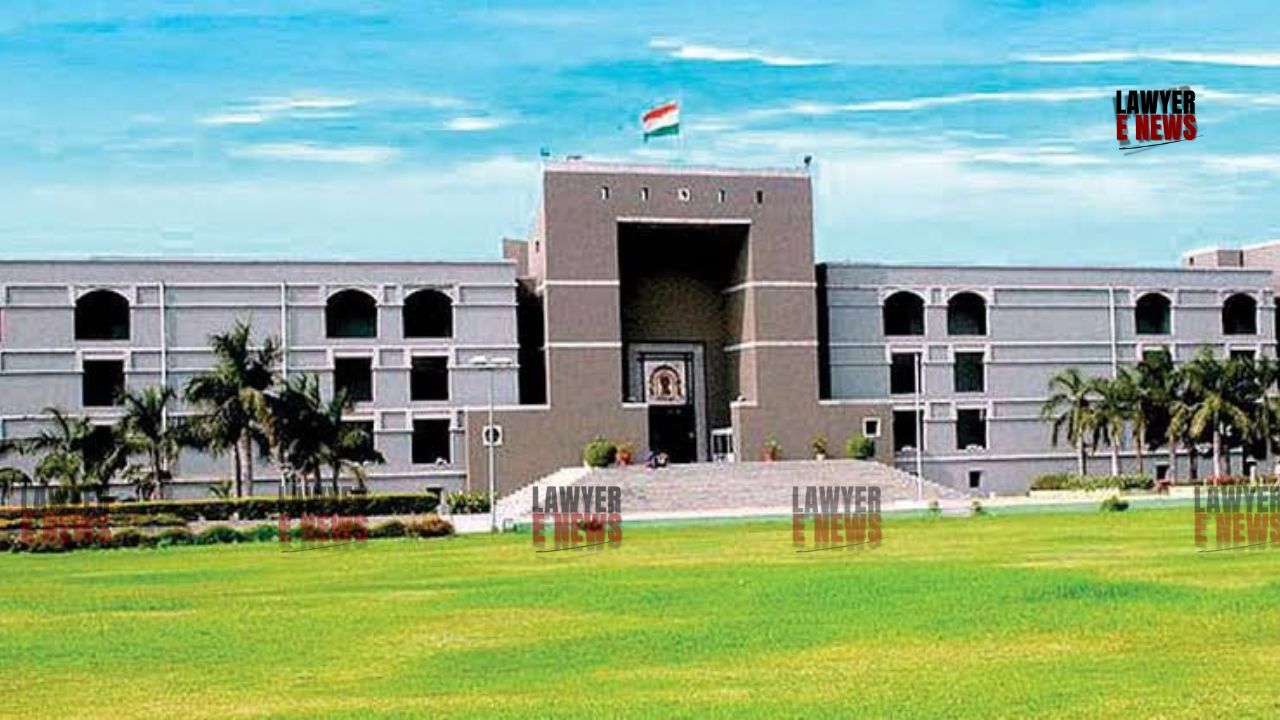
"Unless there is an order passed by the Court to produce the revival documents by the plaintiff bank, no adverse inference could have been drawn against the plaintiff bank." Gujarat High Court, in a significant ruling dated July 21, 2026, held that a court cannot draw an adverse inference against a bank for failing to produce alleged loan revival documents when there was no court order directing their production and the bank denied possessing them.
A bench of Justice Bhargav D. Karia and Justice L. S. Pirzada observed that guarantors cannot be discharged of their liability based on a mere presumption that unproduced documents contained variations to the original contract.
State Bank of Saurashtra (now merged with State Bank of India) filed a suit in 1985 to recover Rs. 3.89 crores from Maharana Mills Ltd. and its directors, who had acted as personal guarantors. The Trial Court decreed the suit only against the company, entirely discharging the directors from their personal guarantees. The lower court reasoned that the bank had suppressed new "revival documents" purportedly executed by the directors.
The trial judge drew an adverse inference against the bank, presuming that these unseen documents must have varied the original contract terms, thereby discharging the sureties under Section 133 of the Indian Contract Act. Aggrieved by the exoneration of the guarantors, the bank appealed to the High Court.
The primary question before the court was whether an adverse inference could be drawn against the plaintiff bank for the non-production of alleged revival documents, thereby discharging the guarantors. The court was also called upon to determine if the trial court erred in legally presuming that these unproduced documents contained a variance in terms that would trigger a surety's discharge under Section 133 of the Indian Contract Act.
No Adverse Inference Without Deliberate Withholding
The High Court observed that the bank's witness had explicitly testified during cross-examination that the alleged revival documents were not available in the bank's files. The bench noted that an adverse inference under Section 114 of the Evidence Act requires proof that a party is deliberately withholding evidence known to be in its possession. Since the bank denied having the documents and the defendants failed to conclusively prove otherwise, the presumption was invalid.
Prior Rejection Of Production Request
The High Court highlighted a crucial procedural flaw in the Trial Court's reasoning. Earlier in the suit, the defendants had filed an application seeking a direction for the bank to produce these very documents, which the Trial Court itself had rejected. The bench noted that having formally rejected the application for production at an earlier stage, the trial court could not later penalize the bank for not placing those same documents on record.
Erroneous Application Of Section 133 Contract Act
Addressing the discharge of the guarantors, the court severely criticized the lower court for presuming that the unproduced documents contained a "charge or variation or modification" in the terms of the guarantee. The High Court termed this finding "perverse," noting that Section 133 of the Indian Contract Act—which discharges a surety if the principal contract is varied without their consent—cannot be invoked on mere guesswork about the contents of unseen documents.
"The Trial Court has drawn adverse inference only on presumption that there must be some change or variation or modification in the terms of guarantee or personal liabilities of the Directors... This is nothing but perverse findings arrived at by the Trial Court."
Guarantors' Liability Remains Intact
The bench emphasized that the drawing of such partial adverse inference by the Trial Court was liable to be set aside. The court reiterated that the original personal guarantees executed by the directors were undisputed. Consequently, any unfinalized discussions or drafted revival documents that were never formally accepted or executed by the bank could not extinguish the existing cause of action.
Error Of Law By Trial Court
The High Court concluded that the lower court conflated the mere existence of renewal negotiations with a concluded novation of contract. The bench observed that the trial court committed a clear error of law by discharging the personal liabilities of the defendants based entirely on assumptions regarding what the withheld documents might have contained.
Allowing the bank's appeal in part, the High Court modified the trial court's decree. The court ordered that the respondent directors (Defendants 2 to 4) are jointly and severally liable alongside the company to pay the outstanding dues of Rs. 3.62 crores with 12% interest, reinforcing the strict enforcement of personal guarantees in institutional borrowings.
Date of Decision: 21 July 2026