-
by sayum
15 August 2026 5:59 AM







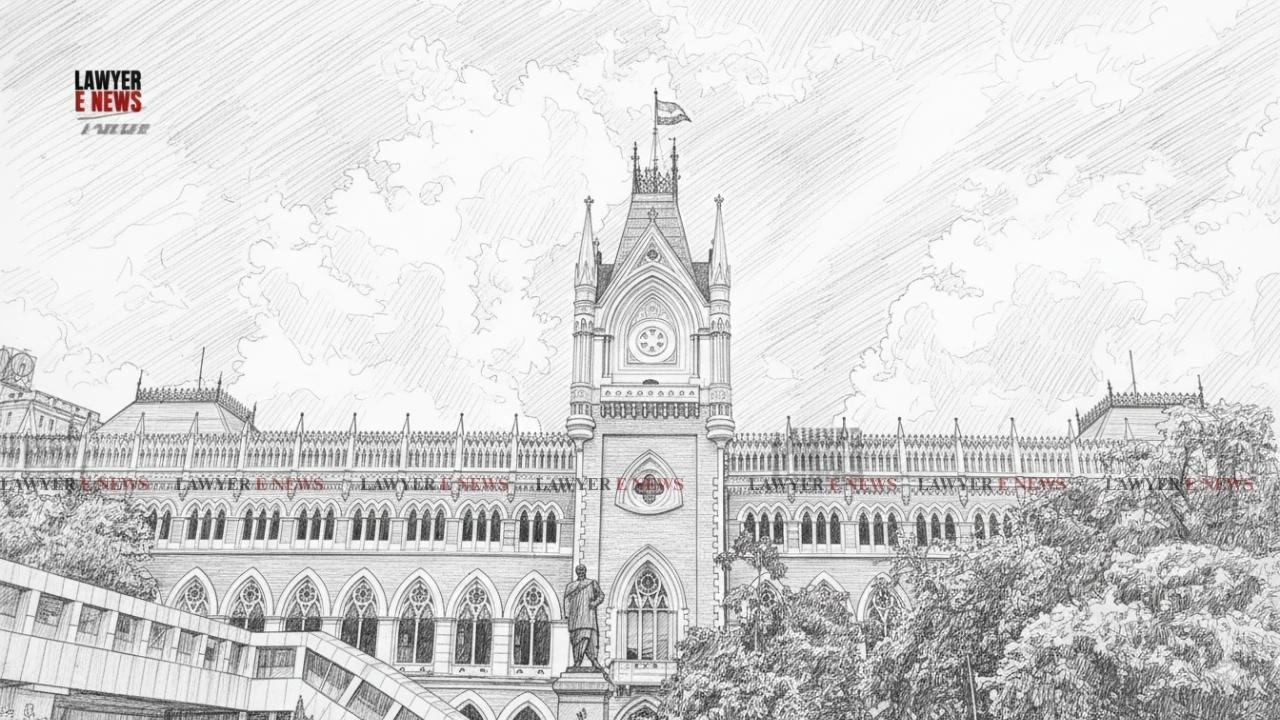
"Witnessing the death of one's mother at the hands of one's father, uncles and aunts is indeed an abnormal event in the life of an individual. The same being witnessed by a minor child of seven years old only exacerbates the situation. The evidence of PW 3, therefore, cannot be brushed aside." Calcutta High Court, in a significant ruling reversing an order of acquittal in a brutal domestic murder, held that the testimony of a minor child who witnessed his mother being murdered by his father and relatives cannot be mechanically discarded on technical grounds.
A bench of Justice Rajasekhar Mantha and Justice Rai Chattopadhyay observed that when a crime occurs in the privacy of a matrimonial home, the burden shifts heavily onto the inmates under Section 106 of the Evidence Act to explain the circumstances of the death.
The de facto complainant, Swapan Kumar Pramanick (brother of the victim), filed an appeal against a 2017 judgment of the trial court which had acquitted the victim's husband, Samir Das, and his relatives of charges under Sections 498A, 306, and 302/34 of the Indian Penal Code. The prosecution's case was that the husband and his relatives brutally assaulted the victim and forcefully poured poison down her throat, while the defense claimed she had committed suicide. The trial court acquitted the accused primarily by disbelieving the testimony of the couple's seven-year-old son, who was the sole eyewitness to the crime.
The primary question before the court was whether the testimony of a minor child witness can be discarded solely on the ground of an alleged delay in recording his statement under Section 164 of the CrPC. The court was also called upon to determine whether the trial court erred in ignoring medical evidence and failing to apply Section 106 of the Evidence Act regarding crimes committed within the secrecy of a dwelling.
Perverse Findings By The Trial Court
The High Court heavily criticized the trial judge for discarding the child witness's testimony on the erroneous premise that the post-mortem report did not show any injuries on the victim. The High Court noted that the medical evidence clearly documented multiple bruises, fingernail scratches, and blunt force trauma on the victim's head and face. The bench observed that these injuries were entirely consistent with the child's testimony that his father had put his leg on the victim's throat and covered her mouth to force her to swallow poison.
"The aforesaid finding of the Trial judge is contrary to the post mortem report. The said finding is therefore perverse in terms of the dicta in H.D. Sundara v. State of Karnataka... It was held that a perverse finding leading to an acquittal deserves to be set aside."
Evidentiary Value Of A Child Witness
Addressing the trial court's skepticism regarding the child witness, the High Court emphasized that a child witnessing such a traumatic event is unlikely to forget it. Relying on Supreme Court precedents, including State of M.P. v. Ramesh, the bench noted that the child was traumatized and essentially abandoned by his father's side of the family. The court held that a delay of 20 days in recording his statement under Section 164 of the CrPC was sufficiently explained by the trauma and the sudden change in his living circumstances.
Distinction Between Improvisation And Fabrication
The defense argued that the child was tutored by his maternal uncle, pointing to minor discrepancies between his police statement and his court testimony. The High Court rejected this, drawing a sharp legal distinction between "improvisation" and "fabrication." The bench noted that while the child may have added a few new details during the trial, the core substance of his testimony—that his father and relatives assaulted and poisoned his mother—remained completely uncontroverted.
"Improvisation of evidence by a witness is the addition of a new detail or mere modification of a fact stated by him during the investigation... Improvisation is not material alteration of a stand of a witness taken pre-trial."
Burden On Accused Under Section 106 Evidence Act
The court placed strong reliance on Section 106 of the Evidence Act, noting that the murder took place in the secrecy of the matrimonial home where all the accused were present. Citing the landmark Supreme Court decision in Trimukh Maroti Kirkan v. State of Maharashtra, the High Court ruled that when a crime occurs behind closed doors, the initial burden on the prosecution is relatively lighter. The inmates of the house are legally obliged to provide a cogent explanation as to how the victim died.
False Plea Of Suicide Is A Strong Circumstance
The bench observed that the accused failed to provide any valid explanation for the victim's death and instead took a false plea of suicide. The court highlighted that this false plea acts as an additional strong circumstance pointing toward their guilt. Furthermore, the court noted the suspicious conduct of the accused, who changed the victim's soiled saree to destroy evidence and actively resisted the prosecution witnesses when they tried to transport the victim's body to a proper hospital.
Common Intention Under Section 34 IPC Established
Dealing with the culpability of the relatives, the High Court found that their active presence at the scene, their participation in the assault, and their subsequent conduct clearly established a common intention under Section 34 of the IPC. The court noted that one of the relatives even physically prevented the victim's brothers from taking her to the hospital, thereby exposing his mental condition and active assistance in ending the victim's life.
The High Court allowed the appeal and set aside the trial court's order of acquittal. The husband and the participating relatives were convicted under Section 302 read with Section 34 of the IPC, and the husband was additionally convicted under Section 498A of the IPC. The court directed that all convicts shall mandatorily suffer rigorous life imprisonment for a period of 24 years before becoming eligible for any remission.
Date of Decision: 16 July 2026