-
by sayum
15 August 2026 2:23 PM







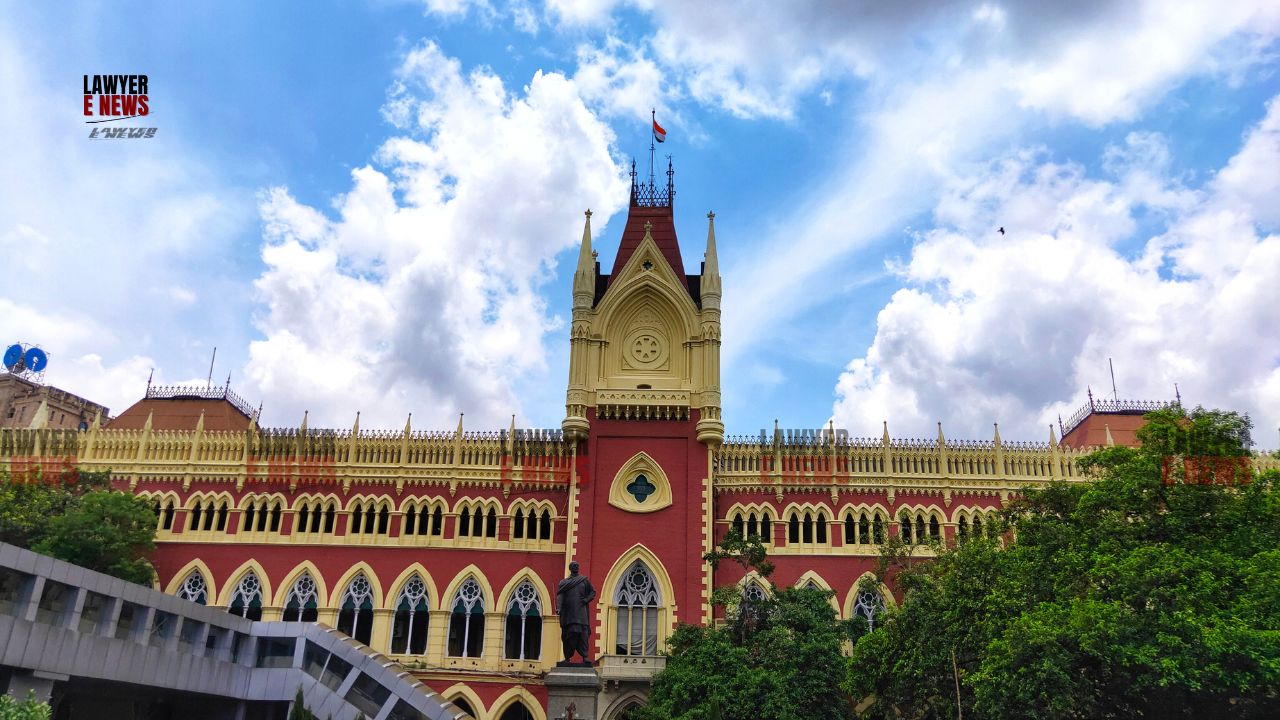
"In the context of contempt of Court, true apology and justification of the contemptuous act/conduct, cannot go hand in hand. They are mutually exclusive. One who seeks to justify his conduct cannot be permitted to get away by tendering apology as a second line of defence." Calcutta High Court, in a significant judgment dated July 13, 2026, held senior TMC leader Kunal Ghosh and seven others guilty of criminal contempt for scandalizing the judiciary and interfering with the administration of justice.
A special bench comprising Justice Arijit Banerjee, Justice Sabyasachi Bhattacharyya, and Justice Rajarshi Bharadwaj observed that while the right to free speech is valuable, it remains subject to the law of contempt to preserve the institutional majesty of the courts.
The proceedings arose from an incident on April 25, 2025, where a mob blocked advocate chambers and public thoroughfares, hurled abuses at lawyers, and desecrated photographs of a sitting High Court judge. The protesters were allegedly aggrieved by interim orders passed in a teacher recruitment matter. Subsequently, Kunal Ghosh held a press conference making several imputations against the impartiality of the judge and the professional integrity of senior advocates representing the litigants.
The primary question before the court was whether the suo motu proceedings were maintainable without the written consent of the Advocate General under Section 15 of the Contempt of Courts Act, 1971. The court was also called upon to determine if the acts of the protesters and the statements made by Ghosh amounted to criminal contempt and whether their apologies deserved acceptance.
High Court’s Inherent Power Under Article 215 Is Absolute
The bench emphasized that the power to punish for contempt is an inherent right of a Court of Record under Article 215 of the Constitution of India. The court noted that procedural technicalities, including those mentioned in the Contempt of Courts Act, 1971, cannot curtail or restrict this inherent jurisdiction to uphold the dignity of the judiciary.
"Informants" In Contempt Cases Are Not Formal Petitioners
Addressing the challenge to maintainability, the court clarified that in suo motu proceedings, private individuals who bring facts to the court's notice are mere "informants" or "relators." Their role ends once the information is placed before the court, and the matter then remains strictly between the Court and the contemnor.
Court Clarifies Distinction Between Petition And Information
The bench distinguished the present case from the precedent in Biman Basu v. Kallol Guha Thakurta, noting that here, no formal contempt petition was filed by private parties. Instead, the court took cognizance of the contents of affidavits as information. Therefore, the statutory requirement for the Advocate General’s consent under Section 15 of the 1971 Act was not triggered.
Chief Justice As Master Of Roster Can Assign Any Matter
The court rejected the contention that the Chief Justice could only assign a "Rule" and not the entire matter to a special bench. It held that the Chief Justice, in his administrative capacity as the Master of the Roster, possesses the general power to assign any matter to any bench, and the 1975 Rules of the High Court do not abrogate this power.
Scurrilous Attacks On Sitting Judges Amount To Criminal Contempt
Regarding contemnor nos. 1 to 7, the court found that their conduct of blocking ingress to chambers and stamping on a judge’s photograph constituted a "vicious attack" on judicial independence. The bench observed that expressing displeasure through such public demonstrations lowers the majesty of the court and interferes with the due course of justice.
"Frustration" Cannot Justify Contemptuous Demeanour
The court acknowledged the contemnors' argument that they were driven by pent-up frustration due to delays in teacher appointments. However, it ruled that condoning such behavior on emotional grounds would set a dangerous precedent. It held that if parties are aggrieved, they must ventilate their grievances before a higher legal forum rather than resorting to disparaging comments.
Imputing Political Bias To Judges Is An Attack On Justice Delivery
Evaluating the case against Kunal Ghosh, the bench noted that his statements in the press conference were not mere political rebuttals. By suggesting that a sitting judge gets "swayed" when lawyers of a particular political camp appear, Ghosh made an unequivocal imputation against judicial impartiality. This, the court held, impinged upon the entire justice delivery system.
Apology Must Be Sincere And Not A Second Line Of Defence
The bench refused to accept the apologies tendered by the contemnors as a means of escaping liability. It observed that a "pretended apology" offered while simultaneously attempting to justify the contemptuous conduct is undeserving of acceptance. The court remarked that the "slap and say sorry" practice cannot be countenanced in the eyes of the law.
"True Apology And Justification Are Mutually Exclusive"
The court specifically noted that Kunal Ghosh challenged the maintainability of the proceedings in the same breath as offering an apology. The bench held that when an alleged contemnor seeks to justify his conduct, he cannot simultaneously offer a genuine apology, as the two positions are legally and ethically inconsistent.
Court Imposes Fines To Deter Similar Future Conduct
Taking a lenient view for contemnor nos. 1 to 7 due to their financial insecurity, the court imposed a fine of Rs. 1,000 each. For Kunal Ghosh, the court imposed the maximum fine of Rs. 2,000. It directed that in default of payment within four weeks, the contemnors would suffer simple imprisonment for a period of three days.
The High Court concluded that the integrity of the judicial system must be protected from both physical interference and verbal scandalization. By holding the contemnors guilty, the court reaffirmed that judicial independence must be shielded from those who attempt to browbeat the bench. The contempt proceedings were accordingly disposed of with the imposition of fines.
Date of Decision: 13 July 2026