-
by sayum
27 August 2026 3:32 PM







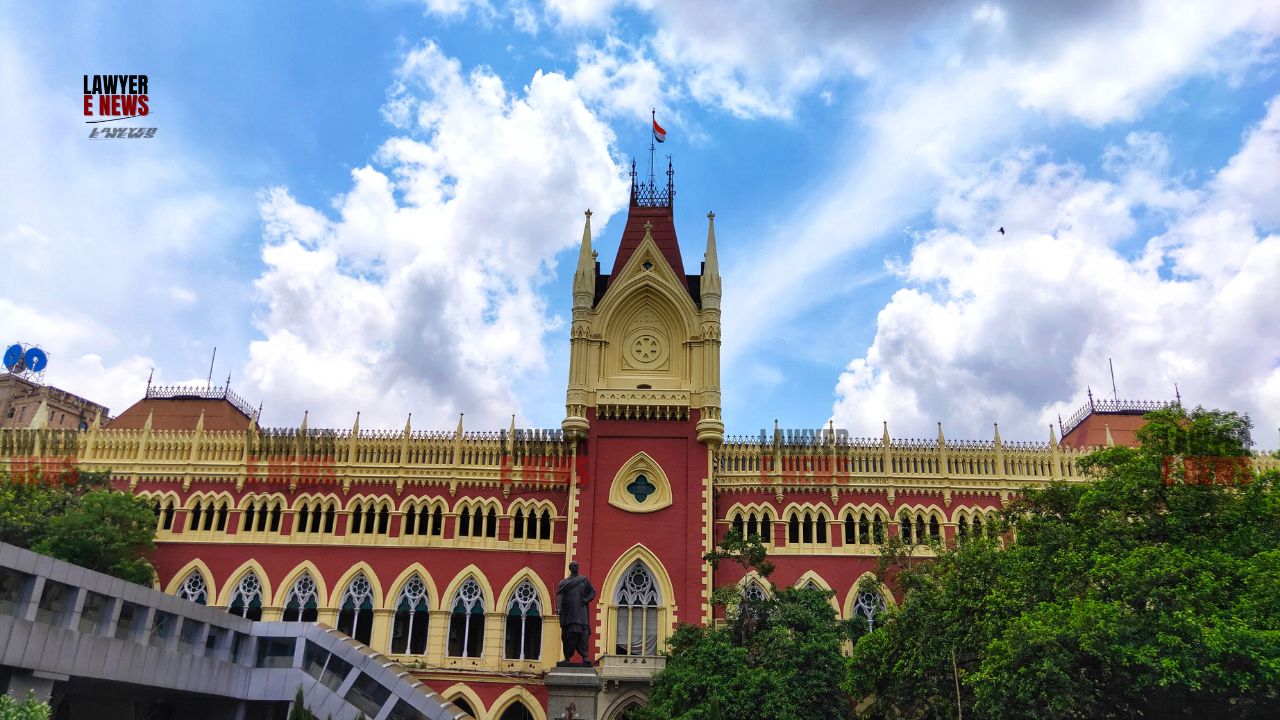
Calcutta High Court, in a significant ruling, held that a Trial Court cannot grant a temporary injunction in a suit for specific performance without addressing serious allegations of fraud and collusion raised by the defendants. A bench of Justice Sabyasachi Bhattacharyya and Justice Biswaroop Chowdhury observed that an order paying "lip-service" to the cardinal tests of injunction without recording clear reasons is legally unsustainable.
The appellants, who are the owners of the suit property, challenged a temporary injunction granted in favor of the plaintiff/respondent in a suit for specific performance of a sale agreement. The plaintiff claimed the agreement was executed by the appellants’ attorneys; however, the appellants contended that the Power of Attorney had been cancelled and that the suit agreement was a product of fraud and collusion between the plaintiff and the erstwhile attorneys.
The primary question before the court was whether the Trial Judge erred in granting a temporary injunction under Order 39 Rules 1 and 2 of the CPC without considering the specific allegations of fraud and lack of consideration raised in the written objection. The court also examined whether the impugned order satisfied the requirement of being a reasoned judicial order.
Failure To Address Serious Allegations Of Fraud
The High Court noted that the appellants had raised grave allegations regarding the conduct of the respondent nos. 2 and 3, who acted as their attorneys. The appellants argued that they had not received a single penny of the consideration amount and that bank statements indicated mutual monetary transactions between the plaintiff and the attorneys, suggesting patent collusion.
Court Notes Trial Judge Ignored Written Objections
Upon reviewing the records, the Division Bench found that the Trial Judge had completely overlooked the substance of the written objection. The court observed that while passing an order of temporary injunction, the judiciary is duty-bound to consider the specific disputes raised by the parties rather than ignoring them.
"None of the averments made in the written objection of the appellants, which contains serious allegations of fraud and collusion, was adverted to by the learned Trial Judge while passing the impugned order of temporary injunction."
Lip-Service To The Three Cardinal Tests Of Injunction
The Bench critiqued the mechanical nature of the Trial Court’s order regarding the three-fold test for injunction: prima facie case, balance of convenience, and irreparable loss. The High Court emphasized that merely mentioning these legal principles is insufficient if the order does not explain how the facts of the case satisfy them.
"The impugned order, although it pays lip-service to the three cardinal tests of grant of injunction, does not specifically advert to any of the grave allegations levelled in the written objection... nor is any clear reason given in the impugned order as to how the learned Trial Judge came to the conclusion."
Requirement Of A Reasoned Order For Judicial Sustainability
The Court held that the lack of reasoning rendered the order unsustainable on that count alone. It clarified that it was not necessary to enter into the merits of the respective contentions at the appellate stage if the primary order itself was devoid of analytical reasoning.
"Thus, the impugned order cannot be sustained on such count alone, even without entering into the merits of the respective contentions of the parties."
Remand And Interim Protection
While setting aside the impugned order, the Court balanced the equities by remanding the matter for fresh adjudication. To ensure the property was not alienated during the re-hearing, the Bench revived a previous interim order restraining the appellants from selling or transferring the property to third parties until the Trial Judge passed a fresh, reasoned order.
"The learned Trial Judge shall re-adjudicate the injunction application and dispose of the same by passing a reasoned order, considering and adverting to the disputes raised by both the parties in their temporary injunction application and written objection."
The High Court allowed the appeal and set aside the order dated December 12, 2025. The Trial Judge has been directed to dispose of the temporary injunction application afresh on its own merits, independently and without being prejudiced by the High Court's observations, preferably by June 30, 2026.
Date of Decision: 13 May 2026