-
by sayum
28 July 2026 11:21 AM







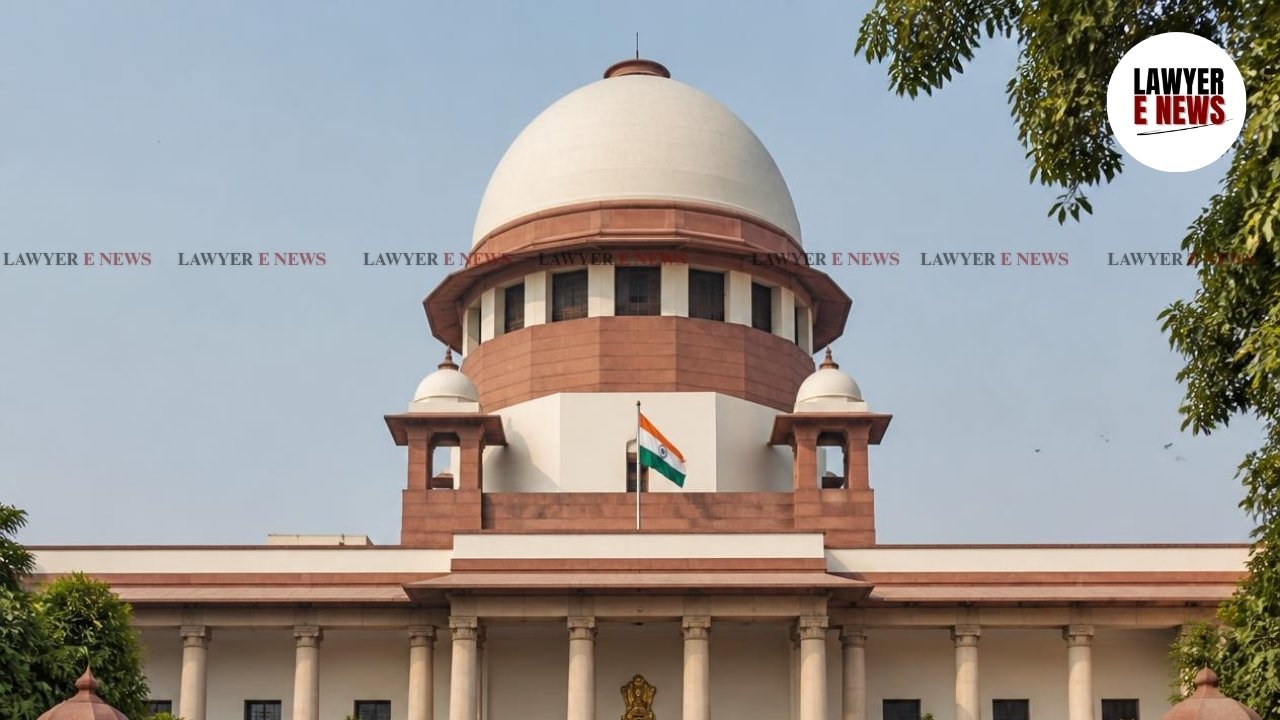
"Contractual benefit of reimbursement of medical expenses as a result of this policy is, therefore, independent of any other claim. The provisions of the MVA are only triggered in the unfortunate eventuality if a death or injury arising out of a motor vehicle accident occurs. That in itself, when it does arise, cannot eclipse the contractual benefit to which a person who has paid premiums, is entitled too." Supreme Court, in a significant ruling dated May 15, 2026, held that the amount received by a claimant through a Mediclaim or medical insurance policy is not deductible from the compensation awarded by a Motor Accidents Claims Tribunal (MACT).
A bench of Justices Sanjay Karol and Vipul M. Pancholi observed that the statutory right to compensation under the Motor Vehicles Act (MVA) and the contractual right under a private insurance policy operate in distinct domains. The Court emphasized that a claimant’s foresight in securing medical insurance should not result in a windfall for the tortfeasor or the insurer of the offending vehicle.
The case reached the Apex Court following an appeal by New India Assurance Company Limited against a judgment of the Bombay High Court. The High Court had resolved a conflict between its own divergent views to hold that Mediclaim proceeds are not deductible from motor accident claims. The appellant-insurer argued that since the medical expenses had already been reimbursed under a Mediclaim policy, awarding the same amount again under the MVA would lead to a duplication of benefits and violate the principle of "just compensation."
The primary question before the Court was whether the amount of money received as Mediclaim, in terms of a medical insurance policy, is deductible from an award passed by a Claims Tribunal or not. The Court was called upon to determine if such a receipt constitutes a "double benefit" that must be adjusted to prevent the unjust enrichment of the claimant.
Court Distinguishes Between Statutory Entitlements and Contractual Benefits
The Court began by analyzing the nature of various benefits received by accident victims, noting a fundamental distinction between statutory and contractual rights. It observed that a statutory benefit flows from the authority of law and is available to all persons who fulfill the prerequisites, whereas a contractual benefit flows from the will and agreement between parties. The bench noted that a Mediclaim policy is a private contract supported by the payment of premiums, making it independent of any statutory claim arising from a motor accident.
The bench highlighted that while the MVA is a beneficial legislation intended to provide relief to victims, a Mediclaim policy is a personal financial base created by an individual to account for the uncertainties of life. "A Mediclaim policy is a policy that is purchased by a person, accounting for the uncertainties of life and preparing a financial base for an unfortunate possible eventuality," the Court observed. It further noted that such policies do not specifically deal with accidental coverage only but are broad preparations for medical exigencies.
Mediclaim Is The Fruit Of Premiums Paid, Not A Windfall
The Court rejected the insurer's argument that receiving both Mediclaim and MACT compensation amounts to an impermissible "double benefit." It reasoned that the Mediclaim payment is essentially the "fruit of amounts already paid in the past" in the form of premiums. The bench held that simply because the two payments appear to cover the same head of medical expenses, they cannot be equated because their origins are entirely different.
The judges observed that if the insurer's view were accepted, it would lead to a "peculiar situation" where the claimant is denuded of the benefits of their hard-earned money spent on premiums. "It would also amount to an undue advantage to the company granting the Mediclaim policy... similarly, it may amount to an unjust benefit to the insurer of the offending vehicle if they are not required to compensate solely on account of the fact that the claimant had received the benefit of a policy," the bench held.
Adherence to the Principles Laid Down in Helen Rebello and Patricia Mahajan
The Court relied heavily on the landmark precedent in Helen C. Rebello v. Maharashtra SRTC, which established that life insurance, provident funds, and pensions are not deductible as they accrue independently of the accident. The bench noted that for a deduction to be permissible, there must be a direct correlation or nexus between the receipt and the accidental death or injury. It found that Mediclaim, being a contractual entitlement earned over time through premium payments, lacks this direct causal nexus with the tortious act.
The bench also distinguished the present case from Reliance General Insurance Co. Ltd. v. Shashi Sharma, where statutory ex-gratia payments were held deductible. The Court clarified that in Shashi Sharma, both benefits had "statutory force," whereas Mediclaim is purely contractual. It further noted that the guiding yardstick for Mediclaim is different from the MVA; the former is limited by policy terms, while the latter is guided by the broad principle of "just and fair compensation" without strict monetary limits.
Court Expresses Concern Over Conflicting High Court Judgments
In a significant observation on judicial discipline, the Court addressed the "unsettling" trend of High Courts taking contrary positions on this issue. The bench noted that different benches of the same High Court, sometimes of the same strength, were delivering conflicting judgments in ignorance of higher-bench pronouncements. The Court emphasized that such inconsistencies lead to judicial uncertainty and create difficulties for both counsel and litigants.
The bench reminded both the Bar and the Bench of their "tri-fold duty" to apply correct law, ensure consistency with precedent, and avoid per incuriam decisions. "In essence, both the Bar and the Bench are responsible for minimising the problems that arise in the face of inconsistent judicial opinion," the Court remarked. It underscored that judicial efficiency is directly impacted by the clarity of law and the following of settled precedents.
Final Directions and Dismissal of Appeal
In conclusion, the Supreme Court held that Mediclaim or medical insurance reimbursements are not to be deducted from the compensation calculated by a Motor Accidents Claims Tribunal. The Court categorized the MVA entitlement as statutory and the Mediclaim benefit as a contractual sequitur of premiums paid in the past. Consequently, the Court dismissed the appeal filed by New India Assurance Co. Ltd. as meritless and remanded the matter to the High Court for a fresh determination consistent with this opinion.
Date of Decision: May 15, 2026