-
by sayum
27 August 2026 3:32 PM







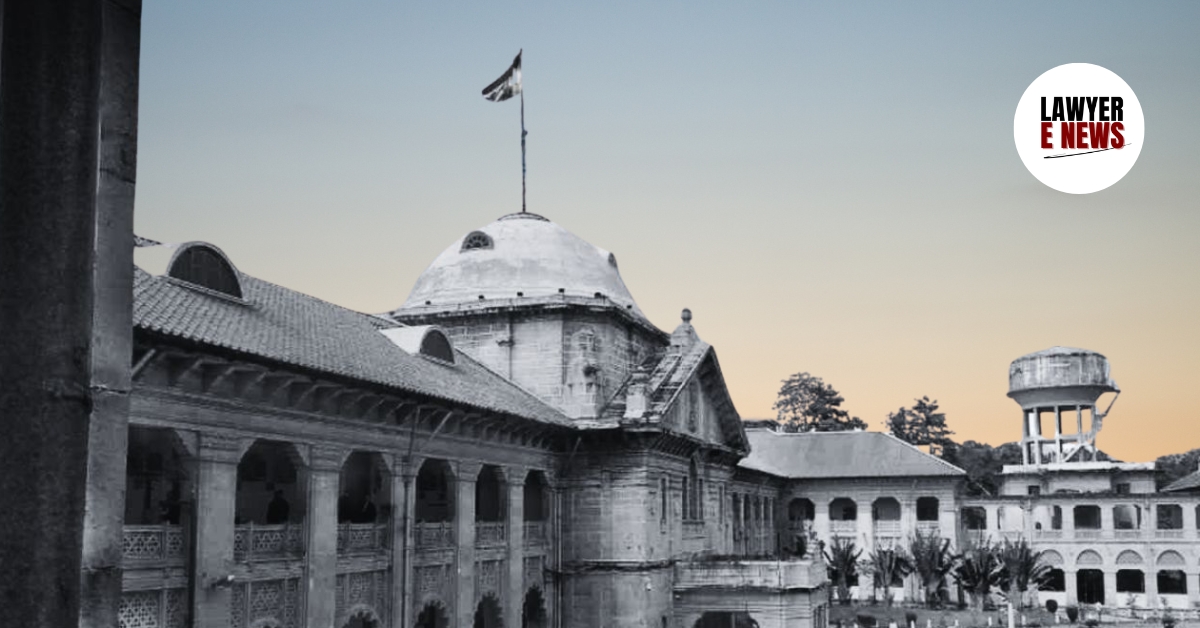
"At the stage of granting leave under Section 92 CPC, the Court does not decide the rights of parties and no right is adjudicated. The Court has merely to see whether there is a prima facie case for granting leave to file a suit, " Allahabad High Court, in a significant ruling dated May 14, 2026, held that trial courts must not adjudicate the final rights of parties while deciding an application for leave to institute a suit under Section 92 of the Code of Civil Procedure (CPC).
A single-judge bench of Justice Abdul Shahid observed that the primary duty of the court at this preliminary stage is merely to ascertain the existence of a prima facie case regarding the public nature of a trust and the necessity of the court's intervention for its administration.
The court made these observations while setting aside an order passed by the Additional District Judge/Fast Track Court, Etawah, which had rejected a leave application filed by worshippers and residents seeking the appointment of a management committee for the Shri Ram Chandra Ji Maharaj Mandir Ramtal.
The appellants, including Sadhus and local residents, claimed that the temple is an ancient public religious institution traditionally managed by 'Baba Bairagis' through the Guru-Chela principle. They alleged that the original defendant, a resident of Chennai with no connection to the Bairagi sect, had fraudulently recorded his name as 'Sarvarakar' (manager) in revenue records based on a disputed Will. They further contended that the temple properties, including a large pond and agricultural land, were at risk of alienation as the defendant rarely visited the village and intended to sell the assets for personal gain.
The primary question before the court was whether the trial court was justified in rejecting the leave application by concluding that no express or implied trust was established. The court was also called upon to determine the scope of judicial inquiry required under Section 92 CPC at the stage of granting leave to institute a suit against a public trust.
Standard Of Inquiry At The Leave Stage
The Court emphasized that Section 92 CPC is a provision of a special nature designed to protect public rights in religious and charitable trusts. It noted that the trial court erred by entering into a detailed adjudication of the parties' rights at the very threshold.
The bench observed that the grant of leave does not in any way affect the final decision on merits, which can only be reached after parties have led evidence during the trial. Citing the precedent in Ambrish Kumar Singh v. Raja Abhushan Bran Bramhshah, the court reiterated that no right is adjudicated at the leave stage.
"The Court has merely to see whether there is a prima facie case for granting leave to file a suit. This order does not in any way affect the final decision which will be given on merit after the parties have led evidence in the suit."
Doctrine Of Constructive Trust Under Section 92 CPC
Addressing the trial court's finding that no trust deed was produced, the High Court clarified that Section 92 CPC explicitly uses the words "express or constructive trust." It noted that the legislature intended to include trusts that arise by operation of law even in the absence of a formal written instrument.
The Court referred to the Supreme Court's decision in Operation Asha v. Shelly Batra, noting that a constructive trust arises whenever a person in a fiduciary character gains a pecuniary advantage or where justice requires the law to deem a trust as having been created.
"A constructive trust arises by operation of law, without regard to the intention of the parties to create a trust. It does not require a deed signifying the institution of trust."
Public Nature Of The Temple And Property Disputes
The Court highlighted that both the plaintiffs and the defendants admitted that the temple and the adjacent pond were open for public worship. This admission, according to the bench, provided sufficient prima facie ground to treat the institution as a public trust of a religious nature.
Furthermore, the Court noted that the first recorded Sarvarakar's name appeared in revenue records only 40 years ago, despite the temple being ancient. It observed that revenue entries do not confer title and that the appointment of a Sarvarakar or Sevayat is a matter that exclusively falls within the jurisdiction of the Civil Court.
"The temple is of public nature is an admitted case of both plaintiffs as well as defendant. None of the documentary evidence had been provided nor any document of Sarvakarship by the predecessor of the defendant was produced."
Allegations Of Breach And Necessity Of Administration
The bench found that the allegations regarding the non-residence of the manager (who resided in Chennai) and the potential alienation of temple property were sufficient to warrant a trial. The Court remarked that if the directions of a court are deemed necessary for the proper administration of a public trust, leave should generally be granted.
The Court concluded that the trial court's refusal to grant leave was based on a "perverse finding" that failed to appreciate the actual import of Section 92 CPC. The bench held that the appellants had successfully established a prima facie case involving a public trust, an alleged breach of duty, and the necessity for a scheme of management.
The High Court allowed the appeal and set aside the impugned order dated January 13, 2026. By granting leave to the appellants to institute the original suit, the Court cleared the path for a full-scale trial to determine whether a management committee should be framed for the temple's preservation.
Date of Decision: 14 May 2026