-
by sayum
06 August 2026 1:57 PM







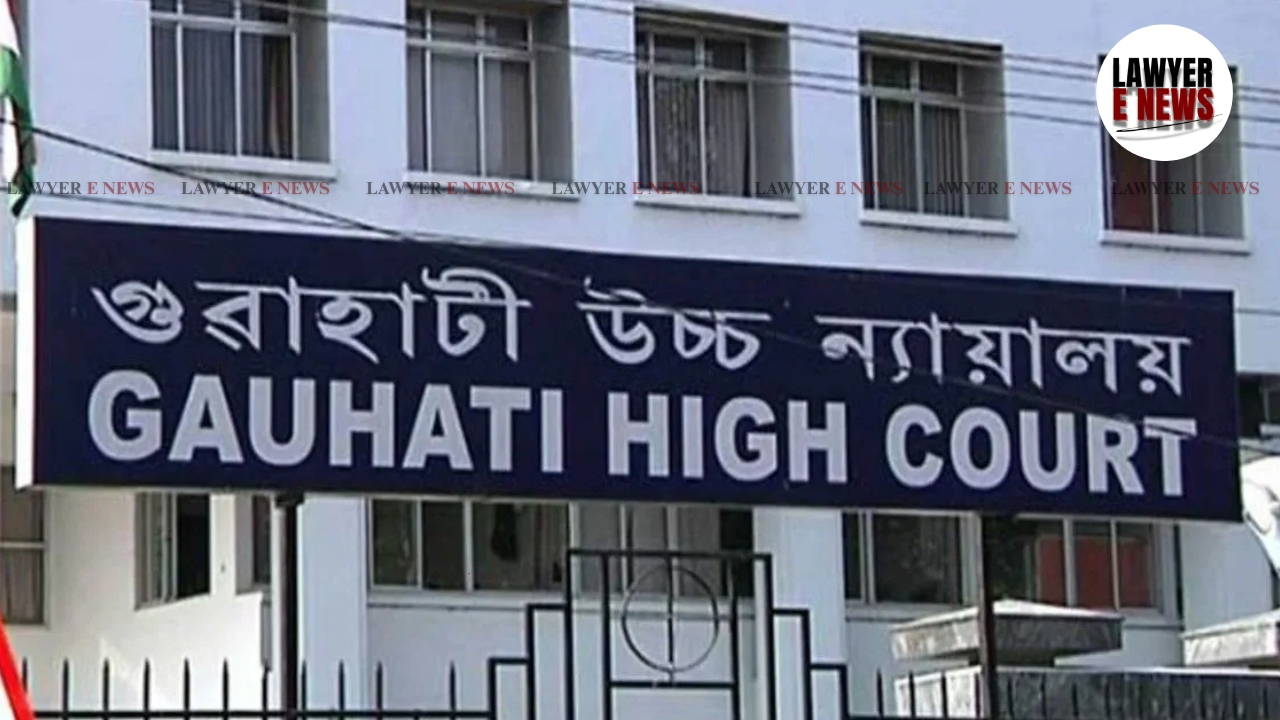
“There is no real consideration of the explanation and testimonies of DW-1 and DW-2 by the Trial Court. Such non-consideration violates the principles laid down in Reena Hazarika v. State of Assam” — Gauhati High Court On 25 September 2025, the Gauhati High Court allowed the appeal of Ravi Kumar Bhowel against his conviction for allegedly raping his 17-year-old stepdaughter over a four-year period. In a detailed judgment, the Division Bench of Justice Michael Zothankhuma and Justice Anjan Moni Kalita held that the Trial Court had committed a grave error by failing to consider the defence evidence and the accused’s explanation under Section 313 of the Criminal Procedure Code, thereby violating the right to a fair trial.
The appeal arose from the judgment of conviction passed on 22 November 2023 by the Additional Sessions Judge-cum-Special Judge (POCSO), Kamrup (Metro), Guwahati, in Sessions Special Case No. 46 of 2022, where the appellant was sentenced to 25 years' rigorous imprisonment under Section 6 of the POCSO Act, read with Section 376(2)(f) IPC, for allegedly raping his stepdaughter multiple times over four years.
“Section 313 CrPC Explanation Cannot Be Ignored; Defence Witnesses Deserve Equal Treatment”
The High Court found that the trial court failed in its statutory duty to consider the defence evidence, particularly the explanation offered by the accused under Section 313 CrPC, and the testimonies of the appellant himself (DW-1) and his second wife (DW-2). This, the Court held, was a direct contravention of the Supreme Court's binding precedent in Reena Hazarika v. State of Assam [(2019) 13 SCC 289].
“The trial court merely brushed aside the defence, branding it unreliable without offering any reasoned findings. There is no real consideration of the explanation and testimonies of DW-1 and DW-2.” [Para 39]
The appellant had submitted that he married the alleged victim's mother in January 2021, and had started cohabiting with her and her daughters only thereafter. The FIR, however, alleged that the sexual assaults had begun four years prior — a timeline that was factually impossible given the documentary evidence of marriage and cohabitation.
“We are of the view that it has not been proved beyond reasonable doubt that rape had been committed by the appellant for the last 4 years, keeping in view the major discrepancies and contradictions in the evidence of the prosecution witnesses.” [Para 51]
Property Dispute as Motive: Defence Raised but Never Considered
The defence had also put forward a clear motive for false implication, alleging that the FIR had been lodged by the appellant’s son (PW-2) due to a property dispute. It was alleged that PW-2 had developed a relationship with the victim and, after being confronted by the accused, conspired to implicate him in a false case.
This explanation was offered in detail by the appellant in response to Question No. 9 of his Section 313 CrPC examination and was corroborated by DW-2, the second wife of the appellant. However, the trial court dismissed these claims as “unreliable” merely because the witnesses were related to the accused, without giving substantive reasoning.
“The learned Trial Court has not considered the evidence of DW-1 and DW-2… nor has it provided any finding based on reasons, as to why their testimonies and the explanation under Section 313 CrPC are not acceptable.” [Para 39]
The High Court stressed that defence witnesses cannot be presumed to be tainted and are entitled to equal treatment under law, as reiterated in the Supreme Court’s decision in Munshi Prasad v. State of Bihar [(2002) 1 SCC 351].
“If Victim's Testimony Was Believed, Why Was Her Mother Not Prosecuted?” – Court Flags Selective Action
A particularly troubling omission, according to the Court, was the failure of the prosecution to take action against the victim’s mother, who was explicitly alleged by the victim to have assisted in the rape by holding the girl down and threatening her to stay silent.
“If the trial court truly believed the testimony of the victim, then action should also have been taken against her mother, who was alleged to have abetted the rape. The absence of such action raises serious doubts.” [Para 44]
This selective prosecution, the Court held, undermined the credibility of the prosecution’s case and highlighted inconsistencies in how the allegations were treated, further justifying the benefit of doubt being extended to the appellant.
Acquittal Ordered, Trial Court’s Judgment Quashed
The High Court ultimately found that the prosecution’s case was riddled with contradictions, including the timeline of cohabitation, the lack of medical corroboration, the inconsistencies in the victim’s statements, and the unexplained delay in lodging the FIR.
Moreover, the trial court’s failure to weigh the defence, especially the accused’s explanation under Section 313 CrPC, amounted to a denial of a fair trial.
“When two views are possible, the one favouring the accused must be adopted. The learned Trial Court has failed to consider this basic principle of criminal law.” [Para 43]
Accordingly, the conviction and sentence were set aside, and the appellant was acquitted of all charges.
Date of Decision: 25 September 2025